
‘To what extent are any geometric patterns in Moorish Art derived from or inspired by Ancient Sacred Geometry?’

There is an ‘artistic’ nexus between:

(i) Geometric patterns in Moorish Art; and

(ii) Ancient ‘Sacred Geometry’.

‘Sacred Geometry’ is based upon the universal and ‘Cosmic’ language of mathematics.

AI – ‘Moorish geometric patterns—the distinctive visual language of the Islamic West (Al-Andalus and the Maghreb)—are deeply derived from and inspired by ancient sacred geometry through a process of “creative appropriation”. While these patterns reached their peak of complexity in the 14th-century Alhambra, they are structurally rooted in the mathematical and philosophical traditions of late antiquity, specifically those of the Greeks, Romans, and Sasanians. 

Structural Inheritance from Classical GeometryThe foundational shapes and structures of Moorish art are directly based on the geometry of Euclid and other ancient Greek mathematicians. 

  • The Circle as Foundation: In both ancient sacred geometry and Moorish design, the circle is the ritual and mathematical starting point. Every pattern begins by dividing a circle into equal sections (four-fold, five-fold, or six-fold), a method that mirrors ancient cosmic symbolism.
  • Archimedean Tilings: Moorish designers utilized the full range of Archimedean tilings—composed of simple polygons first discovered by the Greeks—to create their tessellations.
  • Pythagorean Influence: The concept of “Abrahamic Pythagoreanism” in Islamic thought views numbers and figures as keys to the structure of the cosmos. The Golden Ratio (), a staple of ancient Greek sacred geometry, is reflected in the harmonic proportions of Moorish patterns to symbolize universal balance. Art of Islamic Pattern +4

2. Adaptation and EvolutionMoorish art did not just copy ancient forms; it transformed them into a unique system of decoration that emphasized unity (“Tawhid”). 

From Independent to Interconnected: While ancient Hellenic mosaics often used stars as independent, scattered motifs, Moorish patterns evolved these into an interconnected network where every line is an integral part of a unified, infinite whole.

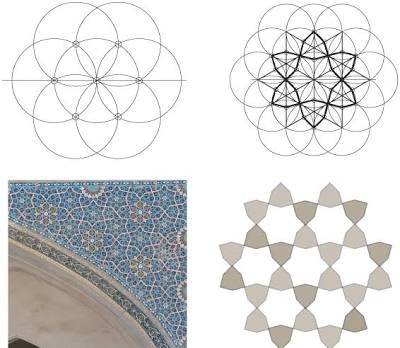
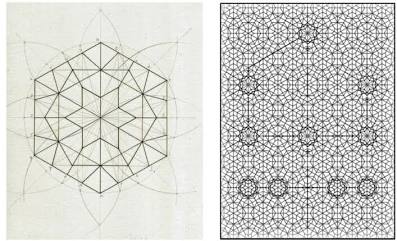
The Polygonal Technique: By the 11th century, Moorish and wider Islamic artists developed the “polygonal technique,” using underlying tessellations of regular polygons as a hidden “veil” to generate increasingly complex star patterns.

Regional Specialisation: While sharing a common ancestry with Eastern Islamic art, Moorish art (notably Zellij tilework) specialized in specific complex forms, such as 16-point stars, which are less common in other regions. ScienceDirect.com +3
Introduction to Geometry – Art of Islamic PatternArt of Islamic Pattern
The Stunning Beauty of Islamic Geometry | by Ali | MediumAli – Medium
Sacred Geometry: The Spiritual Meaning of Islamic …Architecture, Culture, and Spirituality Forum
Sacred Geometry: The Spiritual Meaning of Islamic …Architecture, Culture, and Spirituality Forum
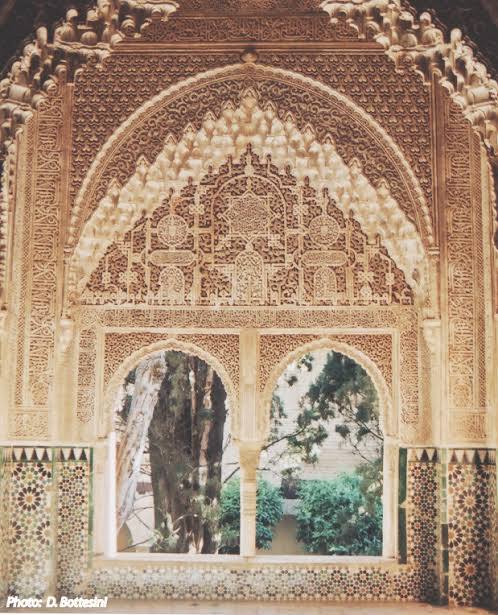
Introduction to Geometry – Art of Islamic PatternArt of Islamic Pattern
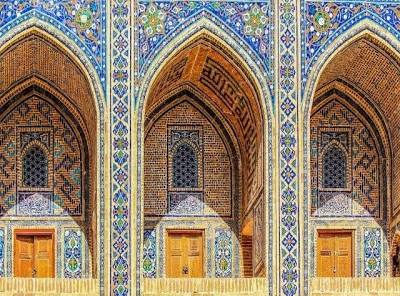
Islamic Geometric Patterns: Exploring The Harmony Between …The Decor Journal India
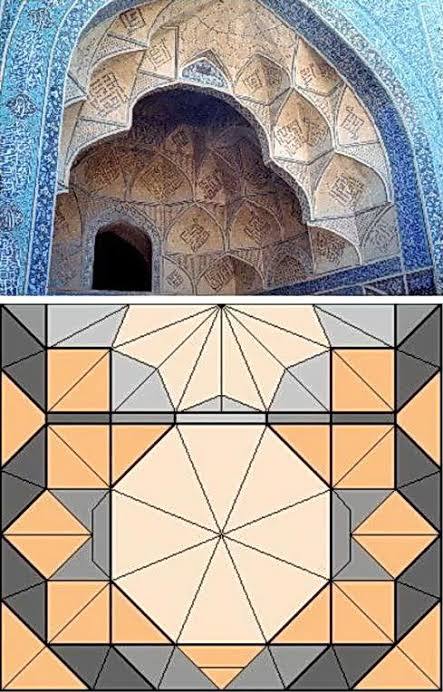
New Discoveries in the Islamic Complex of Mathematics …Muslim Heritage
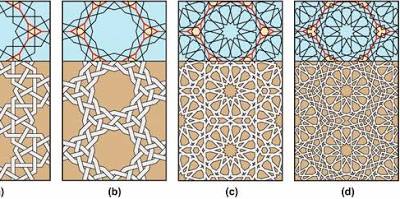
The Historical Significance of the Geometric Designs in the …Springer Nature
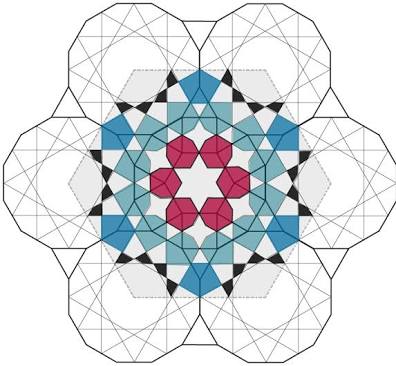
Introduction to Geometry – Art of Islamic PatternArt of Islamic Pattern
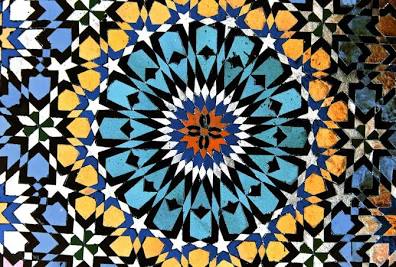
Islamic Tile History and Inspiration – Why TileWhy Tile
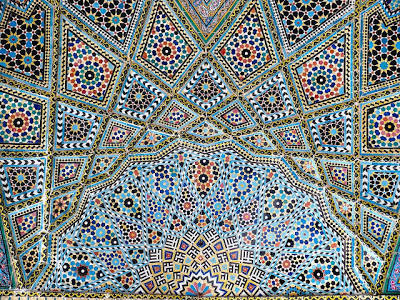
Islamic Tile History and Inspiration – Why TileWhy Tile
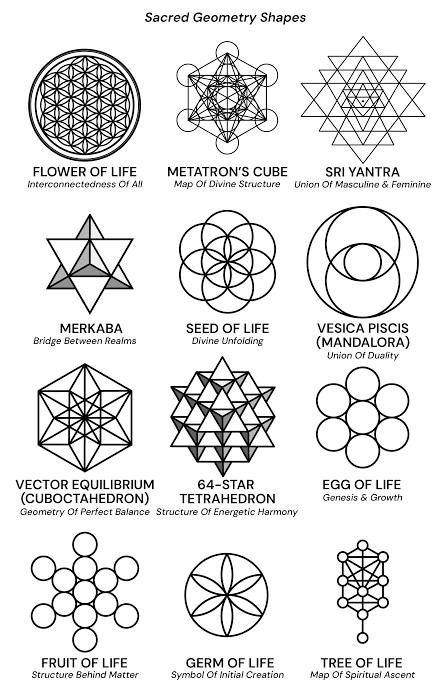
Introduction To Sacred Geometry – Rare Earth GalleryRare Earth Gallery
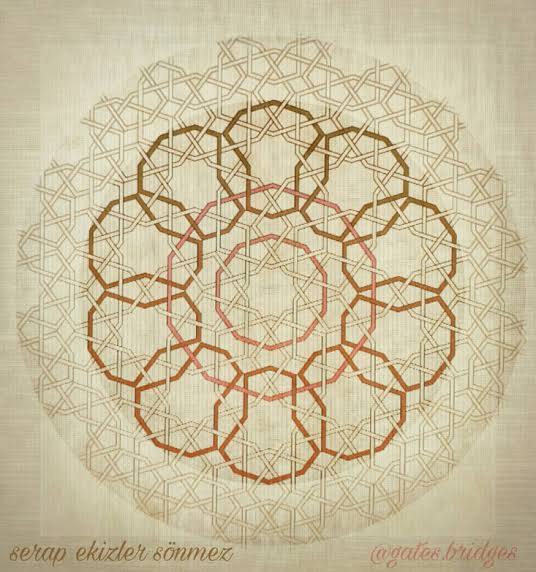
Islamic Geometric Patterns | Deen Arts FoundationDeen Arts Foundation
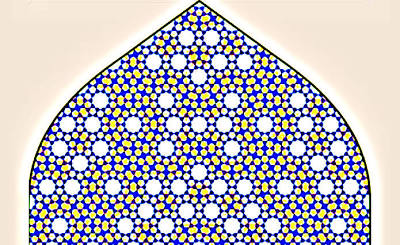
New Discoveries in the Islamic Complex of Mathematics …Muslim Heritage
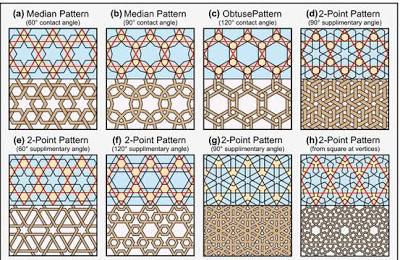
The Historical Significance of the Geometric Designs in the …Springer Nature
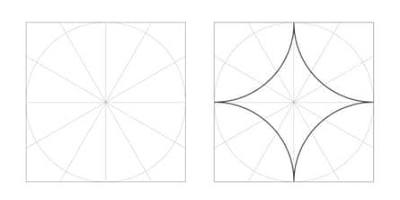
Muslim rule and compass: the magic of Islamic geometric …The Guardian
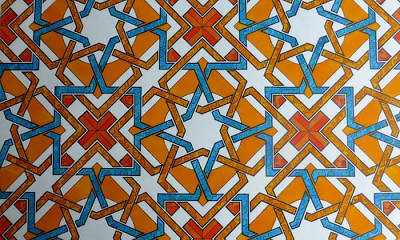
Muslim rule and compass: the magic of Islamic geometric …The Guardian
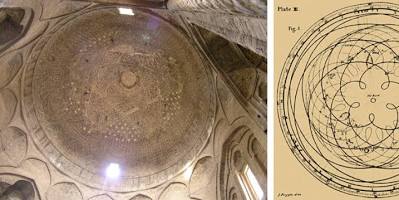
Introduction to Geometry – Art of Islamic PatternArt of Islamic Pattern
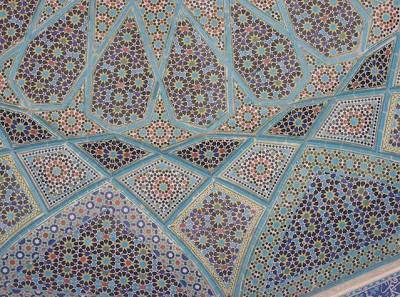
Introduction to Geometry – Art of Islamic PatternArt of Islamic Pattern3. Spiritual and Metaphysical SymbolismThe inspiration from sacred geometry is most evident in the metaphysical meanings attributed to the shapes: 

  • Infinity: The repetition of patterns suggests the infinite nature of God, a direct evolution of the ancient interest in the “divine perfection” of mathematical design.
  • Numerology: Similar to ancient sacred traditions, specific numbers hold weight; for example, the number four represents the cardinal directions and the four elements, while eight-pointed stars (the “Khatam”) often symbolize the “seal” of order. Art of Islamic Pattern +3

For those looking to explore the technical construction of these patterns, resources like Art of Islamic Pattern offer detailed educational guides, while books such as Islamic Geometric Patterns by Eric Broug provide step-by-step recreation techniques. …

The question of whether mathematics is a “cosmic language” is a central debate in both philosophy and science, typically split into two main viewpoints: discovery (math is an inherent part of the universe) versus invention (math is a human-made tool). 

1. The Argument for Math as a Cosmic Language

Proponents argue that mathematics exists independently of human thought and is the “blueprint” of reality. 

  • Predictive Power: Math often predicts phenomena before they are physically observed. For example, Einstein’s equations predicted black holes before we had observational evidence.
  • Universality of Laws: The same physical constants, like  or the speed of light, remain consistent throughout the observable universe.
  • SETI & Alien Contact: Scientists have used math (e.g., prime numbers and binary code in the Arecibo Message) as the most likely bridge for communicating with extraterrestrial intelligence, assuming any advanced civilization would discover the same logic.
  • Mathematical Universe Hypothesis: Max Tegmark posits that the universe isn’t just described by math, it is a mathematical structure. 

2. The Argument for Math as a Human InventionCritics argue that math is a specialized language created by the human brain to model and simplify complex physical realities. 

Anthropocentric Bias: Our base-10 counting system is likely rooted in our having ten fingers. Aliens might have entirely different representations or biological sensory processing that would make our “logic” incomprehensible to them.

A Descriptive Map: Just as a map of a city is not the city itself, mathematical equations are models that describe the “terrain” of the universe but are not the fundamental fabric of it.

Limitations in Meaning: While math is perfect for logical deduction, it lacks the capacity to express abstract cultural concepts like “peace,” “empathy,” or “friend”. 

Key Perspectives from History

Thinker Perspective
Galileo GalileiFamously stated, “The book of nature is written in the language of mathematics”.
Eugene WignerNoted the “unreasonable effectiveness of mathematics” in describing the physical world as something bordering on mysterious.
Richard FeynmanBelieved the universe appeared to be mathematical by its very nature, calling the existence of such rules a “miracle”.
Lakoff & NúñezArgue math is grounded in our physical embodiment (moving through space, holding objects), making it human-specific.

In antiquity, the golden ratio—then known as the “extreme and mean ratio”—signified a fundamental link between mathematical logic and the physical world. It was primarily a tool for understanding cosmic harmony, geometric perfection, and aesthetic balance

Significations in Antiquity

  • Universal Order and Harmony: For the Pythagoreans, the ratio was a symbol of “all is number”. They believed the universe was an ordered system governed by specific proportions. The ratio appeared in the geometry of the pentagram, which the Pythagoreans used as a symbol of health and secret recognition.
  • Aesthetic Perfection: Ancient Greeks, such as the sculptor Phidias, are believed to have used the ratio to achieve ideal beauty and balance in sculpture and architecture. It was viewed as a way to create compositions that were naturally pleasing to the human eye.
  • The “Sacred Ratio”: According to some historical accounts, ancient Egyptians referred to this proportion as the “sacred ratio,” using it in the construction of temples and religious structures to connect their work with divine order.
  • Mathematical “Jewel”: Later ancient mathematicians like Euclid (c. 300 BCE) provided the first formal definition of the ratio in his work Elements. For Euclid and his successors, it was one of geometry’s “treasures,” essential for constructing perfect shapes like the dodecahedron, which was often associated with the cosmos. 

Alleged Ancient ApplicationsWhile modern scholars debate whether these were intentional or coincidental, many famous ancient works are frequently cited as examples of the ratio’s significance: 

Ancient Structure Purported Signification
The ParthenonUsed to achieve balanced proportions in the facade and columns.
Great Pyramid of GizaRepresented a sacred link between height and base area.
Greek StatuesDefined the “ideal” proportions of the human body and face.’

While conventional wisdom amongst archaeologists is that there was no contact between: (i) ancient civilizations in the Americas; and (ii) ancient civilizations in Europe, Africa and Asia, coincidentally, perfect shapes form the backbone of design in the art and architecture of ancient civilizations in Central and South America, who often blended them with organic, zoomorphic, and astronomical alignments to create a deeper meaning.

The Maya used precise rectangles and triangles in their pyramids (like El Castillo at Chichén Itzá), but they designed them so the sun would create a moving ‘serpent’ of shadow during the equinox.

The Inca were masters of the trapezoid. They used it for doors and windows because it provided superior seismic stability against earthquakes while maintaining a clean, geometric look.

The Aztecs used the circle not just for aesthetics, but as a framework for complex cosmological calendars, mapping the entire history of the universe within a single round stone.

In these cultures, geometry was not just about math; it was a way to anchor their buildings to the stars and the earth.

‘Moorish Style in Visual Art – Influences & Legacy.’

AI – ‘Moorish style in visual art refers to the artistic traditions that developed under Islamic rule in North Africa and the Iberian Peninsula (Al-Andalus) between the 8th and 15th centuries. It is a subset of Islamic art characterized by complex geometry, stylized floral motifs, and a focus on interior beauty, heavily influencing European decorative arts and architecture, particularly in Spain. 

Forms of Moorish Style

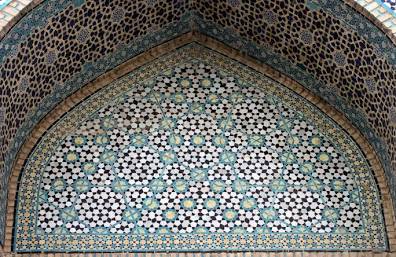
  • Intricate Tilework (Zellij/Azulejos): Hand-cut glazed tiles assembled into complex geometric mosaics, using cobalt blue, emerald green, yellow, and white.
  • Carved Stucco and Plaster (Yeseria): Lacelike, intricate carving on plaster walls, often featuring repetitive geometric or calligraphic patterns.
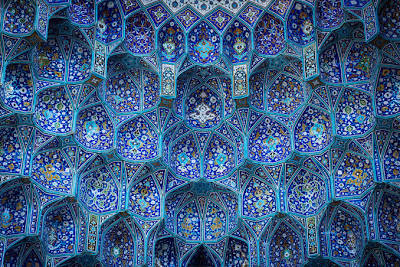
  • Muqarnas (Stalactite Carving): Three-dimensional honeycomb-like niches used to decorate domes, ceilings, and transitions between walls.
  • Arches: The iconic horseshoe arch, multifoil (polylobed) arch, and “lambrequin” arch (a complex pointed arch) are defining features, often arranged in alternating red-brick and light-stone patterns.
  • Calligraphy: The use of Kufic and Maghrebi Arabic scripts to create decorative, rhythmic epigraphs of Quranic verses or poetry on walls.
  • Arabesque and Vegetal Patterns: Stylized, repetitive plant forms (acanthus, palm leaves) that twist and interlace without showing human or animal figures.
  • Artesonado Ceilings: Elaborate, interlocking wooden ceilings that reflect geometric complexity. 

Key Influences and Legacy

  • Synthesis of Cultures: Moorish art synthesizes pre-Islamic Roman, Byzantine, and Visigothic techniques with Islamic artistic currents from the Middle East, forming a unique “Western Islamic” style.
  • Mudéjar Style: After the Christian Reconquista, Muslim craftsmen (Mudéjares) continued working for Christian patrons, blending Islamic decorative arts with Romanesque, Gothic, and Renaissance styles.
  • Moorish Revival (Neo-Moorish): In the 19th century, the style was revitalized in Europe and America, often used for synagogues, theaters (e.g., in London), and cultural buildings.
  • Gardens and Spacial Design: Introduction of the Riad (courtyard garden with a four-part division) and the focus on interior spaces over exteriors, as seen in the Alhambra, influenced Mediterranean landscape and interior design.
  • Ornamentation Manuals: 19th-century publications, such as Owen Jones’ The Grammar of Ornament (1856), used Moorish designs to influence commercial design, architecture, and interior design. 

Influences on Specific Regions

  • Spain & Portugal: The influence is deep-seated, evident in the Mezquita-Catedral in Córdoba, the Alhambra in Granada, and the Alcázar of Seville.
  • Latin America: Spanish explorers brought the Mudéjar style to the New World, visible in colonial churches with ornate wooden ceilings (armadura) and tilework, such as in Mexico and Bolivia.
  • North Africa: The Hispano-Maghrebi style continues to be perpetuated in modern Morocco, Algeria, and Tunisia. … 

Geometry in Islamic art is beautiful because it combines mathematical precision with profound spiritual symbolism, creating mesmerizing patterns that reflect divine order, unity, and infinity. Utilizing simple tools like a compass and straight edge, these designs derived from circles and polygons represent ‘Tawhid’ (the oneness of God) and aniconic beauty, The infinite repetition of patterns suggests the infinite nature of Allah, while the central point from which patterns radiate symbolizes the oneness of God. Patterns are based on strict, underlying grids, reflecting a harmonious and orderly creation. This symmetry is believed to purify the mind and soul. The circle, a foundational element with no beginning or end, represents unity and is used to generate intricate, interlocking polygonal designs. To avoid idol worship, Islamic art focuses on abstract, repeating geometric patterns (tessellation) rather than human or animal figures, turning architecture into a spiritual experience. Geometry is a universal language that, through symmetry, evokes a sense of joy and awe, creating a visual bridge between the earthly and the divine.

Visual literacy in Moorish art is the ability to interpret the complex visual language of Islamic art in Al-Andalus, focusing on geometry, calligraphy, and stylized nature (arabesque) rather than human figures. It involves “reading” intricate patterns, such as tessellated tiles (zellige) and plasterwork, to understand the mathematical, theological, and cultural context of the era. 

Key components of visual literacy in Moorish art include:

  • Aniconism: Understanding the intentional absence of human or animal forms in religious art to emphasize the oneness of God, a central tenet of the culture.
  • Geometric Precision: Recognizing that geometric patterns are not merely decorative but express the order, logic, and scientific (mathematical) knowledge of the Islamic world.
  • The Arabesque & Epigraphy: Interpreting the continuous, intertwining foliate designs (arabesque) and the extensive use of Arabic calligraphy (epigraphy), such as Kufic script, which often includes verses from the Quran or poetic phrases.
  • Contextual Symbolism: Understanding that the art often represents paradise, with frequent use of water scenes, gardens, and light to create a spiritual atmosphere.
  • Materiality: Engaging with the specialized techniques of stucco (plaster carving), wood carving, and ceramics. 

This skill set allows viewers to decode the artistic expression of 8th–15th century Muslim Spain, where artistic, social, and spiritual meanings are interwoven.’

‘Will the 25th Amendment be invoked or will Trump be impeached?’

For a robust analysis by Professor Pape of Chicago University (https://lnkd.in/ebxBtNhC), of the far reaching ‘geopolitical’ consequences of Trump’s ‘Genocidal Statement’ on Tuesday, see – https://lnkd.in/eP2quiYF.

Extract from the Transcript of the discussion with Professor Pape –

‘Trump [said] … tonight a great civilization is going to die.

That is going to leave a permanent or at least a very long-term mark on our geopolitics.

We need to understand that no president in the history of the United States has made a statement threatening to erase, destroy, kill an entire civilization.

Point number one, that is the evidence of genocidal intent that’s required in the Geneva Accords to convict for genocide.

We need to understand that the genocide accords that we have [are] about the intent to commit genocide.

Usually, that’s the hardest thing to find.

It’s not the killing of people, it’s the intent.

Well, President Trump, I don’t think there could be a clearer evidence of genocidal intent than you just saw.

Number two, President Trump is one of only a handful of people on the planet with enough nuclear weapons [to] be able to actually execute that threat. …

So I’m sorry to be so blunt but we need to really understand that what Donald Trump has done here is immoral.

It it is very likely I’m not a lawyer very likely to contradict the Geneva Accords.

But it’s also dangerous because now every American is marked here and this will be wherever we travel in the world.

This is not trivial. …

So this is really an enormously consequential move by President Trump and it will do no good that he will somehow maybe take it back or his supporters will say it’s just Trump being Trump. No, I’m sorry, not everybody who’s a drunk at a bar has their finger on thousands of nuclear weapons that can be delivered within a matter of an hour or less as I’m explaining in detail.

This is way too consequential and this will have tremendous ripple effects across the world.’ …

As a result of Trump’s ‘Genocidal Statement’:

1. Will the 25th Amendment be invoked or will Trump be impeached?

2. Which members of the US Congress are now likely to hitch their wagon to Trump in the run-up to the mid-term elections?, i.e. by endorsing or excusing Trump’s stated intention to commit a Genocide against over 94 million people.

3. Is Trump therefore already in effect, a lame duck President? – In other words has Trump already lost his Presidency?

4. Which allies of the US will risk, in the eye’s of the world, becoming tarnished by the same brush? – i.e. will America’s allies now diplomatically distance themselves as far as they can from Trump’s Administration?

If Trump is politically finished, then why would they support him?

So, geopolitically, the consequences of Trump’s words appear to be catastrophic for America’s place in the world order, i.e. for the ‘global balance of power’.

Please note that this post in written solely in my capacity as a graduate of one of the UK’s top schools of Political Science, and not in any professional capacity whatsoever, as either a legal practitioner of mediator. My views are of course entirely my own.

Comments added:

‘Israel has breached the ceasefire resulting in ships not passing through the Strait of Hormuz.’

AI -(08.04.2026 at 16:40 GMT) – ‘Israel’s Prime Minister Benjamin Netanyahu stated that while Israel supports the truce with Iran, the ceasefire does not include Lebanon. This distinction has led to continued combat operations in Lebanese territory, which Iran has warned could cause them to withdraw from the broader agreement.

Although the waterway is technically “open,” normal commercial navigation hasn’t fully resumed. Many major firms, such as Maersk, remain cautious due to requirements that all transit must be coordinated with the Iranian military.’

The total costs to US taxpayers of only 37 days of war is estimated to exceed $42 Billion – see my comment below.

As a percentage of the total US annual GDP this = approximately 0.137%.
So, at this rate, if the war continues for another 12 months this will amount to around 1.5% of total US annual GDP.

Based upon this empirical evidence, Trump is not making any money for the US, he is burning the total US GDP, on the bonfire of an illegal war of aggression.

AI – ‘Total U.S. health expenditure is consistently the highest in the world, with national health spending reaching roughly 18% of the U.S. Gross Domestic Product (GDP) as of 2024.’

1.5 as a fraction of 18 equates to around around 8% of total U.S. health expenditure.

That is what the money could be spent on funding instead of war.

So, why has no mainstream journalist explained these basic economic facts to the American people?

Meanwhile, Israel is carrying out the random mass murder of civilians across Lebanon, i.e. atrocities.


This is Ethnic Cleansing!

Comments added:

This is not a ‘real’ and ‘genuine’ ceasefire. The Strait of Hormuz has now been closed because of Israel’s breach of the ceasefire – AI (08.04.2026 at 17:05) –
‘Strait Closure: Iranian state-affiliated media (Fars News) reports that while two tankers were allowed to pass earlier today following the initial truce, all further tanker traffic has been halted in response to the escalation in Lebanon.
Ultimatum on “All Fronts”: Ibrahim Rezaei, spokesman for Iran’s National Security Committee, issued a stark warning: “Either there is a ceasefire on all fronts, or there is no ceasefire on any front”.
Potential Withdrawal from Truce: A security source told Tasnim News Agency that Iran is considering a formal withdrawal from the ceasefire agreement if Israel’s strikes on Lebanon persist.
Threats of Retaliation: Iranian officials have warned that their “hands are on the trigger” and that they are identifying Israeli military targets for a “punishment” strike in response to the ceasefire violations.’
The missile barrages are predicted to start again in two hours time.

https://www.middleeasteye.net/news/democratic-lawmakers-call-remove-trump-after-civilization-will-die-threat-iran

‘Legally Trump cannot be stopped but he can be impeached for high crimes and misdemeanors.’

Last night Trump stated an intention to commit ‘War Crimes’ which may also amount to ‘Crimes against Humanity’, on an unprecedented scale since World War 2.

Direct and public incitement to commit genocide is a specific crime under international law, punishable even if the genocide never occurs.

A leader or commander stating an intention to commit war crimes can be used as evidence of a ‘plan or policy’ to commit such crimes, which is a key element in prosecuting crimes against humanity.

Constitutionally, there is no direct, established emergency injunctive procedure in the US judicial system that allows a court to immediately declare that a President’s military orders constitute ‘war crimes’ or ‘crimes against humanity, and subsequently halt them.

While US law includes mechanisms for addressing potential crimes, the separation of powers and the doctrine of Presidential Immunity create severe hurdles for such a declaration.

Under the Supreme Court ruling in Trump v. United States (2024), sitting and former presidents enjoy absolute immunity from criminal prosecution for official acts, which broadly covers actions taken as commander-in-chief, such as ordering military strikes.

US courts typically view decisions regarding military deployment and foreign policy as ‘political questions’ meant for the legislative and executive branches, not the judiciary.

The president is considered the ‘sole organ’ of the nation in foreign affairs, giving them broad discretion over the armed forces.

While no simple injunction procedure exists, there are limited, unconventional legal and political channels that may be used:

(i) ‘The Uniform Code of Military Justice (UCMJ)’ – Members of the Armed Forces have a duty to disobey unlawful orders. If a military commander refuses an order, it could trigger a court-martial, where the legality of the order would be argued.

(ii) ‘Impeachment’ – Congress has the power to impeach a president for ‘high crimes and misdemeanors,’ which could include war crimes.

(iii) ‘War Powers Resolution of 1973’ – This act provides a legal framework for Congress to force the withdrawal of armed forces if military action is taken without congressional authorization.

(iv) ‘Civilian Lawsuits/Alien Tort Statute’ – In rare instances, individuals have attempted to file lawsuits for violations of international law, but these rarely succeed against the executive branch.

The US is not a party to the Rome Statute of the International Criminal Court (ICC), meaning the ICC cannot typically prosecute US leaders for actions within the US.

Furthermore, US law (the Hague Invasion Act of 2002) explicitly authorizes the President to use ‘all means necessary and appropriate’ to free any U.S. personnel detained by the ICC, further insulating the Executive from international war crimes charges.

Comments added:

  • The mainstream media do not appear to have grasped that today the world is on the edge of potentially the biggest crisis since the Cuban Missile Crisis. Everything in the news appears to be normal. It is not!
  • Legal experts and international bodies like the International Committee of the Red Cross (ICRC) have recently warned that mass threats against Iran’s infrastructure, such as those described as “bringing them back to the Stone Age”, would flout modern rules of warfare and constitute clear violations of international law. In 2024, the ICC issued arrest warrants for Russian officials for similar ‘widespread attacks on Ukraine’s power infrastructure,’ setting a recent legal precedent.
  • The Geneva Conventions and their Additional Protocols mandate that parties to a conflict distinguish between civilian objects and military objectives. Most bridges and power stations are primarily civilian. To be a lawful target, an object must make an ‘effective contribution to military action’ and its destruction must offer a ‘definite military advantage’. A blanket order to destroy all such facilities fails this case-by-case test. International law prohibits attacking objects ‘indispensable to the survival of the civilian population,’ such as electricity needed for water pumping, healthcare, and food storage. The Rome Statute of the International Criminal Court (ICC) defines ‘extensive destruction of property, not justified by military necessity and carried out unlawfully and wantonly’ as a war crime. If the destruction is part of a ‘widespread or systematic attack directed against any civilian population,’ it may qualify as a Crime Against Humanity under the Rome Statute. If the total destruction of infrastructure is calculated to bring about the physical destruction of part of the population (e.g., through starvation or lack of medical care), it could meet the threshold for extermination.
  • Tom Fletcher (Former UK Ambassador/UN Humanitarian Chief) warned that hitting civilian infrastructure like bridges and power plants constitutes ‘war crimes’ under international law, stating such targets are ‘not negotiable’.
  • Dame Emily Thornberry, chair of the UK Foreign Affairs Committee, also condemned the threats, stating that bombing such infrastructure would be ‘unlawful under the Geneva Convention’.

‘The Path of Dialogue.’

After I have completed the writing of my current book, which is about the ‘Mediation of Cultural Heritage Disputes’, I am planning to write one more book about Mediation entitled – ‘The Path of Dialogue.’

The current chapter structure is as follows:

1. Why we Fight.
2. The Price of Conflict v. Peace.
3. Benefits of Mediation.
4. Competing Narratives and Conflict Analysis – Who are the Parties and Stakeholders and What is at Stake?
5. Is Mediation possible and appropriate – Are the Parties and Stakeholders ready and willing to enter into a constructive dialogue?
6. Getting onto the Path – How does the Process of Mediation work in Multi-Dimensional International Disputes and Armed Conflicts?
7. Agendas, Building Trust and Negotiating in Good Faith.
8. Ethics and Ground Rules.
9. Planning and Preparation – What are the Dimensions of the Dispute.
10. Mediation Framework – What political architecture needs to be innovated, agreed and implemented, in order to end the dispute/conflict and bring about a lasting peace?
11. Joint-development of a Road-Map for Peace.
12. Mediator Tools.
13. Mediation Advocacy Tools.
14. Settlement and Treaties.

See the ‘Path of Dialogue’ page at www.carlislam.co.uk.

Meanwhile, wishing all readers of my posts on LinkedIn a Happy and Peaceful Easter.

I am working over Easter on my next book – the ‘Mediation of Cultural Heritage Disputes.’ These are International Disputes, see my Talk on YouTube:

https://lnkd.in/e-9KagXy

I am on track to complete the research reading I have been undertaking about Mediation in International Relations in six weeks time. I am currently reading the ‘Handbook Of Global And Multicultural Negotiation’ by Christopher W. Moore and Peter J. Woodrow.

After that stage of research has been completed, I will complete my reading of books and articles about Cultural Heritage. So, by mid-August I should be in a position to finalise the Chapter Structure and embark on putting pen to paper.

I estimate that writing process will take around three months. Meanwhile, to view the current Chapter Structure, please visit the ‘Mediation of Cultural Heritage Disputes’ page at www.carlislam.co.uk.

Comments added:

  • ‘Dialogue is an approach for discussing issues and interests that is used in a wide variety of cultures. Where debate is often focused on winning, constructing a stronger argument, or scoring intellectual points, dialogue is orientated toward exploration, striving to understand, and, in some cases, discovering a shared reality. Dialogue is useful for discussing issues, gaining a better mutual understanding of them, and developing solutions that meet the needs and interests of all parties. Dialogue also can be aimed simply at developing better understanding and improving relationships or actually solving problems.’ (The ‘Handbook Of Global And Multicultural Negotiation’, by Christopher W. Moore and Peter J. Woodrow, at page 253).

‘Can Humanitarian Mediation provide a Diplomatic Offramp in an armed conflict?’

Humanitarian Mediation provides a diplomatic offramp by using urgent, non-political concerns, such as the protection of civilians and delivery of aid, as a neutral starting point for dialogue when formal political channels have failed.

By focusing on ‘low-stakes’ humanitarian goals first, Mediators can build the minimal trust necessary to eventually transition toward broader peace

(i) ‘Confidence-Building Measures (CBMs)’ – Mediators facilitate small, tangible actions like prisoner swaps, humanitarian corridors, or temporary ceasefires for vaccinations. These acts ‘humanize’ the opposition and demonstrate that agreements can be reached and kept without either side losing face or territory.

(ii) ‘Neutral Communication Bridge’ – When direct contact is impossible, humanitarian actors such as the International Committee of the Red Cross, serve as a discreet, impartial link to convey messages. This allows parties to test compromise ideas away from public scrutiny.

(iii) ‘Decoupling Issues’ – It separates immediate survival needs from entrenched political or territorial demands. This ‘problem-solving’ approach allows leaders to de-escalate violence under the guise of ‘humanity’ rather than admitting military or political defeat.

(iv) ‘Legitimacy and Engagement’ – For non-state armed groups, engaging in humanitarian mediation can offer a sense of international legitimacy and a seat at a table, incentivizing them to move toward more formal diplomatic processes.

Humanitarian mediation often serves as Track II diplomacy, where informal talks between non-government experts or NGOs lay the groundwork for official Track I government negotiations. Organizations like the Centre for Humanitarian Dialogue explicitly use their humanitarian access to create space for broader political and security dialogue in hard-to-reach conflict zones.

While Humanitarian Mediation does not automatically end wars, it prevents total diplomatic stagnation and provides a ‘slip road’ off the path of escalation, allowing for the eventual reconstruction of the social fabric and durable peace.

‘US War Crimes in Iran.’


See:

‘Never assume that anything is as it appears!’


See – ‘Game Theory #18: Trump World Order’: https://lnkd.in/ezc73eZ7

Extract from my 2022 post – ‘Engineering Convergence through Mediation – Can we put the Genie back into the bottle?’

‘As a guest attending the King’s College London School of Security Studies Annual Conference on the 8th and 9th June 2022, I asked a question related to what was then my research interest in ‘Transforming Geo-Political Conflict Through Mediation’.

My Q.  ‘Is understanding what lies underneath competing narratives [‘N’] the key to Mediation of a peace process in a conflict?’

i.e. can analysis of ‘N’ reveal:

(i) the philosophy and political doctrine driving a conflict on each side; and

(ii) psychological biases which are road-blocks in geo-political mediation?

Answer: I drew the following conclusions from the comments made by the speakers in reply:

(i) Mediation is not possible where a participant [‘P’], i.e. ‘P.1’ requires the destruction of the other P – i.e. ‘P.2’, because the values and interests underlying ‘N’ collide [‘C’].

(ii) Mediation is possible where they potentially overlap and can cohere.

(iii) Where a P.1 is a nuclear power [‘PN’], the use of nuclear weapons is a very real potential outcome in C – one speaker thought this was almost an ‘inevitability’ (which is what Professor John Mearsheimer has been warning since 2014 and as recently as May 2022).

Therefore, before undertaking a step in Mediation each P needs to first see the world through the eyes of the other.

If P.1 views the world through a rose-tinted geo-political lens, it will be looking inwards and not outward, in which case the outcome is likely to be strategic miscalculation, i.e. if the result is a mischaracterization of N by P.1, because P.1 either:

(i) does not understand N; or

(ii) does not believe that N is real, actually exists in the psychology of P.2, and therefore is deeply embedded in P.2’s existential political Doctrine.

This incongruence dooms Mediation from the start, because P.1 cannot even see where the ‘rails’ of the underlying and causal political dispute actually are, let alone the direction in which the train is going.’

I never imagined that four years later the US [P.1] would launch an illegal war of aggression against Iran [P.2], which could result in the use of a nuclear weapon by Israel.

Based upon the above wisdom I received at King’s, I do not believe that this armed conflict is capable of Mediation.

On the contrary, I expect the conflict to escalate and spread.

Meanwhile, I invite Mediators on LinkedIn to think about:

(i) ‘N’;
(ii) who the architects of ‘N’ are;
(iii) the underlying ‘dynamic interests’ driving the conflict; and
(iv) who is geopolitically ‘pulling the strings’ of P.1 – because I do not think that Trump is intellectually capable of ‘8-dimensional chess’, let alone of ‘Grand Strategy.’

See also – https://lnkd.in/eser7K_7


See also – https://www.amazon.co.uk/dp/1917646267?ref=ppx_yo2ov_dt_b_fed_asin_title, – which is my Easter weekend reading!
I wonder if such a Political Thery could in relation ‘geopolitical convergence’, advocate universal principles of global ‘Fiduciary Governance’?, which could include preservation of Cultural Heritage and Monuments, and of course the Environment – which are linked.

Note that Cultural Heritage is entwined with UNESCO’s broader mandate concerning human rights, the rule of law, development, and peace.

Cultural identity is considered to part of human dignity. It is linked to human rights because cultural heritage is of crucial importance to individuals and communities as part of their identity.

As cultural heritage requires memory, this applies to both tangible and intangible heritage, because material and physical heritage needs to be placed in both a historical and cultural context, in order to understand its value.

The cultural heritage of a people is not limited to the tangible expressions of art, architecture, religion, poetry, or writing in general but also includes its intangible heritage, which is transmitted from generation to generation, is constantly recreated by communities and groups in response to their environment, their interaction with nature and their history, and provides them with a sense of identity and continuity.

More generally, cultural heritage includes the expressions of the people’s spirituality, and the body of values which give meaning to life.

See also:

Joe Kent: Iran War, Israeli Influence & Creating ISIS – YouTube

‘IDF tortures a baby!’

AI (01,04.2026) – ‘In March 2026, allegations emerged that Israeli Defense Forces (IDF) soldiers tortured an 18-month-old Palestinian baby, Jawad Abu Nassar, to coerce a confession from his father. …

According to family members, witnesses, and regional news outlets like TRT World and Al Jazeera, the incident occurred near the Al-Maghazi refugee camp in central Gaza: Separation and Detention: Jawad’s father, Osama Abu Nassar, was reportedly stopped at a checkpoint, stripped, and interrogated while his son was taken by soldiers.

Physical Abuse: Reports and a medical assessment shared by the family alleged the toddler suffered deliberate cigarette burns on his legs, pricking, and the insertion of a metal nail into his foot.

Release: The child was released after approximately 10 hours through the International Committee of the Red Cross (ICRC), while his father remained in detention.

The United Nations Special Rapporteur and organizations like CAIR have cited this and other reports as evidence of systematic abuse of Palestinian detainees.’

‘I told you once that I was searching for the nature of evil. I think I’ve come close to defining it: a lack of empathy. It’s the one characteristic that connects all the defendants. A genuine incapacity to feel with their fellow man. Evil, I think, is the absence of empathy.’ (Gustave Gilbert – who was, an American Army psychologist assigned to the Nuremberg trials. After closely observing and interviewing the Nazi defendants, he reflected on his search for the nature of evil).

See also:

  • ‘Aaron Maté : IDF Tortures a Baby’: https://lnkd.in/eN7mucyb
  • ‘2,000 British Soldiers Serving In Israel’s Army During Gaza GENOCIDE’: https://www.youtube.com/watch?v=MbN6X1JKRh4

    AI (01.04.2026) – ‘British journalist and commentator Owen Jones has heavily criticized the actions of British citizens serving in the Israel Defense Forces (IDF) during the conflict in Gaza, advocating for their prosecution for alleged war crimes.

    Jones has highlighted that British nationals serving in Israel’s armed forces are contributing to atrocities and has called for them to face legal scrutiny. He has stated that “soldiers who committed these war crimes, including Brits,” should be prosecuted, arguing that “following orders” is no excuse.

    The calls for prosecution of these individuals are part of a wider campaign by legal groups, such as the International Centre for Justice for Palestinians (ICJP) and the Public Interest Law Centre (PILC), which have prepared reports to be filed with police regarding British citizens’ involvement in IDF operations, alleging they participated in serious violations.’
  • ‘Brits Face Gaza WAR CRIME CHARGES’: https://www.youtube.com/watch?v=62do2P5mTBk
  • https://www.youtube.com/watch?v=F8LcRpbZ9qA
  • ‘Torture and genocide Report of the Special Rapporteur on the situation of human rights in the Palestinian territories occupied since 1967’, Francesca Albanese –

    ‘In the present report, the Special Rapporteur on the situation of human rights in the Palestinian territories occupied since 1967 examines the systematic use by Israel of torture against Palestinians from the occupied Palestinian territory since 7 October 2023, encompassing custodial and non-custodial practices that meet the threshold for genocide under the Convention on the Prevention and Punishment of the Crime of Genocide.

    She documents how torture has become integral to the domination of and punishment inflicted on men, women and children, both through custodial abuse and through a relentless campaign of forced displacement, mass killings, deprivation and the destruction of all means of life to inflict long-term collective pain and suffering.’
    https://www.ohchr.org/sites/default/files/documents/hrbodies/hrcouncil/sessions-regular/session61/advance-version/a-hrc-61-71-aev.pdf
  • https://www.democracynow.org/2026/3/24/headlines/un_special_rapporteur_says_israel_has_adopted_torture_as_state_policy
  • ‘How can any moral person justify or support this!’: https://lnkd.in/eQfD6cm5 – ‘I expect that the image of this depraved woman [who is the Deputy Speaker of the Knesset] holding up a ‘death noose’ and symbolic ‘lethal injection’, will become a defining image of the ‘Genocidal Intent’ of the people she represents. Is this the moral cause for which mothers and fathers in America are giving up their sons and daughter to fight, and to die for?’
  • AI (01.04.2026) – ‘Multiple investigations and reports have documented members of the Israel Defence Forces (IDF) posting photos and videos of themselves with detained Palestinians in humiliating or abusive circumstances on social media. …

    Specific documented instances include an officer posting a photo of himself standing over a handcuffed, undressed hostage, and soldiers filming themselves mocking or forcing detainees into “stress positions”. …

    Investigations by BBC Verify and The New York Times analyzed hundreds of such posts across platforms like TikTok, Instagram, and Facebook. These reports found that many soldiers did not hide their identities when uploading this content.

    Legal experts and human rights organizations, including Human Rights Watch and UN investigators, have stated that filming and publishing such images may constitute war crimes as they violate international laws protecting detainees from “public curiosity” and “humiliating and degrading treatment”. …

    Additionally, high-profile footage from the Sde Teiman detention facility—which reportedly showed soldiers sexually abusing a detainee—was leaked to Israeli media in 2024 rather than posted by the soldiers themselves.’
  • ‘Israel tortured 2 year old child, Gaza doctor testifies’: Israel tortured 2 year old child, Gaza doctor testifies

‘Israel’s parliament passed a sweeping death penalty law targeting Palestinians on Monday, triggering widespread international condemnation – as lawmakers celebrated with champagne inside the Knesset. The bill, approved by 62 of the Knesset’s 120 members with 48 opposed and one abstention, will instruct military courts to impose capital punishment on Palestinians convicted of killing Israelis in acts defined as “terrorism”. It takes effect within 30 days, and crucially, does not apply to Jewish Israelis convicted of the same crime. Far-right extremist National Security Minister Itamar Ben-Gvir, who had made the law a core condition of his party’s coalition agreement with Prime Minister Benjamin Netanyahu, appeared in the chamber wearing a lapel pin shaped like a metal noose before the vote.’

As far as I am aware Israel has become the first state in history to legislate for a death penalty that only applies to one ethnic group, which in the case of the Palestinians – are living under occupation by Israel in breach of International Law.