by Carl Islam, LLM (Exon)(International Business Legal Studies), Diploma in Art Law (Institute of Art & Law) (London), Barrister & CMC Registered Mediator – Contentious Probate & Cultural Heritage Disputes – 1 EC Barristers, Temple, London.
As Greg Williams states on p.111 of his excellent book – ‘A Practical Guide to TOLATA Claims’ (2019) – which I highly recommend to both solicitors and judges – ‘TOLATA is a developing area of law, and we may well be a few reported decisions away from certainty in all aspects of its intricacies.’
So, these cases are pregnant with litigation
risk. They are also highly fact sensitive and therefore case preparation is
expensive – e.g. as common intention may be ‘inferred’ from conduct – i.e.
facts proven by contemporaneous documentary evidence. Some judges decide on the
basis of ‘imputation’. However it is not entirely clear doctrinally – what the
distinction is.
In spite of the intellectual brilliance of Lady
Hale, Lord Walker and Sir John Murray Chadwick (retired) whose judgments I
greatly admire, there is nearly always an unquantifiable element of litigation
risk for all parties involved in this cases, as a procedural judge will
invariably point out at the first CMC.
Where for example the conveyancer did not
complete Box 10 in the TRI – which incidentally may amount to negligence – i.e.
where the conveyancer has not advised the parties to complete it or set out
clearly the potential effect of various options, then litigation risk is not
limited to the parties.
Context if everything in these case and each
case will turn on its own facts. At trial the primary search is for what the
parties actually intended to be deduced objectively from their words and
actions.
As Greg Williams states in his book – ‘It is
hard, indeed usually impossible, tp know what was in the other party’s mind.
The point of ascertaining the so-called common intention, however, is to find
the intention which was reasonably understood by the other party to be
manifested by that party’s words and conduct notwithstanding that he or he did
not consciously formulate that intention in their own mind. Thus it is not
necessarily essential to know what a person subjectively thought – their
outward actions can still bind them.’
For a comprehensive discussion of Mediation and
Mediation Advocacy in Trust and Estate disputes see my book the 2nd edition of
the ‘Contentious Trusts Handbook’, published by the Law Society in 2025. See
also my talk on YouTube – ‘Mediation Advocacy in Trust & Estate Disputes.’ There
is a link on the ‘How I can help’ page at www.carlislam.co.uk
AI – ‘11,700 to 40,000+ Years Old Hypothesis – Independent researcher Matthew LaCroix, who has participated in recent dive expeditions at Lake Van alongside filmmaker Tahsin Ceylan, has publicly argued that the deeper, megalithic components of the site are far older than traditionally accepted. [1, 2]
The Geological Argument: LaCroix bases his hypothesis on the area’s volcanic and geological history. He points out that Lake Van’s natural basin was sealed by lava flows from nearby Mount Nemrut, which caused water levels to rise dramatically. While mainstream geologists view the major lava blockages as occurring hundreds of thousands of years ago, alternative timelines cite shifts closer to 40,000 years ago. LaCroix argues that the stone monuments had to be constructed on dry land before the basin completely flooded, making them at least 11,700 and potentially up to 40,000 years old. [1, 2]
The “Lost Civilization” Claims: Proponents of this view point to advanced stonework, circular megalithic designs, and symbolic carvings (such as a motif resembling the “Flower of Life”) as evidence of a highly sophisticated, prehistoric culture that predates recorded history. [1, 2]
The Mainstream Archaeological Consensus (3,000 Years Old)Academic archaeologists and the original Turkish research teams view the site through a much more recent historical lens. [1, 2]
The Urartu Kingdom: Mainstream experts from institutions like Van Yüzüncü Yıl University attribute the primary stone structures to the Urartu Kingdom (the Kingdom of Van), an Iron Age civilization that flourished between the 9th and 6th centuries BCE (roughly 3,000 years ago). [1, 2]
Fluctuating Lake Levels: Archaeologists note that the water level of Lake Van has fluctuated drastically over the millennia. During the Urartian period, the lake was hundreds of meters lower than it is today, allowing for shore-side construction that was later swallowed by rising waters. Some structures also show signs of being repurposed during the Middle Ages. [1, 2]
Depth and “Deepest” Status
While the Lake Van ruins are highly notable and sit at depths ranging from 15 to over 23 meters (approx. 50–75+ feet) below the surface, labeling them definitively as the “deepest underwater monuments in the world” is a frequent talking point in alternative history circles rather than an established scientific record. Various other underwater ruins, such as structures off the coast of Alexandria, Egypt, or the controversial Yonaguni Monument in Japan, sit at comparable or greater depths. [1, 2, 3]
Because stone itself cannot be carbon-dated, researchers from both sides have noted that finding and dating organic materials trapped beneath or within the masonry will be required to conclusively resolve the age of the ruins. [1, 2]’
The ‘Flower of Life symbol’ is carved out out Basalt. Balsalt and andesite – see my previous blog – the ‘Sun Cross of Ayanis’, are nearly identical in hardness, generally sharing a rating of 5 to 6 (and sometimes up to 7) on the Mohs hardness scale. Because both are fine-grained volcanic rocks that cool rapidly on Earth’s surface, their internal mineral structure gives them highly overlapping physical properties.
Basalt and Andesite cannot be directly carved or cut using bronze tools alone, and while iron tools are harder, they still struggle significantly with these dense volcanic rocks. Both basalt and andesite are highly durable igneous rocks, with andesite ranking between 6 and 7.5 on the Mohs hardness scale, making them harder than bronze and typical historical iron. If a mason tries to strike basalt or andesite with a bronze chisel, the metal tool will simply blunt, deform, or shatter without leaving a significant mark.
AI – ‘To carve precise geometric symbols like the Flower of Life or a Sun Cross onto exceptionally hard igneous rocks like basalt or andesite today, modern stone masons and artists rely on high-hardness abrasive tools, mechanical guidance, and computer automation. Basalt and andesite score between 5 and 7 on the Mohs hardness scale, making traditional steel chisels ineffective because the rock will dull or break the metal.Here is exactly how these symbols are carved today, ranked from the most advanced industrial methods to manual studio techniques:1. Computer Numerical Control (CNC) Milling
The most precise method for complex geometry like the Flower of Life.
Because the Flower of Life requires perfectly interlocking circles, manual carving is prone to human error.
The Tool: A 3-axis or 5-axis CNC stone router equipped with sintered diamond burrs or diamond-tipped end mills.
The Process: The symbol is uploaded as a vector file (DXF/SVG) into CAM software. The stone is submerged in water or continuously doused to cool the diamond bit and suppress hazardous silica dust. The machine automatically executes perfectly uniform, multi-pass geometric grooves into the basalt.
2. Laser Engraving and EtchingBest for shallow, highly detailed, or dark basalt surfaces.
The Tool: High-power CO2 or Fiber laser engraving machines (typically 100W to 300W+ for stone).
The Process: The laser beam generates intense localized heat, causing the microscopic crystals in the basalt or andesite to fracture and melt (vitrify). On dark, polished basalt, this creates a high-contrast, frosted white line that perfectly captures the fine lines of the Flower of Life without physically touching the stone.
3. Pneumatic Carving with Tungsten CarbideThe modern upgrade to traditional hand-carving.
The Tool: A pneumatic air hammer (resembling a miniature jackhammer held like a pen) fitted with tungsten carbide-tipped chisels. Tungsten carbide is hard enough to easily fracture the feldspar and pyroxene minerals in andesite.
The Process: The artist glues a stencil of the Sun Cross or Flower of Life directly onto the stone. Using the pneumatic tool, they trace the lines, letting air pressure do the heavy lifting of spalling (chipping) away the stone.
4. Rotary Micro-Grading (Dremel / Die Grinder)The most accessible method for studio artists and hobbyists.
The Tool: A high-RPM rotary tool or die grinder paired with diamond-grit core bits or diamond cutting wheels.
The Process: A physical template or stencil (often made of thick plastic or metal to prevent slipping) is clamped to the stone. The artist uses a flexible shaft attachment to manually grind the grooves into the stone, using a constant drip of water to preserve the tool’s diamond coating.
AI – ‘The “Sun Cross of Ayanis” refers to an ancient carved relief discovered behind the altar of the Temple of Haldi in the Ayanis fortress near Lake Van, Turkey.
This specific archaeological artifact has gained significant traction in alternative history circles and “citizen archaeology,” most notably popularized by author and researcher Matthew LaCroix. [1, 2]
Discovery and Architectural ContextThe symbol is carved into a highly durable andesite stone block—measuring between 7 and 7.5 on the Mohs hardness scale—located directly behind the temple’s central altar.
Ayanis was one of the most vital fortresses built during the peak of the Urartu Kingdom (frequently referred to in these theories as the Ararat Civilization) during the 7th century BCE. [1]
What makes the carving a focal point of alternative engineering theories is its precision. The intricate, geometric design spans seamlessly across multiple fitted stone blocks, leading some researchers to claim that the ancient builders used advanced “laser-cut” masonry techniques. [1]
The “First Cross” Theory – Alternative historians hypothesize that the Ayanis Sun Cross might be the oldest known expression and true origin point of the cross symbol in human history.
The relief takes the form of an equilateral cross contained perfectly within a circle—a classic solar or wheel cross motif. [1, 2, 3, 4]
LaCroix and other researchers trace a historical “lineage” of this specific design, arguing that it was preserved through esoteric traditions across millennia: [1]
Urartu Origin: Originates as a sacred cosmic template in the Temple of Haldi at Ayanis. [1]
Mesopotamian & Egyptian Migration: Appears later on the chest relief of Assyrian King Shamshi-Adad V, and within the Temple of Isis on Philae Island, Egypt. [1]
Esoteric & Modern Survival: Eventually adopts a path into European history, appearing in Knights Templar iconography and surviving into modern Vatican heraldry and papal attire. [1, 2]
Academic vs. Alternative Views – While alternative researchers view the Ayanis relief as evidence of a lost, highly advanced ancient tradition connecting global civilizations, mainstream archaeologists classify the sun cross as a universal solar symbol.
Mainstream historical consensus generally holds that the cross-in-circle design emerged independently across many prehistoric Neolithic and Bronze Age cultures worldwide—from Scandinavia to the Mediterranean—initially representing chariot wheels, the changing seasons, and cosmic order. [1, 2, 3, 4, 5]
In the ancient Kingdom of Urartu (which was centered around Lake Van), the winged solar disc was the primary symbol of Shivini, the Urartian sun god. [1, 2, 3]
At Ayanis: Archeological excavations of the Ayanis fortress (a major Urartian site overlooking Lake Van) have unearthed small artifacts and clay objects linked to these religious motifs. For example, studies on Ayanis small finds note that specific winged iconography found at the site may be directly associated with the god Shivini and his winged solar disc symbol. [1, 2]
Anthropomorphic representation: Shivini himself is often depicted in anthropomorphic form—specifically as a man on his knees holding up the solar disc, or as a human-like figure with divine elements. [1, 2]
While the symbol appears across several prominent Urartian sites in the Lake Van basin (such as Toprakkale, Altintepe, and Karmir-Blur) on medallions, seals, and belts, its presence at Ayanis highlights how central the solar deity’s icon was to the royal fortresses built around the lake. [1, 2, 3, 4]. …
Solar iconography is explicitly tied to Ayanis and the Lake Van region, but with a vital historical caveat regarding the “face”. The site of Ayanis, located right on the shores of Lake Van in eastern Turkey, was a major 7th-century BCE fortress city of the Urartu civilization (the Kingdom of Van). [1, 2]When looking closely at what has been excavated at Ayanis and around Lake Van, the artifacts match the Near Eastern tradition perfectly rather than the later European one: [1, 2]
1. The Winged Solar Disc of ShiviniThe Urartians heavily worshipped a sun god named Shivini. In Urartian art discovered across Lake Van sites—including bronze helmets, plaques, and horse trappings—Shivini is depicted using Near Eastern conventions: [1, 2, 3]
The Anthropomorphic God: Rather than a flat, circular cartoonish “smiley face” filling a disk, the god Shivini is depicted as a full human figure or half-body torso emerging directly from or kneeling beneath a winged solar disc. [1, 2, 3]
The Face on the Helmet: On famous Urartian bronze helmets (such as those matching styles found at Ayanis and Toprakkale), you can see the distinctive winged disc with a detailed human bearded face/torso of the god in the dead centre. [1]
2. The Sun Cross of Ayanis – Ayanis is particularly famous for its incredibly precise stone carvings in the Temple of Haldi. Instead of a human face, archaeologists here found geometric cosmic symbols: [1]
Ayanis features highly stylized, deeply incised Sun Crosses and wheel-like solar motifs cut directly into hard black andesite stone.
These are abstract geometric symbols representing the sun’s rays and cosmic order, flanked by sacred trees of life, lions, and winged genii. [1, 2]
In antiquity, a human face inside a solar disc appears prominently in specific regions:
Mesoamerica (The Maya and Aztecs)
The Aztec Sun Stone: The most famous ancient example of a face in a solar disc is the Aztec Sun Stone, which features the detailed face of the sun god Tonatiuh (or Tlaltecuhtli) directly in the center of a massive circular solar disc.
Mayan Solar Glyphs: The Maya regularly depicted their sun deity, Kinich Ahau, with distinct facial features (large eyes, crossed eyes, and a prominent tooth) framed entirely inside a circular solar cartouche or glyph.
2. The Ancient Near East (Assyria and Persia)While the Egyptians used a purely geometric disc with rays ending in human hands for the god Aten, neighboring civilisations modified the winged sun disk: [1, 2]
Assyrian and Persian Reliefs: In ancient Mesopotamia and Persia, the solar disc was anthropomorphised by placing the torso and face of a god (such as Ashur, Shamash, or the Zoroastrian Faravahar) emerging directly from the middle of the winged disc. [1, 2]
3. Ancient India (Vedic Tradition)
The Solar Purusha: Ancient Sanskrit literature (such as the Upanishads and classical Kavya poetry) details a distinct theological concept of the solar disc containing a “golden Personality” or cosmic human consciousness (Purusha) dwelling right inside the sun’s centre. [1]
The sun cross (or wheel cross) is one of the most universally distributed symbols in human history, appearing across completely disconnected ancient civilizations thousands of years before the Urartu kingdom.
While alternative history narratives focus heavily on its specific path through Mesopotamia and Egypt, mainstream archaeology documents the equal-armed cross inside a circle as a fundamental cosmic marker worldwide.
Civilization / Culture
Timeline
Appearance & Archaeological Context
Neolithic & Bronze Age Europe
c. 3000 – 1000 BCE
Carved extensively into rock faces across Scandinavia (such as the Bohuslän petroglyphs) and the Southern Alps. It represented the sun chariot, the four seasons, and the solar calendar.
Ancient Mesopotamia
c. 2000 – 600 BCE
Featured as the primary symbol of Shamash, the Assyrian and Babylonian god of justice and the sun. It is famously worn as a massive amulet on the chest of King Shamshi-Adad V in his Neo-Assyrian stela.
Indus Valley Civilization
c. 2500 – 1900 BCE
Discovered on Harappan clay seals and pottery scripts. The equal-armed cross and early solar geometric designs were used as decorative or administrative markers.
Pre-Columbian Americas
c. 1000 BCE – 1500 CE
Found universally across Native American cultures. It is central to the Mississippian Ideological Interaction Sphere as the “Sacred Fire” or cosmic axis, and used by the Maya and Aztec to depict the four cardinal directions and the world tree.
Minoan & Mycenaean Greece
c. 1600 – 1100 BCE
Painted on Aegean pottery, gold discs, and administrative seals discovered in the palaces of Knossos and Mycenae, representing structural harmony or solar cycles.
Ancient Egypt
c. 1400 BCE
Integrated closely with the Aten (the sun disc) during the Amarna Period under Akhenaten, where the sun was depicted as a circle with radiating arms. It also correlates structurally with the Amdat cosmic wheel structures.
Why did it appear everywhere?Mainstream anthropologists explain this global phenomenon through convergent cultural evolution rather than a single, lost origin point. The symbol is an intuitive geometric abstraction:
The Solar Wheel: For societies that invented or used the wheel, the sun naturally looked like a blazing chariot wheel rolling across the sky.
The Four Directions: If you stand in an open landscape and mark the sunrise/sunset axes alongside the north/south poles, you naturally draw an equal-armed cross within the circle of the horizon.’
The appearance of a solar disc with a human face across numerous ancient civilizations is a classic example of anthropomorphism—the universal human tendency to attribute human traits, emotions, and intentions to non-human entities.Psychologists, anthropologists, and historians explain this widespread phenomenon through several core concepts:
1. Hyperactive Agency Detection Device (HADD)The human brain evolved as a survival mechanism to recognize patterns, particularly human faces and intent.
The Survival Trait: It was safer for an ancient human to mistake a rustling bush for a hidden predator (over-detecting agency) than to mistake a predator for a rustling bush.
Application to the Sun: Because the sun has a profound, active impact on daily life—bringing warmth, light, and growing crops—the primitive brain naturally concluded that the sun possessed a conscious mind, intent, and personality.
2. Pareidolia and Visual ProjectionThe human brain is hardwired from infancy to see faces in random or abstract geometric shapes.
The Perfect Canvas: The circular shape of the sun, often surrounded by radiating lines of light, naturally mimics the structure of a human head and hair.
The “Face” of Nature: Ancient peoples projected eyes, a nose, and a mouth onto this perfect circular canvas to make the blinding, abstract force of nature visually comprehensible.
3. Making the Unpredictable Predictable – In antiquity, natural disasters, droughts, and eclipses were terrifying because they were not scientifically understood.
A Relationship with Nature: By giving the sun a human face, ancient cultures transformed an indifferent cosmic object into an entity they could relate to.
Control via Ritual: If the sun has a human face, it has human emotions. This meant it could be pleased, angered, bargained with, or appeased through prayers, sacrifices, and rituals. It gave humans a perceived sense of control over their environment.
4. Language and Conceptual MetaphorBefore abstract scientific language existed, humans used the closest available analogy to describe power and life: themselves.
The Source of Life: Because kings and rulers governed human societies, it was a natural metaphorical leap to view the ruler of the sky as a supreme human-like monarch (e.g., Ra in Egypt, Helios in Greece, Inti in the Inca Empire.
Note also:
(i) The Aztec Sun Stone (Mexico City) – Housed in the National Anthropology Museum, this massive 24-ton basalt monolith features a dramatic human-like face at its exact center (often interpreted as the sun deity Tonatiuh or the earth deity Tlaltecuhtli). Because of its intricate geometric concentric rings and perfectly straight lines, some theorists often cite it when discussing ‘impossible’ ancient tools.
(ii) The Face of Userkaf (Cairo, Egypt) – Located in the Egyptian Museum, this 4,500-year-old head of Pharaoh Userkaf, who famously turned Egypt toward Sun worship, is carved from a block of green schist/diorite. Its flawless symmetry often sparks social media rumors about mechanical laser carving.
The stones used to carve both the Aztec Sun Stone and the notable Cairo sculptures of Pharaoh Userkaf are just as hard as (or slightly harder than) andesite.
Because rocks are mixtures of different minerals, their hardness is evaluated on the Mohs hardness scale based on their primary components. Andesite typically sits at a Mohs hardness of 6 to 7.Here is how the materials of these ancient masterpieces directly compare:
1. The Aztec Sun Stone (Olivine Basalt)
The Material: The Aztec Sun Stone was carved from a massive monolithic block of olivine volcanic basalt.
Hardness Comparison: Basalt is a mafic volcanic rock closely related to andesite (an intermediate volcanic rock). Basalt typically registers at 6 to 7 on the Mohs scale. The presence of olivine—a mineral with a rigid hardness of 6.5 to 7—ensures that the stone is directly comparable to, and frequently on the higher end of, the hardness range of andesite. [1, 2, 3, 4]
2. The Face of Userkaf (Greywacke / Schist & Red Granite)Pharaoh Userkaf (founder of Egypt’s 5th Dynasty) has two famous monumental heads housed in the Egyptian Museum in Cairo:
The Sun Temple Head (Greywacke/Schist): The exceptionally detailed, smooth face of Userkaf wearing the Red Crown was carved from a single block of greywacke (often historically referred to as green schist). Greywacke is a highly consolidated, quartz-rich sedimentary rock. Because it is bound tightly by silica, it is incredibly durable and ranks at roughly 6 to 7 on the Mohs scale, making it just as hard as andesite. [1, 2, 3]
The Mortuary Complex Head (Aswan Red Granite): A second colossal head of Userkaf found at Saqqara is carved from pink/red Aswan granite. Granite is dense and primarily composed of quartz and feldspar, consistently holding a Mohs hardness of 6 to 7. [1, 2, 3]
Quick Hardness Reference
Artifact / Rock
Primary Material
Estimated Mohs Hardness
Comparison to Andesite
Andesite (Baseline)
Intermediate Volcanic Rock
6.0 – 7.0
N/A
Aztec Sun Stone
Olivine Basalt
6.0 – 7.0
Equally hard
Face of Userkaf (Bust)
Greywacke / Schist
6.0 – 7.0
Equally hard
Face of Userkaf (Colossus)
Aswan Red Granite
6.0 – 7.0
Equally hard
All of these materials are tough, fine-grained, or highly crystalline rocks. Carving them with the copper, bronze, or stone tools available to ancient Egyptian and Aztec sculptors required immense skill, patience, and abrasive materials (like quartz sand).’
According to conventional wisdom, the appearance of a solar disc with a human face accross numerous ancient civilizations is a classic example of ‘anthropomorphism’, the universal human tendency to attribute human traits, emotions, and intentions to non-human entities.
There is of course another explanation!
AI – ‘The logical alternative explanation to psychological anthropomorphism is literalism, or the ancient astronaut hypothesis (and its historical variations), which posits that ancient civilizations were depicting actual, physical entities or advanced technology that they witnessed firsthand.
From a strictly logical and historical perspective, when multiple independent groups record a similar, highly specific phenomenon, the two primary competing hypotheses are:
The Phenomenological/Psychological Explanation (Anthropomorphism): The human brain uses familiar frameworks (the human face) to interpret and revere powerful, abstract natural forces (the sun).
The Empirical/Literal Explanation (Direct Observation): The depictions are not symbolic, but rather a universal attempt to document a real, objective external stimulus that appeared across the globe.
Under this alternative explanation, the “solar disc with a face” could represent:
Extraterrestrial Visitation: Physical craft or beings possessing metallic, reflective gear (helmets, visors, or circular shields) that ancient peoples could only conceptualise and describe using the vocabulary of their time—calling them “sun gods” traveling in celestial chariots.
A Lost Advanced Civilization: A highly advanced, prehistoric human civilization possessing technology that appeared divine or mechanical to less developed cultures.
Atmospheric or Celestial Anomalies: Highly unusual, cross-global atmospheric phenomena (such as severe solar halos, parhelia/sun dogs, or plasma discharges in the atmosphere) that naturally formed geometric or face-like structures in the sky, which were then meticulously recorded by scribes.
The search for a “lost advanced civilization”—frequently popularised in alternative history as a highly developed global society wiped out at the end of the last Ice Age—has produced a wealth of fascinating data, but no definitive, universally accepted archaeological proof of advanced technology. [1, 2]
However, there is significant, verified scientific evidence that has completely rewritten our timeline of prehistory, revealing that ancient humans were far more sophisticated, coordinated, and capable of monumental architecture much earlier than conventional history once assumed. [1, 2]The primary “corroborating evidence” used in these debates falls into three distinct categories: anomaly, catastrophe, and architecture.
1. Monumental Anomalies That Pushed Back HistoryThe strongest physical evidence for highly sophisticated ancient societies comes from real archaeological sites that have disrupted previous historical timelines:
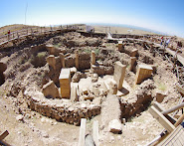
Closed · Haliliye/Şanlıurfa, TürkiyeCallDirectionsWebsiteDating to around 9,600 BCE (over 11,500 years old), this massive complex features precisely carved T-shaped limestone pillars weighing up to 20 tonnes. Its discovery completely shattered the old historical rule that monumental architecture could only be built after the invention of agriculture and permanent farming cities. It proves that hunter-gatherers were capable of massive, highly organized construction projects at the end of the Ice Age.
Closed · Cianjur Regency, West Java, IndonesiaCallDirectionsWebsiteA site of fierce academic debate, some geologists claim this stepped hill in Java is actually a giant, multi-layered pyramid dating back up to 25,000 years.
While alternative historians point to it as proof of a lost Ice Age empire, mainstream archaeologists heavily dispute this, stating the lower layers are likely natural volcanic formations modified by later humans around 6,000–7,000 years ago. [1, 2, 3, 4, 5, 6]
2. Evidence of Global Cataclysm: The Younger DryasProponents of a lost civilization frequently rely on a very real, documented geological event as the “eraser” of this ancient society: The Younger Dryas period (circa 12,900 to 11,700 years ago). [1, 2]
During this window, the earth experienced abrupt, violent cooling and a massive rise in sea levels. Mainstream scientists attribute this to collapsing ice sheets interrupting ocean currents, but a heavily debated alternative theory—the Younger Dryas Impact Hypothesis (YDIH)—argues that a fragmenting comet struck Earth. Researchers have found platinum anomalies, micro-spherules, and melt-glass spanning several continents that point to massive burning and sudden environmental upheaval during this exact window.
If an advanced maritime civilization existed along the ancient coastlines, a sudden 400-foot rise in sea levels would have swallowed their remains entirely. [1, 2, 3, 4, 5, 6]3.
Engineering Riddles – Alternative researchers point to several pre-dynastic engineering features that they argue are difficult to explain using the known tools of the period: [1]
The Serapeum of Saqqara (Egypt): Enormous, multi-tonne black diorite and granite boxes cut with incredible precision, displaying perfectly flat interior surfaces and 90-degree angles. [1]
Pre-Inca Megalithic Masonry: Sites like Sacsayhuamán and Ollantaytambo in Peru feature interlocking stone blocks weighing over 100 tonnes, fitted together so tightly without mortar that a piece of paper cannot slide between them.
The Mainstream Scientific Counter-ArgumentWhile the evidence above proves ancient humans possessed incredible ingenuity, organizations like the Scientific American note a glaring flaw in the “lost advanced civilization” hypothesis: a total absence of technological markers. [1]True scientific “corroboration” requires positive empirical proof. If a global, advanced civilization existed, modern science would expect to find:
Synthetic anomalies: Refined plastics, synthetic chemicals, or microscopic industrial pollution embedded in ancient ice cores or rock strata. [1]
Metallurgy & Mining: Evidence of deep-earth resource extraction or industrial-scale smelting factories.
Genetic/Agricultural Monoculture: Signs of domesticated crops or livestock being systematically transported across continents thousands of years before records begin.
Instead, sites like Göbekli Tepe show thousands of wild animal bones and stone tools—proving that while these ancient builders were staggeringly sophisticated architects, they were still operating within a Stone Age framework. …
The claim that a continuous, direct transmission of the “Sun Cross of Ayanis” was purposefully handed down through the Assyrians, Knights Templar, and the Vatican comes from alternative history and esoteric conspiracy theories rather than mainstream archaeology or historical scholarship. [1, 2]The Historical Realities of the Symbols
The Sun Cross (Solar Cross):
The sun cross (an equal-armed cross inside a circle) is a universal, ancient geometric motif found independently in many prehistoric and ancient cultures across Europe, the Near East, and Asia dating back to the Neolithic and Bronze Ages, where it often represented the sun, solar wheels, or cardinal directions.
It is a broad category of design rather than a single, exclusive trademark passed down by a secret lineage. [1, 2, 3]
Urartu / Ayanis:
Ayanis is an ancient Urartian fortress (not Assyrian) in modern-day Turkey, dating to the 7th century BCE. While Urartian and Anatolian art used various solar and geometric emblems, linking them directly to a specific “Sun Cross” lineage is a modern speculative narrative. [1]
The Assyrians:
Assyrian kings (such as Shamshi-Adad V) did wear or display cross-like emblems or four-pointed stars (often associated with solar deities like Shamash or the god Ninurta/winged sun disks). However, these were ancient Mesopotamian religious and royal insignia tied to their specific pantheons, not a direct descendant of an Urartian Ayanis cross meant for later medieval orders. [1, 2, 3]
The Knights Templar:
The Knights Templar used distinct heraldic crosses—most famously the cross pattée (flared arms)—which developed out of Christian heraldry, the Crusader tradition, and symbols like the Jerusalem cross, rather than an unbroken pagan Assyrian or Urartian sun-wheel heritage. [1, 2]
The Vatican and Christian Symbolism:
The Vatican and Catholic iconography use the Christian cross (cruciform) and liturgical items like the monstrance (which features sunburst rays around the Eucharistic host). Esoteric theorists often conflate the circular monstrance or ancient Egyptian obelisks in St. Peter’s Square with pagan sun worship, mainstream historians view these as standard Christian adaptations or classical Roman architecture rather than a hidden transmission of an Ayanis sun cross. [1, 2]’
Sections 4 and 5 of the Trusts of Land and Appointment of Trustees Act 1996 [‘TOLATA’] introduced ‘trusts of land ‘ in place of ‘trusts for sale.’
The old concept of a ‘trust for sale’ found in The Law of Property Act 1925 was repealed.
However, the term ‘Trust for sale’ continues to appear in wills executed after 1 January 1997.
In early 2020 I was even told by a judge that executors were under a duty i.e. ‘compulsion’, to sell estate land.
That is completely wrong!
See my article, ‘Electing between equitable remedies’ – published in ‘Trusts & Trustees’ (Oxford University Press) [full citation appears on the Publications page at www.carlislam.co.uk]. This is a leading, rigorous and peer reviewed Law Journal.
Brief extract:
‘[T]he author further submits that the following general principles of equity, trust law, and conveyancing practice, are relevant to the consideration of duties and powers:
i. an executor is not under a duty (i.e. any legal compulsion) to sell land, because s.2 of the Trusts Of Land And Appointment of Trustees Act 1996 [abolished the doctrine of conversion];
ii. executors are statutory trustees of land, s.1(i)(a) Trusts Of Land And Appointment of Trustees Act 1996; …
[iii] …
iv. the duties of executors, trustees, and trustees of land are the same in relation to land, see Byrnes v Kendle [2011] HCA 26, (2011) 243 CLR 253, at paragraphs 67 and 119, which was cited in Brudenell-Bruce v. Moore [2014] EWHC 3679 (Ch), by Mr Justice Newey at 88;
v. trustees must
manage trust property for the benefit of the beneficiaries, i.e. ‘they should
let or relet trust
realty . . . where that is the appropriate mode of making the property
beneficial to the trust’ [Lewin on Trusts], because ‘they are also under a duty
to seek a renewal of the lease if a renewal would be beneficial to the trust’
[Lewin], i.e. where
property is
retained because it would be imprudent to sell it because, ‘The overriding
obligation of trustees is ordinarily to preserve and safeguard the trust
property’ [Lewin];
vi. Trustees may
therefore be obliged to generate income from land comprised in the trust;
vii.
‘Trustees are bound to sell at the best price reasonably obtainable. . .’
[Snell’s’ Equity];
viii. trustees must
act prudently, because ‘. . . if they contract under circumstances of haste and
improvidence, they may be personally liable for the loss’ [Lewin]. They must be
careful not to sell under unnecessarily depreciatory conditions’ [Snell];
ix. in relation to
the exercise of their powers of investment, executors are trustees for the
purposes of the Trustee Act 2000 (i.e. because s.28 of the Trustee Act 2000 …’
So, any technical
ignorance amongst legal practitioners and judges about the introduction of
‘trusts of land’ in place of ‘trusts for sale’ is inexcusable, and at Trial,
logically may lead to an appeal.
An inadvertent consequences of the decision by the US and Israel to attack Iran is an unfolding environmental catastrophe in the Persian Gulf caused by oil spills.
So I asked AI – ‘What is the tipping point at which de-salination plants in the Gulf will cease to function because of polluted water?’
AI (27.10.2026) – ‘The Gulf is highly susceptible to catastrophic oil spills from geopolitical conflict.
The Failure Point: Desalination plants have a zero-tolerance threshold for raw hydrocarbons entering their intake streams.
The Consequence: Even trace amounts of oil will permanently ruin reverse osmosis membranes, requiring a total and incredibly costly overhaul of the filtration system. In thermal desalination plants (like Multi-Stage Flash distillation), oil can volatilize and carry over into the product water, poisoning the drinking supply. As observed historically during the 1991 Gulf War, major oil slicks force immediate, indefinite shutdowns of coastal water intakes to preserve the physical infrastructure from permanent destruction.
Rather than a slow, gradual decline, the tipping point behaves like a sudden operational cliff. If a major ecological or geopolitical event introduces a high concentration of oil or toxic algae to a plant’s specific coastal intake zone, water production stops instantly. Because smaller Gulf states like Kuwait, Qatar, and Bahrain rely on desalination for 86% to 100% of their drinking water and have strategic water reserves lasting only a few days, crossing these pollution thresholds triggers an immediate humanitarian and economic crisis. …
The Gulf is currently facing its most critical proximity to this tipping point since the 1991 Gulf War, actively teetering on the edge of localized infrastructure failures. Due to the ongoing shipping strikes connected to the war with Iran, a massive 160-square-kilometre oil slick is widening just off the coast of the United Arab Emirates. It has already forced beach closures in Umm Al Quwain and Sharjah, and maritime analysts confirm the oil is spreading directly toward key desalination intake zones.’
The ‘Paradox of Oil’ is – No functioning de-salination plants = no oil production i.e. because it is not possible to live in the region without clean water. So, how will it be possible to operate, maintain and repair the entire oil infrastructure of the Gulf – including transportation by land i.e. through pipelines and sea- i.e. by tankers?
If after the US Mid-Terms a further attack in made on Iran then this unfolding environmental crisis can only get worse.
That in itself is a risk for insurers of oil infrastructure (including above ground pipelines) and ships.
So, is it also possible that a spike in insurance premiums could paralyse oil production and transportation, resulting in an increase in the price of oil and gas?
If Saudi Arabia decides that it must bring the conflict in Yemen – which has spread to Saudi Arabia to an end, and if the terms of settlement require the closure of all western military bases in the Gulf (including Jordan), and the removal of all western military personnel and advisors, then if Iran supports this, and in coalition with Turkey and Pakistan persuades the House of Saud to implement this strategy, then that conflict will end. This in the immediate term may preserve the House of Saud but will result in a strategic shift in alliance to BRICS. So, I can’t see that happening – because the US and Britain would be kicked out of the entire region – which logically would be the end of e.g. BAE’s business in Saudi Arabia, and possibly the entire region? In which event, if thousands of jobs were lost as a consequence, then politicians who failed to prevent this, are likely to pay a high price at the polls in future elections.
If further war
results in the environmental ‘tipping point’ explained above, then how will
western forces and contractors operate without clean water in the region?
If Saudi Arabia decides to continue the fight – which I predict it will, and
this possibly results in the collapse of the House of Saud as a consequence of
their military failure, then a new political order may arise which is
antithetic to the West.
‘Dominos’ – If Saudi Arabia falls, then what is the likelihood that Bahrain,
UAE, Kuwait, Qatar and Jordan will follow?
In which event a new political order will result in the entire region.
If that happens, who will pay for re-construction?
Let’s assume that China and Russia do this.
If reconstruction is tied to arms contracts e.g. for jets and training – then
logically where will that leave e.g. BAE’s entire business in the Gulf?
If oil production and transportation are effectively shut down because of the
unfolding environmental catastrophe what will the consequences be for the world
economy?
So, how can a ‘multi-polar’ balance be struck which avoids these consequences,
or because of decisions which have already been made is it too late to stop the
march toward all out war in the Gulf, i.e. the ‘March of Folly!’
Let’s assume that
war in the Gulf escalates and that in addition to the unfolding environmental
catastrophe nuclear weapons are used by Israel or the US – or both, i.e. in a
final throw of the ‘hegemonic dice.’
Then not only will the Gulf and world economy be in a crisis from which it may
not fully recover for decades i.e. generations of future young people, but the
world may find itself at war again – which would result in rationing and the
conscription of generations of youth throughout the west. Millions may die
elsewhere in the world if there is drought / fertiliser shortage i.e. because
of the impact of the war on the supply of LNG coming out of the Gulf.
When I think this all through to a logical conclusion it becomes obvious to me
that a solution to the entire problem in the short-term, is to end all of these
conflicts and to collaborate in preventing existential environmental damage.
However, I have not yet heard a single politician or leader in the West
advocate this. It appears to me that most of them are in favour of escalation.
If that observation is robust – then why do they favour escalation over
diplomacy resulting in collaboration?
What do you think about how environmental catastrophe can be avoided?
This post is written in my capacity as a graduate of what in its day was a top 5 UK School of Political Science. It is not written in any capacity as a Barrister or Mediator. All views are entirely my own.
Comments added:
AI (28.10.2026) – ‘’If the Knesset fails to approve a new government, parliament automatically dissolves, and a new snap election must be scheduled, usually within 90 to 150 days.
Diminished Powers: Caretaker governments operate under strict judicial scrutiny. They are legally barred from passing sweeping non-urgent legislation, appointing major permanent civil servants, or enacting structural budgetary reforms without exceptional clearance. …
While the interim government cannot become legally indefinite, it can become perpetual in practice if the country becomes trapped in an unresolved electoral loop. Initial numbers from the 2026 vote show the blocs deeply fractured (with Netanyahu’s camp hovering around 54–55 seats and Eisenkot’s alliance around 48–50). Because both leaders have structural limitations—such as Eisenkot ruling out a coalition with Arab lawmakers and Netanyahu being restricted by his right-wing allies—breaking a subsequent deadlock in a second or third snap election is statistically difficult. …
As the leader of an interim or caretaker government, Netanyahu legally retains the authority to order the IDF to attack Iran, provided the decision is formally approved through the required cabinet and security channels.’
AI (28.10.2026) – ‘To establish the baseline legal framework for national security measures during a conflict, a state of emergency must be formally declared or extended.
Knesset Declaration: Under Article 38 of Basic Law: The Government, the Knesset holds the primary authority to declare a state of emergency. This declaration can last for up to one year and is subject to renewal.
Government/Cabinet Declaration: If the Knesset cannot be convened quickly and the situation is urgent, the Government (the Cabinet) can declare a state of emergency on its own. However, this executive declaration is only valid for seven days unless it is explicitly approved or revoked by the Knesset in the meantime.’
AI – ‘In antiquity, Tanis served as the powerful political capital, commercial heart, and principal burial site of Egypt’s Third Intermediate Period (c. 1069–664 BC). Known in ancient Egyptian as Djanet, it rose to prominence following the economic and environmental decline of nearby cities, eventually becoming a grand stronghold that rivalled the sacred city of Thebes. The biblical narrative of infant Moses being placed in a papyrus basket along the Nile (Exodus 2:3–5) is often tied to Tanis, which is equated with the ancient city of Zoan.
The
primary factors behind the immense significance of Tanis include its strategic
role in trade, politics, and religion:
The
Northern Counterpart to Thebes
When the
21st Dynasty took power, Egypt fractured politically. While the powerful High
Priests of Amun controlled Upper Egypt from Thebes in the south, the pharaohs
established Tanis as the royal capital of Lower Egypt in the north. To
legitimize their rule, the Tanite kings intentionally built the city as a
“Thebes of the North.” They constructed a massive temple complex
dedicated to the god Amun, mimicking the legendary Karnak Temple, and
successfully shifted the empire’s geopolitical focus to the Nile Delta.
A
Commercial Powerhouse and Gateway
Situated
on a major branch of the Nile, Tanis became a booming international commercial
port.
Trade Route Monopoly: Its
position allowed it to strictly monitor and control naval shipping routes
passing through the Mediterranean Sea.
Wealth Accumulation: The
city acted as a vital trading gateway connecting Egypt with the Levant,
Greece, and the broader Near East, generating immense wealth through
taxes, imported timber, precious metals, and luxurious goods.
The
Valley of the Kings of the Delta
Unlike
the New Kingdom pharaohs who hid their tombs in the remote valleys of Luxor,
the kings of the 21st and 22nd Dynasties built their royal necropolis
directly inside the sacred temple precinct at Tanis.
Because
these tombs were integrated into the city’s heavily fortified temple complex,
they survived completely intact until their excavation in 1939. This makes
Tanis one of the most archaeologically significant burial sites ever
discovered, yielding breathtaking silver coffins, solid gold burial masks, and
royal jewelry belonging to “The Silver Pharaohs” like Psusennes I.
An
Architectural Recycling Center
Tanis
holds vast significance for its unique architecture. When the nearby capital of
Pi-Ramesses dried up due to the shifting of the Nile’s waters, the Tanite
pharaohs physically hauled millions of tonnes of stone to build their new
capital. They completely recycled the older monuments, resulting in a city
built almost entirely from the massive obelisks, towering colossi, and engraved
blocks of Ramesses II.
Summary
of Tanis’s Historical Identity
Attribute
Significance in Antiquity
Primary
Status
Political
capital of Egypt’s 21st and 22nd Dynasties.
Religious
Role
Spiritual
center of Lower Egypt, serving as the “Northern Thebes”.
Economic
Impact
Major
maritime trade hub controlling access between the Mediterranean and the Nile.
Archaeological
Legacy
Site of
the intact Royal Necropolis containing the treasures of the Silver Pharaohs.
[Rich
media excluded from paste]
Approximately
90% of the ancient Egyptian city of Tanis remains unexcavated. [1]
Despite
major historical breakthroughs at the site—such as Pierre Montet’s 1939
discovery of intact royal tombs containing gold masks and silver coffins—the
vast majority of the city still sits buried in the Nile Delta. Progress on
further uncovering Tanis faces ongoing challenges, particularly due to a rising
water table that threatens the unexcavated ruins. [1, 2]
This high
percentage of hidden history mirrors a broader trend across the country, as
experts estimate that roughly 70% of ancient Egypt as a whole remains
underground and unexplored.
The ruins
of Tanis (modern-day San El-Hagar) are scattered
with the shattered remains of some of the largest single-piece stone
monoliths ever sculpted by human hands. [1]
While the
city’s overall excavation is only about 10% complete, the uncovered temple
areas contain a surreal graveyard of megalithic proportions. Among these ruins,
the most significant colossal remains belong to a group of monstrously large
red granite figures depicting Pharaoh Ramesses II. [1]
The Scale
of the Tanis Monoliths
The Giant Colossi:
Archaeologists at Tanis have identified the fragmented remains of four
separate monolithic granite statues of Ramesses II. [1]
The Record Breakers: The
largest of these figures are calculated to have originally stood between 21
and 28 metres (69 to 92 feet) tall. [1]
The Staggering Weight: Carved
out of single, continuous blocks of pink and red granite quarried in Aswan
(nearly 1,000 kilometres to the south), these statues are estimated to
have weighed roughly 1,000 tonnes. [1, 2]
To put
that into perspective, these single stone sculptures were heavier than a fully
loaded commercial Boeing 747 airliner.
Why Are
They in Pieces?
When
later dynasties moved Egypt’s capital city to Tanis around 1060 BC, they lacked
the resources to transport brand new 1,000-tonne monoliths. Instead, they
targeted the abandoned capital city of Pi-Ramesses nearby. Unable to safely
move the towering statues intact, engineers dismantled, dragged, or
deliberately broke them down to repurpose the precious granite for the new
temple gates, columns, and walls of Tanis. [1, 2, 3, 4]
Today,
visitors to the open-air site can walk directly among massive, isolated stone
feet, giant ears, and portions of royal torsos half-buried in the Delta mud. [1, 2]
The
“destruction” and disappearance of Tanis was a slow process caused primarily by
environmental shifts, economic decline, and natural disasters. Over centuries,
these factors transformed a booming, wealthy capital into a collection of
shattered ruins buried beneath the mud of the Nile Delta. [1, 2]
The fall
of Tanis was driven by a combination of factors:
1. The
Shifting Nile (The Fatal Blow)
Tanis
thrived because it sat directly on the Tanitic branch of the Nile River,
providing direct maritime trade access to the Mediterranean. However, delta
rivers naturally change over time. Over centuries, the Tanitic arm began to
silt up and eventually dried up entirely. [1, 2, 3]
Loss of Water & Commerce: Without
a flowing river, the city lost its primary water source, and its bustling
international harbour became completely unusable.
Agricultural Failure: The
shifting of the coastline and changes in the delta layout caused severe
soil salinization. The surrounding farmland, which fed the city, turned
into barren salt plains. [1]
2.
Seismic Cataclysms
The
violent, shattered state of Tanis’s monuments—where 1,000-tonne statues and
massive stone walls lie snapped and overturned—points heavily to intense
geological activity. The Nile Delta is historically prone to earthquakes. Repeated
major earthquakes violently brought down the city’s heavy stone architecture
over the centuries. Some researchers even connect the toppling of its grandest
monuments to the legendary Crete earthquake of AD 365, which sent a devastating
tsunami tearing through the Nile Delta. [1, 2, 3]
3.
Economic and Political Eclipse
Tanis’s
importance plummeted when it lost its monopoly on trade. The rise of Alexandria
during the Ptolemaic period shifted Egypt’s economic and political gravity
completely to the west. Unable to compete with Alexandria’s grand Mediterranean
port, Tanis was downgraded from a glorious royal capital to a regional
provincial town, starving it of the wealth needed to maintain its grand
structures. [1, 2]
4. The
Delta Swallows the Ruins
By the
end of the Byzantine era (around the 6th or 7th century AD), the remnants of
the populace had completely abandoned the site. Once human maintenance stopped,
the Nile’s seasonal floods and accumulating silt completely took over. The soft
delta mud and windblown desert sands slowly buried the collapsed stone temples,
forming an artificial mound (a tell) that swallowed the ancient city
until its modern rediscovery. [1, 2]
Summary
of Tanis’s Decline
Factor
Specific Cause
Ultimate Impact on the City
Environmental
Silting
and drying up of the Nile’s Tanitic branch.
Destroyed
the harbor, choked off trade, and ruined drinking water.
Agricultural
Soil
salinization from Delta shifts.
Rendered
surrounding farmlands barren and unable to sustain life.
Geological
Massive
regional earthquakes (e.g., AD 365 event).
Physically
shattered and collapsed the city’s megalithic stone monuments.
Geopolitical
The
founding and rise of Ptolemaic Alexandria.
Stripped
Tanis of its trade dominance and economic wealth.
Post-Abandonment
Centuries
of Nile floods, silt accumulation, and sandstorms.
Entirely
buried the ruins, erasing the city from map views for a millennium.
At the ancient site of Tanis in the Nile Delta, the royal necropolis, including the Tomb of King Osorkon II (specifically its northern chamber), and an uninscribed 40-ton solid granite sarcophagus (attributed to King Shoshenq III) are buried under or enshrouded in thick layers of Nile silt and waterlogged soil. [1, 2, 3]Key structures and discoveries embedded in the silt at Tanis include:
The Tomb of King Osorkon II: The northern chamber contained 225 royal ushabti figurines buried directly in compact silt layers near a stone coffin. [1, 2, 3]
The Uninscribed Granite Sarcophagus: Believed to house King Shoshenq III, this heavy granite vault sits submerged in the waterlogged mud and silt of the delta. [1, 2, 3]
The Royal Necropolis and Temples of Tanis: Much of the ancient city and its temple enclosures—frequently incorporating relocated and recycled structures like statues of Ramesses II—spent centuries buried beneath rising Nile floodwaters and silt deposits. [1, 2]
Beyond the monuments already found, an immense portion of Tanis remains completely buried under the delta’s silt and mud. While ground-level excavations have only uncovered a small fraction of the city, infrared satellite imagery and geophysical surveys have mapped out exactly what else is suspected to be hiding beneath the surface. [1, 2]Archaeologists suspect that the following structures are still trapped beneath the silt:1. Thousands of Mud-Brick Homes and NeighborhoodsSpace archaeology breakthroughs, popularized by Dr Sarah Parcak, revealed a massive, highly dense street plan that is completely invisible from the surface. Over 3,000 ancient settlements and residential houses are suspected to be mapped out in a sprawling urban matrix underneath the silted-over plain. [1, 2, 3, 4]2. Over 1,000 Unexcavated TombsWhile the wealthy elite and pharaohs (like Psusennes I and Osorkon II) were buried safely within the sacred temple walls, the broader necropolis remains buried. Satellites have registered the thermal footprints of over 1,000 hidden elite and commoner tombs flanking the city, waiting to be cleared of mud. [1, 2, 3, 4]3. Missing Palaces and Administrative QuartersAs a grand royal seat during the 21st and 22nd Dynasties, Tanis hosted pharaohs who lived in unparalleled luxury. The elite administrative quarters, grand palaces, military barracks, and artisan workshops that supported the royal court are currently silted over and unexcavated. [1, 2]4. Extensions of the Grand Temples and Sacred LakesTanis was intentionally constructed to be the “Thebes of the North,” replicating the massive temple layouts of Luxor. Because of this, archaeologists suspect there are further auxiliary shrines, priestly compounds, and potentially more sacred lakes (similar to the Lake of Mut discovered beneath the mud in 2009) still hidden within the vast 400-by-300-meter temple enclosure. [1, 2, 3]5. Lost Industrial Harbor and Trade CanalsBefore the Nile’s branches shifted and dried up, Tanis was a thriving maritime trade hub connected to the Mediterranean and the Levant. The ancient city’s harbor walls, docks, and complex canal network are entirely swallowed by centuries of agricultural silt and shifting Delta mud. [1, 2]’
If I was asked this as a hypothetical question, while being interviewed for the company – as I was back in the late 1980’s at their London Headquarters for a position in their Legal department, then having at that time recently passed the Law Society Finals exam in Accounts, I could have explained that:
(i) Because no physical or material loss has occurred yet, the risk remains classified under ‘General Business and Geopolitical Risk’ within the ‘Strategic Report’ of the BAE Systems Annual Report – i.e. It does not sit as a ‘numerical liability’.
(ii) BAE Systems maintains a standard disclosure note for ‘Contingent Liabilities’ covering contract performance guarantees, litigation, and unquantifiable warranty or insurance disputes. So, if a loss occurred and insurers denied coverage under a force majeure dispute, it would typically be disclosed as an unquantified contingent liability until the dispute was legally resolved or settled.
Thus, if Iran cuts undersea data cables and BAE suffers downstream financial losses (i.e. communications blackouts disrupting localised operations, or supply chain bottlenecks), the financial treatment will depend upon ‘contractual terms’ rather than a pre-existing ‘balance sheet pocket’.
Business interruption (‘BI’) programs generally require direct physical loss or damage to the insured’s own property to trigger coverage. If a third-party undersea cable is cut, it often creates a ‘pure delay’ or ‘denial of access’ gap. Standard commercial insurance policies explicitly exclude acts of war or hostile actions by sovereign states (like Iran). For coverage to exist at all, defence contractors rely on highly specialized Political Risk Insurance (‘PRI’) or specific Marine/Aviation War Risk extensions.
Rather than absorbing the loss onto the balance sheet immediately, defence firms rely on the underlying government or commercial contracts. If an event is determined not to be a contractually defined ‘force majeure’, the loss and expense are strictly allocated between the parties based on who assumed the operational risk.
BAE Systems’ balance sheet resilience against unexpected operational shocks or insurance gaps is underwritten by its massive liquidity and capital allocation strategy, which as of its latest reporting includes:
– An Order Backlog of £83.6 billion. – A healthy Free Cash Flow of over £2.1 billion, providing significant working capital to absorb sudden operational disruptions.
So, what impact would such a loss have on the share price and investment? – See my comments below – because there is a Trap!
Such an unrecovered
operational loss is likely to lead to a decrease in the company’s share price
due to reduced earnings expectations and an increased risk premium.
An unrecovered operational or asset loss directly reduces net income.
Because equity markets value a company based on the present value of its future
cash flows, a sudden drop in earnings causes a corresponding downward
adjustment in the stock price.
If the market perceives that BAE Systems has exposed, uninsurable
vulnerabilities in critical infrastructure (like Middle Eastern communications
networks), investors will demand a higher rate of return to hold the stock.
This increases the company’s cost of capital and compresses its valuation
multiple.
To a switched-on General Counsel that propsect should scare the living
daylights out of them because it could potentially be existential to the
survival of their company.
While losing its entire business in the the Gulf would be a severe operational
black eye that would wipe billions off BAE’s market capitalization and require
years of restructuring, because 91% of its business is anchored outside of
Saudi Arabia and the Gulf, BAE Systems would remain structurally sound and
highly profitable. But there is a trap …
The ‘Trap’ – How can the UK exert any geopolitical influence in the Gulf without BAE?
‘Knocking out BAE in the Gulf’ – While you do not thereby knock out the company – you do knock out the UK as a geopolitical player in the Gulf.
That is becuase BAE Systems operates less as a typical commercial enterprise and more as an institutional arm of the UK state.
So, knocking out BAE’s commercial presence in the Middle East would effectively sever the primary artery of British geopolitical influence in the Gulf.
For decades, the UK’s status as a heavyweight player in the Gulf Cooperation Council (GCC) has not been sustained by massive troop deployments, but by defence dependencies. BAE Systems is the vehicle through which these critical relationships are built, maintained, and leveraged.
I wonder if Burnham and his Ministers have fully grasped this?
If they have – then what can they do to safeguard UK geopolitical power in the Gulf by persuading the US and Israel not to attack Iran?
Because if that happens – the UK will be cut off at the knees in the Gulf.
In which case will the consequential capital flight go to the UK or to the East?
In other words – this is bigger than BAE!
I assume that Bankers in the City of London have already figured this all out and are not concerned about the potential loss by BAE Systems of its entire business in the Gulf – even though this would leave Saudi Arabia, Jordan and the Gulf States vulnerable to invasion/civil insurrection – potentially resulting in a new geopolitical order?
Anecdotally – BAE did not make me an offer I could not refuse – in spite of the sight that greeted me at the top of the excalator to their reception. I would encounter this sight again – 6 years later in the offices of a Foreign Government’s Nuclear Energy Headquarters, where the guards in reception were armed with machine guns.
I had been invited to explain to their Head of Legal why a contractual exclusion clause did not exclude consequential loss in the event of a nuclear accident caused by a defect in design, materials or manufacture.
They had paid a top law firm to draft what they thought was an infallible exclusion clause, and struggled to understand how a top law firm could have missed the gaping hole that I pointed out.
In the same year I was interviewed by BAE Systems, I found myself in a conference room in a hotel in Seoul, South Korea – negotiating a multi-million pound power station contract. During the conference the alarm rang for a routine military curfew in the city. This provided me with an exceptional and perhaps unique opportunity to explain to my gracious hosts why my company needed a Force Majeure clause in the contract. Not least because certain losses would not be covered by our insurers, which could potentially put the company out of business. So, when I look today at what appears to be imminent in the Gulf – I am left wondering if our political leaders have fully grasped the potentially catastrophic contractual consequences for major UK companies of the incurrence of uninsured losses as a result of a US/Israeli attack on Iran? In other words – have they thought this all through rigorously?
I assume that the lights will be burning bright this weekend in the headquarters of BAE Systems in London.
AI (24.10.2026) –
‘The hypothetical loss of BAE Systems’ entire business in the Persian Gulf would have a devastating, multi-billion-pound ripple effect on thousands of UK jobs, particularly within the domestic aerospace manufacturing and engineering sectors.
The most immediate and severe impact would hit manufacturing plants across Northern England and Scotland.
The Typhoon fighter jet programme heavily relies on Gulf export contracts (such as Qatar’s major £5 billion order and recurring procurement interest from Saudi Arabia). BAE Systems explicitly states that these multi-billion-pound international agreements sustain and protect roughly 20,000 UK jobs. A complete loss of the Gulf market would immediately halt production lines.
Repatriation – Thousands of UK-based BAE Systems contractors, specialized technicians, and support personnel live and work in the Middle East to manage aircraft fleets, supply chains, and training schools.
Defence manufacturing has a high employment multiplier effect. For every single job directly at BAE Systems, multiple secondary roles are supported across the broader UK economy.’
AI – ‘Globally in the classical architecture of antiquity, the moon gate (yue men) originated in ancient China—specifically flourishing during the Tang and Song dynasties—as a profound spiritual, philosophical, and energetic portal rather than a mere decorative pathway. [1]As it integrated into classical gardens and homes, its architecture carried several layers of cosmic and spiritual significance:
1. Universal Wholeness and the Cosmic CycleIn traditional Chinese culture, the circle represents perfection, completion, unity, and harmony. Because the archway physically mimics the shape of the full moon rising from the earth, it visually manifests the concepts of birth, renewal, and the cyclical nature of life. Passing through the gate was considered a ritualistic act of stepping into a state of spiritual renewal and shedding the non-linear transformations of life. [1, 2, 3, 4, 5]
2. Balancing Heaven (Yin) and Earth (Yang)
The structural makeup of a classical moon gate serves as a physical axis to balance universal forces. [1]
The Circle (Heaven): The overarching round portal represents the heavens and carries passive, receptive Yin energy.
The Base/Door (Earth): The rectangular or flat walkway ground running through the circle represents the earth and embodies active Yang energy. By walking through this intersection, an individual physically steps through a perfectly harmonized microcosm where heaven and earth meet. [1, 2]
3. Feng Shui and the Harmonization of QiAccording to the ancient practice of Feng Shui, sharp angles and rigid, linear paths disrupt the movement of Qi (universal life force) and can create harmful energy (“poison arrows”).
The gentle, continuous curve of the moon gate diffuses harsh lines, allowing energy to flow smoothly and harmoniously into a courtyard or garden. This smooth flow was believed to foster an environment of profound psychological calm and spiritual peace for anyone entering the space. [1]
4. “Borrowed Scenery” and Zen Soul ReflectionIn classical landscape design, moon gates were rarely meant to reveal an entire space at once. Instead, they functioned like the frame of a living painting—a technique known as jie jing (borrowed scenery). By framing a specific viewpoint of nature (like a single bamboo grove or a distant mountain peak), the gate forced the viewer to slow down, encouraging intellectual contemplation, mindfulness, and poetic reflection (Zen Soul). [1, 2, 3, 4, 5]5.
Talismanic and Auspicious ProtectionThe physical building materials of the gate itself were imbued with spiritual safeguards. The sloping roofs flanking the top of the gate represented the summer half-moon, and the tips of the roof tiles were frequently adorned with talismanic ornaments or protective symbols. These carvings were deliberately chosen to ward off malevolent spirits, attract good fortune, and ensure family cohesiveness. [1, 2, 3, 4]Charlotte Serenity GardenThe Moon Gate – Charlotte Serenity GardenThe Moon Gate dates back to ancient China, where it emerged as an architectural element in classical gardens during the Tang (618–…
Ancient Egyptian, Mesopotamian, Persian, African, and South American architectures did not have moon gates. The circular moon gate is a highly specific architectural archetype unique to ancient Chinese culture and landscape design. [1, 2]However, these ancient civilizations built their own monumental, highly spiritual gateways. While they lacked the circular shape of a moon gate, they carried equally profound cosmic, protective, and ritualistic significance.
Here is a direct comparison of the architectural thresholds of antiquity:
Culture / Civilisation
Signature Spiritual Gateway
Geometric Form
Spiritual & Symbolic Significance
Ancient China
Moon Gate (Yue Men)
Perfect Circle
Represents cosmic wholeness, the cycle of life, the blending of Heaven and Earth, and the smooth flow of Qi (universal energy).
Ancient Egypt
Pylon Gateways
Linear & Sloped (Trapezoidal)
Mimics the hieroglyph for “horizon” (akhet). The pylon represented the mountains of the horizon between which the sun god rose, serving as a ritual boundary between the chaotic outer world and the sacred inner temple.
Dedicated to the goddess Ishtar. Faced with brilliant blue lapis lazuli glazed bricks and flanked by protective reliefs of dragons and bulls to ward off evil and display divine royal authority.
Built by Xerxes the Great at Persepolis. Guarded by massive, winged Lamassu (bull-men deities) to provide protective warding and showcase imperial unity and cross-cultural inclusivity.
In regions like Mali, gateways integrated organic timber torons for spiritual/structural maintenance. In Aksum (Ethiopia), massive stone false-doors were carved into funerary obelisks to serve as symbolic thresholds for the soul to enter the afterlife.
Carved from a single stone block, Tiwanaku’s gate aligned with solar solstices, featuring carvings of the Creator God Viracocha. Mayan gates (like at Labná) linked elite ceremonial plazas, acting as celestial alignments.
Why didn’t these cultures build Moon Gates?
Structural Engineering Limitations: True freestanding circular stone arches are incredibly difficult to balance without collapsing inward under tension. Ancient Chinese architects perfected this using exact brick/stone corbelling or flexible timber framing. In contrast, civilisations like the Maya or ancient Egyptians relied primarily on post-and-lintel (flat beams over columns) or triangular corbel arches, which naturally favored square, trapezoidal, or jagged geometric openings. [1, 2]
Varying Cosmic Geometry: While ancient China viewed the circle as the ultimate spiritual shape of harmony, cultures like the Maya, Babylonians, and Egyptians heavily favored the quadrangle or the triangle/pyramid to map their structural reflections of the cosmos.’
AI – ‘There was no contact between the Bronze Age Shu culture (centered at Sanxingdui) and Bali. The two locations were completely isolated from one another by formidable geographic barriers and a massive technological and maritime gap.
The Geographic Distance:
The geographic separation between the two regions is vast, spanning completely different ecological and geological zones:
The Straight-Line Distance: As the crow flies, the distance between the Sanxingdui Museum in Sichuan, China, and the island of Bali, Indonesia, is roughly 4,300 kilometres (approx. 2,670 miles).
The Overland Route: If it were possible to travel continuously by modern roads and regular ferry crossings, the journey would cover over 7,100 kilometres, stretching across China, Vietnam, Laos, Thailand, Malaysia, Singapore, and the Indonesian islands of Sumatra and Java. [1]
The Geographic and Historical Barriers:
During the Bronze Age (1200–1100 BCE), traversing this distance was functionally impossible for these two specific societies due to several physical realities:
The Isolation of the Shu Kingdom: The ancient Shu civilization was completely landlocked. It was nestled inside the Sichuan Basin, a low region completely encircled by rugged mountains (like the Qinling and Min mountains). Travel out of the basin was notoriously difficult even to neighboring parts of China, giving rise to the famous ancient Chinese saying, “The road to Shu is harder than climbing to heaven.” The Shu people simply did not have an avenue to access deep ocean networks.
Lack of Deep-Sea Maritime Capabilities: To reach Bali from mainland Asia, a civilization required advanced, deep-sea open-ocean navigation. Between 1200 and 1100 BCE, neither the landlocked Shu nor the contemporary coastal cultures of mainland China possessed the seafaring technology, ship-building techniques, or navigational tools required to sail down the South China Sea, navigate the treacherous Strait of Malacca, and reach the southern Indonesian archipelago.
The State of Prehistoric Bali: During the period of the Shu Kingdom, Bali was still in its prehistoric, late Neolithic-to-Early Bronze transition phase. The complex, unified kingdoms, highly organized temple societies, and distinct artistic craft guilds of Bali would not begin to develop until the late first millennium CE—more than 2,000 years after the Sanxingdui civilization had already collapsed and been buried.
Because of this immense geographic and historical divide, any visual overlap in their art forms is entirely coincidental, born from human beings independently finding similar stylized shapes to represent the supernatural.
However, there are striking visual similarities between the angular Sanxingdui golden masks (from the lost ancient Shu civilization in Sichuan, China) and certain Balinese craft pottery faces and masks. [1, 2, 3]While these two artistic traditions are separated by thousands of miles and roughly 3,000 years, they share geometric, stylized facial characteristics driven by a common purpose: manifesting the divine and spiritual realms through art. [1, 2, 3]
Shared Facial Characteristics
Facial Feature
Sanxingdui Golden Masks (China)
Balinese Pottery/Craft Faces (Indonesia)
Eye Shape
Almond to triangular, sharply angled, with heavily outlined lids. Some bronze/gold versions feature dramatic, protruding cylinder eyes.
Triangular, almond, or deeply round eyes with highly exaggerated, raised borders to convey intensity, trance, or supernatural presence.
Face Contours
Sharp, highly angular jaws, flat cheek planes, and square-shaped chins.
Blocky, geometric, and stylized facial structures, frequently built with sharp ridges on the cheeks and nose.
Prominent, linear T-shaped brow-and-nose ridges that block out the face into distinct geometric zones.
Mouth Expression
Long, straight, slit-like lips, or wide mouths turning upward in a rigid, enigmatic, serene smile.
Wide, flat mouths often showcasing structured teeth/fangs, or clamped tight in a stylized grin to represent deities or protective demons.
Why Do They Look So Similar?
Despite the resemblance, archaeologists and art historians find no direct historical link between the Bronze Age Shu Kingdom (c. 1200–1100 BCE) and traditional Balinese craft art. Instead, their shared characteristics are prime examples of independent parallel evolution in sacred art, shaped by specific factors: [1, 2]
Deity and Spirit Representation: Neither art form was meant to be a realistic human portrait. The ancient Shu people and Balinese artisans both intended to capture supernatural beings, ancestors, or temple gods. To make an object look “divine” or “otherworldly,” artists across global cultures naturally turn to non-human, hyper-stylized, and sharply geometric geometry (like exaggerated triangular eyes to signify all-seeing vision). [1, 2, 3, 4]
Functional Visibility: The Sanxingdui masks were attached to oversized bronze heads placed in sacrificial ritual pits, while Balinese pottery and stone carvings act as guardians (Dwarapala) or ceremonial figures meant to catch the eye from afar. The sharp, angular contours maximize shadows under natural light, making the faces legible and imposing from a distance. [1, 2, 3, 4, 5]
If you are looking at a specific piece of Balinese pottery, I can help you identify its meaning. Would you like to explore which specific Balinese deity or spirit (such as Barong, Rangda, or a Dwarapala temple guardian) matches your pottery face, or learn more about the ritual functions of the Sanxingdui masks? [1, 2]
Archaeologists account for the striking visual similarities between Sanxingdui masks and Balinese craft art as a case of independent parallel evolution (or convergence) in sacred art, rather than the result of historical contact or artistic exchange.There is absolutely no evidence of any historical contact, trade, or cultural exchange between the ancient Shu civilization of Sanxingdui and the historic cultures of Bali.Archaeologists and art historians explain the lack of contact and the reasons for their structural similarities through several factors:1. An Insurmountable Gap in Time and SpaceTo have a cultural exchange, two civilizations must coexist or be linked by a continuous chain of trade. In this case, the gap is vast:
The Time Gap: The Sanxingdui culture flourished during the Bronze Age, roughly between 1300 BCE and 1100 BCE, before abruptly vanishing. Traditional Balinese craft art and the mask styles we recognize today developed thousands of years later, heavily influenced by Hindu-Buddhist migrations into Indonesia that consolidated between the 8th and 14th centuries CE. [1, 2, 3]
The Geographic Barrier: The ancient Shu Kingdom was entirely landlocked, isolated inside the Sichuan Basin of southwestern China. Bali is an island in the Indonesian archipelago thousands of miles away. [1, 2]
2. The Concept of “Psychic Unity” and Shared Media ConstraintsWhen archaeologists find identical traits in completely isolated cultures, they look to anthropological archetypes. Human beings share the same basic anatomy, psychological wiring, and optical mechanics.
Depicting the Invisible: When artists from any culture are asked to depict a god, a demon, or an ancestor, they inherently know they must not draw a normal human. To imply supernatural sight, they exaggerate the eyes into sharp geometric shapes (triangles or protruding cylinders). To imply power and rigidity, they use blocky jaws and sharp, linear brow ridges. [1, 2]
The Physics of “Legibility”: Both the bronze-and-gold Sanxingdui masks and Balinese temple pottery are meant to be viewed from a distance during dramatic, outdoor religious rituals. Sharp, angular lines create deep shadows under flickering firelight or harsh sunlight. This renders the face instantly recognizable and intimidating to a crowd of worshippers. [1]
Where Did Sanxingdui Actually Exchange Culture?
While Sanxingdui had no contact with Bali, it was not entirely isolated. Recent excavations show that Sanxingdui was actively trading with other parts of ancient China.Archaeological artifacts show a deep integration and exchange between the indigenous Shu culture and the Shang Dynasty of the Yellow River Valley. For example, complex bronze sculptures found at Sanxingdui feature a unique blend of local Shu supernatural faces combined with traditional ritual wine vessels (zun and lei) natively crafted by the Shang and pre-Western Zhou civilizations. [1, 2]Ultimately, any resemblance to Balinese art is a beautiful coincidence—proof that human imagination, when striving to capture the divine, often lands on the exact same striking imagery.
Carl Jung’s
groundbreaking Theory of the Collective Unconscious and his study of universal
archetypes provide a profound psychological explanation for the striking visual
similarities between the angular Sanxingdui golden masks and Balinese
ceremonial masks. In anthropology, the term “cultural convergence”
describes how different civilizations independently develop similar
technologies or art styles due to shared human needs, but Jung looked at this
phenomenon through the lens of the shared human mind. [1, 2, 3, 4]
Jung’s
concepts explain these parallel artistic expressions through several key
mechanisms:
1. The
Collective Unconscious as a Blueprint
Jung
posited that beneath our personal memories lies a deeper layer of the psyche
shared by all human beings, regardless of time, geography, or culture. This
collective unconscious contains inherited instincts and “primordial
images”. When artisans from the lost ancient Shu civilization at Sanxingdui and craft
pottery makers in Bali created masks with exaggerated, angular features, they
weren’t copying one another through physical trade routes. Instead, they were
dipping into the same universal well of human imagery. [1, 2, 3]
2. The
Archetype of the Mask (The Persona and the Divine)
In
Jungian psychology, the mask is a foundational archetype. [1, 2]
The Persona: Jung used the word persona
(the Latin word for a theatrical mask) to describe the social face we
present to the world.
The Transcendent Deities:
When a mask is used in rituals—as they were in both Sanxingdui’s
shamanistic rituals and Bali’s dramatic dance dramas—the mask serves to
suppress the human individual and channel a deity or ancestor. [1, 2, 3, 4]
To
represent a being that is distinctly “non-human” or
“more-than-human,” both cultures independently relied on abstract,
geometric, and hyper-angular aesthetics. The sharp lines, massive knife-shaped
eyebrows, and protruding eyes seen in Sanxingdui bronzes mirror the fierce,
stylized geometry of Balinese protectors like Barong or demonic entities,
capturing an archetypal “supernatural gaze”. [1, 2, 3]
3.
Psychological vs. Anthropological Convergence
While an anthropologist might attribute the similarities to technical constraints (such as the nature of casting bronze or shaping pottery clay) or a shared regional climate, a Jungian perspective argues that the meaning behind the art matches. Both civilizations used these bold geometries to visualize the terrifying, awe-inspiring power of the spiritual world. Because human brains share the same psychological architecture, highly isolated cultures will naturally hit upon the exact same visual symbols to represent the divine, creating a cross-cultural convergence of form. [1, 2, 3, 4] …
Regarding the South American figurines – visual resemblances in facial styling do exist — specifically the shared use of exaggerated, cylindrical, or protruding “bug” eyes and stylized angular contours — though mainstream archaeology attributes these similarities to convergent symbolic evolution rather than direct historical contact. [1, 2, 3]
Key Parallels in Appearance
Protruding / Cylindrical Eyes: Both the bronze and gold masks of the ancient Shu civilization at Sanxingdui (Sichuan, China, c. 1700–1150 BCE) and various pre-Columbian Andean or Mesoamerican styles (such as certain Moche, Vicús, or Chancay ceramic figurines from South America) feature eyes that jut dramatically outward from the face. [1, 2, 3]
Symbolism of Vision: In both artistic traditions, oversized or protruding eyes are widely interpreted by scholars as representations of supernatural perception, clairvoyance, or connection to deities and ancestors rather than realistic human anatomy. [1, 2]
Reverence for Gold: Political and cultural comparisons have occasionally been drawn—such as state observations linking the heavy ritual use of gold masks in the ancient Shu and Inca/pre-Inca realms—due to both societies placing immense sacred value on gold metallurgy and sun/ancestor worship. [1, 2]
Historical and Archaeological Context
Independent Development: Mainstream historians and archaeologists emphasize that these stylistic overlaps are independent inventions. The Sanxingdui civilization evolved in the upper Yangtze River basin of China, isolated from the Americas by thousands of miles and millennia of separate chronological development. [1, 2, 3]
Functional Differences: Sanxingdui masks were largely cast in bronze with gold-foil overlays and used as architectural or ritual stack-offerings in sacrificial pits, whereas pre-Columbian South American pieces frequently comprised funerary gold sheets or molded pottery burial figurines