
‘How to bring a Cultural Heritage Loss Claim v. a Multinational Corporation in the High Court in London.’

AI – ‘A civil claim can be brought in the English High Court against a UK-domiciled parent company for harms caused by its foreign subsidiary by establishing a direct duty of care in negligence.

A UK company assumes this duty if it exercises substantial control, direction, or intervention over the subsidiary’s operations, land use, or group-wide safety and compliance policies.

A coercive land grab involving an indigenous community typically translates into actionable tortious breaches in the English High Court through the following legal pathways:

(i) ‘Breach of a Direct Duty of Care (Negligence)’ – UK parent companies are not automatically liable for their subsidiaries, but they owe an actionable duty to affected communities if:

(a) The parent company implements defective environmental, human rights, or land-use policies that the subsidiary enforces, resulting in harm.

(b) The parent company actively directs, supervises, or manages the subsidiary’s daily land operations and security.

(c) The parent company issues public materials, codes of conduct, or annual reports indicating that it actively monitors and controls the management of the subsidiary’s operations.

A claim against the parent company requires establishing that the subsidiary committed an underlying actionable wrong abroad. In the context of a land grab, the applicable foreign law generally governs the substantive liability, but the following torts are commonly pursued:

(a) ‘Trespass to Land’ – Direct, unlawful physical interference with indigenous land or property, which may be aggravated by coercion or violence.

(b) ‘Private or Public Nuisance’ – Unlawful interference with the indigenous community’s use or enjoyment of their land, including interference with traditional fishing, hunting, or water rights.

(c) ‘Conversion’ / ‘Misappropriation’ – The unlawful taking, destruction, or deprivation of property and assets.

(d) ‘Assault and Battery’ – Where coercion involves physical violence, intimidation, or threats made by the subsidiary or its contracted security forces.

(e) ‘Unlawful Means Conspiracy’ – If the parent and subsidiary acted in concert with the intention and purpose of unlawfully depriving the indigenous community of their land.

3. Jurisdiction and Applicable Law

Under the English common law, claimants can sue the UK parent as the “anchor defendant” and serve claims out of the jurisdiction to the foreign subsidiary as a “necessary and proper party”. The English court will apply the law of the foreign territory where the damage occurred to determine substantive liability (the lex loci delicti), while English procedural rules and principles of negligence apply to the parent’s liability. [1, 2, 3, 4]

To succeed in the English High Court against a UK-domiciled parent company for the actions of its foreign subsidiary, the indigenous community must prove the four core elements of the tort of negligence.

1. The Duty of Care

The claimants must prove that the UK parent company owed them a direct duty of care. This requires demonstrating that the parent company went beyond mere ownership and actively intervened in, controlled, or assumed responsibility for the subsidiary’s operations. [1]

How to prove it in court:

Corporate Disclosures: Submit the parent company’s annual reports, sustainability policies, and public statements showing it assumes responsibility for human rights and land management across the group.

Internal Governance Documents: Request court disclosure of internal group guidelines, mandatory compliance manuals, and reporting lines that show the subsidiary had to defer to the parent.

Board Minutes: Present minutes from the parent company’s board meetings showing that directors directly discussed, approved, or supervised the specific land acquisition or security deployment abroad.

Shared Personnel: Evidence that key executives or risk managers held dual roles in both the parent company and the foreign subsidiary.

2. Breach of Duty

The claimants must prove that the parent company failed to act as a reasonably competent and prudent parent company would have acted in similar circumstances.

How to prove it in court:

Lack of Due Diligence: Show that the parent company failed to conduct adequate Human Rights Impact Assessments (HRIAs) or environmental risk assessments before or during the land acquisition.

Expert Witness Testimony: Use corporate governance and human rights experts to establish standard industry benchmarks (such as the UN Guiding Principles on Business and Human Rights) and demonstrate how the parent company fell short.

Audit Failures: Present evidence that the parent company ignored internal red flags, whistleblower reports, or independent audit warnings regarding coercive tactics used by the subsidiary.

3. Causation

The claimants must prove a causal link: first, that the parent company’s failure to supervise caused the subsidiary to commit the land grab; and second, that the land grab directly caused the community’s injuries or losses.

How to prove it in court:

The “But For” Test: Prove that but for the parent company’s failure to enforce its compliance policies or intervene, the subsidiary would not have been able to carry out the coercive land grab.

Chain of Command Evidence: Produce emails, WhatsApp messages, or memos showing instructions flowing from the UK headquarters to the local managers directing the operational push onto the land.

4. Actionable Damage

The community must prove they suffered actual, legally recognized harm as a direct result of the breach. [1]

How to prove it in court:

Physical and Psychological Harm: Provide medical records, psychological assessments, and local hospital data documenting injuries caused by security forces during eviction.

Property and Economic Loss: Submit satellite imagery, photographic evidence, mapping data, and agricultural valuation reports showing the destruction of homes, crops, or sacred sites.

Anthropological Evidence: Deploy expert reports from anthropologists or sociologists to legally document the community’s historical connection to the land and the cultural or economic devastation caused by displacement. …

Suing a multinational corporation (MNC) in the High Court of London for foreign subsidiary negligence involves navigating complex jurisdictional hurdles, parent company duty of care thresholds, and massive funding and procedural barriers.The primary legal, procedural, and jurisdictional challenges break down into the following key areas:1. Jurisdictional Challenges

  • Establishing Jurisdiction Over the Parent: Plaintiffs must establish a legal basis to sue the UK parent company. Under English law, a UK-domiciled parent company can be sued as an “anchor defendant” in its home jurisdiction. [1]
  • Serving the Foreign Subsidiary: To bring the foreign subsidiary into the London claim, plaintiffs must secure permission to “serve out of the jurisdiction.” This requires proving that there is a real issue to be tried against the parent, and that the subsidiary is a “necessary or proper party” to that claim. [1, 2, 3]
  • Forum Non Conveniens: Defendants frequently argue that the High Court is an inconvenient forum and that the local courts of the foreign territory are the more appropriate venue. Plaintiffs must demonstrate that they cannot obtain substantial justice in their home country due to systemic corruption, lack of legal aid, or threats to safety.

2. Legal and Substantive Challenges

  • The Parent Company Duty of Care: Under the landmark Supreme Court rulings in Vedanta v Lungowe and Okpabi v Shell, a parent company is not automatically liable for its subsidiary. Plaintiffs must prove the parent owed a direct duty of care by showing it actively controlled, supervised, or managed the specific land policies or security operations of the subsidiary. [1, 2]
  • Applicable Law (Rome II Regulation): Under the retained Rome II rules, English courts generally apply the law of the country where the damage occurred to the substance of the tort. This means the High Court will have to interpret and apply foreign land, environmental, or personal injury laws, which requires extensive expert evidence.
  • Proving Negligence in a “Land Grab”: Translating a systemic “land grab” into an English common law negligence claim is difficult. Plaintiffs must frame the harm as foreseeable physical injury, property damage, or specific economic loss flowing from a breach of duty, rather than a broad geopolitical grievance.

3. Procedural and Practical Challenges

  • Proving Collective Indigenous Land Rights: Indigenous communities often hold communal, unregistered, or customary land titles. Proving a legally recognized proprietary interest under local law to establish standing and quantify property damage is highly complex.
  • Gathering Evidence in Foreign Territories: Gathering corporate documentation, environmental data, and witness statements from remote, politically unstable, or hostile foreign territories presents immense logistical and security risks.
  • Mass Tort Case Management: Group litigation involving hundreds or thousands of foreign claimants requires strict court management frameworks (such as a Group Litigation Order), which creates immense administrative strain.

4. Financial Hurdles

  • The English “Loser Pays” Rule: The UK operates on a fee-shifting system where the losing party pays the winner’s legal costs. For an indigenous community, the risk of an adverse costs order from a multi-million-pound corporate defense can be completely prohibitive.
  • Securing Litigation Funding: Because of the high financial risk, plaintiffs heavily rely on Third-Party Funding (TPF) or Conditional Fee Agreements (CFAs). Sourcing funding requires proving a very high probability of success at an early stage.’

In any event, some specialist practitioners – myself included, do not undertake public access and contingency fee work at all.

Regulated Mediators are not permitted to accept an appointment on a contingency-fee basis.

So, where these obstacles can be overcome, then there is a live ‘litigation risk’.

The existence of such a public and potentially financially ruinous – ‘litigation risk’, may therefore result in the parties consenting to Mediation, or in court ordered Mediation, i.e. in Mandatory Mediation.

While directors of a UK plc do not owe a specific, standalone fiduciary duty to consider, propose, or agree to early mediation. However, they are bound by broader statutory and fiduciary duties under the Companies Act 2006. These overarching duties heavily penalise directors who blindside or ignore early dispute resolution options in high-stakes human rights or environmental litigation. [1, 2, 3, 4, 5]How existing UK fiduciary duties and civil court mandates intersect with an early mediation decision in a transnational corporate accountability claim is outlined below.


1. The Core Fiduciary Duties At PlayRather than a direct “duty to mediate”, a director’s decision regarding Alternative Dispute Resolution (ADR) is governed by two key statutory duties: [1]

  • Section 172: Duty to Promote the Success of the Company: Directors must act in good faith to promote the success of the company for the benefit of its members as a whole. In doing so, they are legally required to consider long-term consequences, the company’s reputation, and the impact of operations on the community and the environment. [1, 2, 3, 4]
  • Section 174: Duty to Exercise Reasonable Care, Skill, and Diligence: Directors must make informed, prudent risk assessments. Refusing mediation without a reasoned commercial basis can be construed as a failure of this duty. [1, 2, 3]

2. Why Section 172 Compels Serious Consideration of MediationIn cases involving “land grabs” or environmental damage by foreign subsidiaries, landmark UK Supreme Court precedents like Vedanta v Lungowe and Okpabi v Royal Dutch Shell establish that UK parent companies can be held directly liable if they exercise sufficient operational oversight or dictate group-wide sustainability policies. [1, 2]Because parent-liability risk is a realistic legal threat, Section 172 effectively forces a board to consider early mediation due to the following factors: [1, 2]

  • Reputational Harm: Public, multi-year High Court battles over indigenous exploitation cause severe damage to brand equity and institutional ESG metrics. [1]
  • Financial Drain: Transnational litigation involves extensive jurisdictional battles and massive disclosure costs. [1]
  • Shareholder Activism: Derivative actions can be brought against directors by activist shareholders if the board’s hardline refusal to negotiate destroys corporate value. [1, 2]

3. The Judicial Mandate: Compulsory Consideration of ADRWhile fiduciary law handles the corporate side, English Civil Procedure Rules (CPR) govern the court side.The English courts strongly expect parties to engage in ADR. Following key judicial rulings, the High Court has the power to order parties to engage in mediation or issue severe cost sanctions against a company that unreasonably refuses an invitation to mediate. [1]A board that flatly refuses to even consider or propose early mediation exposes the PLC to severe adverse cost penalties by the trial judge, even if the corporation ultimately wins the underlying case. Therefore, under Section 174 (Duty of Care), a director must properly evaluate any early mediation proposals to shield the company from these preventable court sanctions. [1, 2]


Summary Checklist for a UK BoardTo satisfy their fiduciary duties when facing a High Court claim by a foreign community, directors must ensure the board minutes reflect that they have:

Action Required [1, 2, 3, 4]Legal Objective
Formally Evaluated MediationProtects the board against claims of breaching the Section 174 duty of care.
Assessed ESG & Reputational ImpactSatisfies Section 172 requirements regarding community and environmental impacts.
Documented “Reasoned Refusals”If choosing not to mediate early, the board must have recorded, objective legal/commercial reasons to avoid future High Court cost sanctions.

An indirect jurisdictional pathway tp the brining of proceedings in the European CXourt of HUman Rights also exists if the indigenous community first sues the parent company in UK domestic courts.

If the UK legal system fails to provide a fair trial or adequate remedy, the community can then file a claim at the ECtHR against the United Kingdom as a State for failing its human rights obligations. [1, 2, 3, 4]


Key Jurisdictional Obstacles

1. No Direct Corporate LiabilityThe ECtHR only has jurisdiction over States that have ratified the European Convention on Human Rights (ECHR). You cannot name a private UK parent company or its foreign subsidiary as a defendant in Strasbourg. [1, 2, 3, 4]

2. Strict Territorial Framework (Article 1)Under Article 1 of the ECHR, member states must secure rights to everyone within their domestic territory. The ECtHR rarely applies “extraterritorial jurisdiction”. It only does so if a state exercises “effective control” over a foreign area (e.g., military occupation) or over a specific person. A corporate connection alone does not trigger extraterritorial jurisdiction. [1, 2, 3, 4, 5]


The Domestic Pathway to the ECtHRFor the ECtHR to eventually gain jurisdiction, the indigenous community must establish a jurisdictional link through the UK domestic legal system: []

[Indigenous Community] 
       │
       ▼ (Brings civil tort/negligence claim)
[UK Domestic Courts] (e.g., English High Court via Vedanta precedent)
       │
       ▼ (Exhausts all domestic appeals)
[European Court of Human Rights] (Claims UK violated ECHR duties)
  1. Sue in the UK First: Landmark UK supreme court cases like Vedanta v. Konkola Copper Mines established that a UK parent company can owe a direct duty of care to communities harmed by its foreign subsidiaries. [1]
  2. Exhaust Domestic Remedies: The community must take their civil claim all the way through the UK court system. [1, 2]
  3. File Against the UK State: If the UK courts act unfairly or block access to justice, the community can file an application at the ECtHR. The claim would argue that the UK government breached its positive obligations under the ECHR. [1, 2, 3]

Applicable ECHR Rights to CiteIf a claim reaches the ECtHR via the UK domestic pathway, it would typically allege that the UK violated the following convention rights:

  • Article 6 (Right to a Fair Trial): Argued if UK courts create insurmountable procedural hurdles, cost barriers, or refuse to hear the case, thereby denying the community an effective access to remedy. [1]
  • Article 1 of Protocol No. 1 (Right to Property): Argued if the domestic courts fail to recognize or protect ancestral customary land tenure. [1, 2]
  • Article 8 (Right to Respect for Private and Family Life): Often used in environmental and land cases where the destruction of ancestral land undermines the community’s traditional way of life and cultural survival. [1, 2]. …

The European Court of Human Rights (ECtHR) cannot overturn, reverse, or quash a domestic UK court judgment. Under the principle of subsidiarity and the doctrine of parliamentary sovereignty, the ECtHR functions as a supervisory mechanism, not an appellate court. [1, 2]When the ECtHR finds that UK domestic proceedings or laws violated the European Convention on Human Rights (ECHR), it can make the following orders and declarations: [1, 2]

  • Declaratory Judgments: The court can declare that the UK has breached specific ECHR articles (e.g., Article 6 for a fair trial, Article 8 for respect for private/family life, or Article 1 of Protocol 1 for peaceful enjoyment of possessions). [1, 2, 3]
  • Awards for “Just Satisfaction”: The court can order the UK government to pay financial compensation for pecuniary (e.g., lost land or property value) and non-pecuniary damages, as well as legal costs incurred. [1, 2, 3]
  • Individual Measures: Under Article 46 of the ECHR, the ECtHR can direct the UK to take steps to restore the applicant’s rights as far as possible. In land-related cases, this may include ordering the state to facilitate restitution of the land, adopt specific measures to prevent ongoing environmental damage, or halt eviction. [1]
  • General Measures: The ECtHR may require the UK to change its domestic policies, administrative practices, or legislation to prevent similar human rights violations in the future. [1]

How the Reversal Happens in PracticeBecause the ECtHR cannot directly nullify a UK court decision, “reversal” is achieved indirectly through the domestic legal system. The UK is obligated under international law to execute ECtHR judgments. To fulfill this obligation, the indigenous community or the UK government may apply to the domestic courts for a review or retrial, or the UK Parliament may pass new legislation to give effect to the ECtHR’s ruling. [1, 2, 3, 4, 5]Resources on bringing claims are available through the European Court of Human Rights portal and the British Institute of Human Rights legislation explainers. [1, 2]’
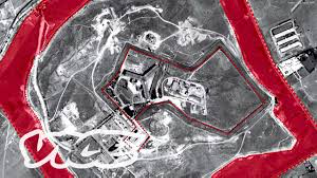

‘Using Art History Tools to Litigate in Tort v. Coercive Corporate Land Grabs – II.’

AI – ‘Visual Art History Tools – traditionally used to analyse historic paintings and establish provenance, can be repurposed to litigate in Tort v. Coercive Corporate Land Grabs.

By shifting the ‘Art Gistorical Gaze’ from ‘Canvas’, to ‘Landscapes and Data Streams’, a Barrister can construct definitive evidence of Ancestral Displacement and Corporate Malpractice.

While the Civil Procedure Rules (CPR) strictly govern the English High Court and require evidence to be objective, factual, and directly causative of the pleaded Civil Tort (i.e. Negligence, Nuisance, or Conspiracy), and rhetorical, ideological, or highly theoretical assertions regarding political structures will be struck out as irrelevant or vexatious under CPR Part 3.4, a Barrister can achieve a similar practical outcome by restructuring this concept into admissible, ‘Scientifically Rigorous Spatial and Digital Forensic Evidence, i.e. ‘Forensic Architecture’.

To visually demonstrate state or corporate complicity within the strict confines of the CPR, the Barrister must filter these concepts through the following procedural mechanisms:

(i) ‘Expert Evidence (CPR Part 35)’ – The court will completely reject a Barrister’s own political interpretation of a building. Instead, the data must be introduced as a Report by an Independent Expert Witness under CPR Part 35.

To be admissible, the Expert Evidence must provide necessary, objective technical analysis that falls outside the judge’s knowledge.

So, an expert (i.e. a structural engineer, surveyor, or digital forensic analyst) can present spatial reconstructions, 3D fluid dynamics, and data mapping.

The expert must strictly prove material facts, such as how corporate design choices directly caused physical harm or how state-controlled infrastructure intentionally restricted access – thereby proving elements of the Tort.

(ii) ‘Admissibility of Visual and Digital Evidence (CPR Part 32)’ – Visual models, animations, and interactive maps are highly effective in court, but constitute ‘Demonstrative’ or ‘Documentary Evidence’ under Part 32.

So, every pixel of a 3D architectural model or video reconstruction must be tethered to verifiable, disclosed data (e.g. satellite imagery, LiDAR scans, or internal corporate CAD files).

(iii) ‘Evidencing Complicity via Disclosure (CPR Part 57AD / Part 31)’ – To link the physical architecture to state or corporate complicity, a Barrister must rely on the ‘paper trail’ behind the construction.

‘Intent and Knowledge’ – Under the applicable disclosure models, the Barrister must seek internal emails, cabinet minutes, or board resolutions.

The Visual Evidence is then used to show that the defendants knew the physical layout would cause harm, but built it anyway to prioritize corporate profit or state control.

Thus, the architecture is the physical manifestation of the ‘Breach’, and the documents prove ‘Complicity’.

Comments added:

  • Note also the ‘Prohibition of Bias’ – If a Visual Model includes political commentary, dramatic lighting, or unsubstantiated animations, the opposing Barrister can and probably will succeed in persuading the Trial Jusge to exclude it, on the grounds that it is: (i) ‘Unfairly Prejudicial’; or (ii) ‘Lacks an Objective Foundation’.
  • To evidence ‘Complicity’ via ‘Disclosure’, a Barrister must use targeted models under CPR Part 57AD or CPR Part 31 to compel adverse documents.

    The strategy relies on demanding internal communications, metadata, and ‘deleted’ files that reveal coordinated knowledge, shared intent, or willful blindness between the conspiring parties.

    ‘Extended Disclosure (PD 57AD)’ – In the Business and Property Courts, complicity is best evidenced by utilizing ‘Model C’ (Request-Based Search) to pinpoint specific correspondence, or ‘Model D’ (Narrow Search-Based Disclosure) focusing on the ‘Issues for Disclosure’.

    In drafting a Disclosure Request, a Barrister will focus on:

    (i) ‘Chronological Overlaps’ – Requesting communications immediately before and after the disputed actions to prove a shared timeline of events.

    (ii) ‘Metadata Analysis’ – Inspecting native files (e.g., Word docs, PDFs) to check for ‘Shared Authorship’, ‘Tracked Changes’ by multiple parties, or ‘Hidden Comments’ showing ‘Collaboration’.

    (iii) ‘Unfavorable Documents’ – Parties must disclose known adverse documents. So, a well-drafted Request forces the opposing party to search specifically for ‘damaging’ materials.
  • The English High Court has jurisdiction to entertain tort claims against corporate entities regarding land grabs outside the UK.

    Claimants frequently establish jurisdiction in England and Wales by suing a UK-domiciled parent company for the actions of its foreign subsidiary.

    Establishing jurisdiction typically requires fulfilling three core criteria:

    (i) ‘The Jurisdictional Gateway’ – Claimants must prove there is a ‘good arguable case’ that falls within a recognized jurisdictional gateway.

    In Tort claims (such as Negligence, Breach of Statutory Duty, or Human Rights Abuses), the gateway is often met if the damage was sustained in England, or if the UK-based parent company exercised enough control over its overseas operations to owe a direct duty of care.

    (ii) ‘A Serious Issue to be Tried’ – The claimant must demonstrate there is a valid, substantive case against the defendant.

    (iii_ ‘Appropriate Forum (Forum Conveniens)’ – Claimants must show that England is the proper and most suitable place to resolve the dispute.

    In cases against multinational corporations, this often involves proving that the overseas host state’s legal system cannot guarantee substantial justice.
  • Theoretically, a claim can be brought in the English High Court against a multi-national corporate entity regarding a land grab outside the UK, provided the claimant can establish a sufficient connection to England.

    A ‘Transnational Tort Claim’ must meet specific legal and jurisdictional criteria:

    (i) ‘Parent Company Liability’ – A UK-domiciled parent company can be sued for the actions of its overseas subsidiaries or business partners if the parent company exercised direct control, issued group-wide policies, or assumed a duty of care.

    The landmark Supreme Court cases Vedanta v Lungowe and Okpabi v Shell established this precedent.

    (ii) ‘Conspiracy Claims’ – If it can be proven that an unlawful conspiracy to commit a land grab was ‘hatched’ in England, the English court may assert jurisdiction over the dispute, even if the primary wrongdoer or target is located abroad.

    (iii) ‘Service Out of the Jurisdiction’ – If the targeted corporation or its subsidiary is not domiciled in the UK, the claimant must seek the court’s permission to serve proceedings outside the jurisdiction.

    (iv) ‘Foreign Law Application’ – The English Court will typically apply the law of the country where the harm occurred as a question of fact.
  • Note also the following:

    (i) The ‘Corporate Veil’ must be pierced, or direct ‘Negligence’ by the UK-based headquarters proven, to hold a parent company liable for the acts of a local affiliate.

    (ii) The English court will only hear the case if there is not a clearly more appropriate jurisdiction, and it will assess potential sovereign immunity or act of state doctrines that might prevent litigation concerning actions directed by foreign governments.

    (iii) Securing a judgment is not the final step. Claimants must enforce the resulting order in territories where the multinational company actually holds assets.
  • The landmark UK Supreme Court decisions in Vedanta v Lungowe (2019) and Okpabi v Shell (2021) established that UK-based parent companies can be held legally liable in English courts for the environmental damage and human rights abuses caused by their overseas subsidiaries.

    This case dismantled the traditional legal assumption that a parent company is inherently separate from its foreign subsidiaries, establishing several crucial precedents:

    (i) ‘Establishment of a Duty of Care’ – The courts confirmed that a UK parent company can owe a direct duty of care to third parties affected by a foreign subsidiary if it exercises significant control over the subsidiary’s operations or assumes responsibility for group-wide policies and safety standards.

    (ii) ‘Expansion of Jurisdiction (Anchor Defendants)’ – By proving an arguable case against the UK parent company, foreign claimants can use the parent as an ‘anchor defendant’. This allows the entire lawsuit (including claims against the foreign subsidiary) to proceed in the English court rather than in a jurisdiction where claimants might struggle to access justice.

    Parent company liability is not a distinct legal field, but rather an application of ordinary, orthodox Tort law.’

‘Using Visual Art History Tools to Litigate v. Coercive Corporate Land Grabs in an international human rights court or tribunal.’

AI – ‘Visual art history tools provide critical evidentiary frameworks for proving coercive corporate land grabs in international human rights courts, such as the International Criminal Court (ICC) or regional human rights tribunals. They offer a systematic method to reconstruct, authenticate, and demonstrate a community’s deep-rooted connection to a landscape before corporate dispossession. [1]Here is how specific methodologies from art history can be directly applied as legal evidence:🗺️ Visual and Material Culture MethodologiesArt history excels at extracting objective data from visual and material artifacts to verify ownership, presence, and cultural destruction.

  • Iconographic and Iconological Analysis: Used to decode the symbolic meaning of community artifacts, boundary markers, and sacred sites. In court, this proves that specific geographical markers are not merely natural features, but legally or culturally significant boundaries establishing historical occupancy.
  • Materiality and Technical Art History: Employs scientific analysis—such as radiocarbon dating, pigment analysis, and dendrochronology—on localized artifacts, structures, or community art. This establishes a precise timeline of continuous indigenous or local habitation, directly refuting corporate claims of “vacant” land (terra nullius).
  • Visual Documentation and Provenance Research: Tracing the chain of custody of local cultural property, historical maps, and regional artwork. This demonstrates the unbroken, generations-long relationship between a population and their territory.

🛰️ Modern Spatial and Forensic ToolsArt historical analysis frequently pairs with digital humanities tools to recreate landscapes altered or destroyed by corporate entities.

  • 3D Spatial Reconstructions: Building immersive digital models of destroyed villages, burial grounds, or agricultural systems using historical sketches, early photographs, and oral histories. This visualises the tangible human cost and scale of the corporate encroachment.
  • Forensic Architecture: Integrating art history with satellite imagery, architectural rendering, and environmental data to track land degradation and forced displacement over time. Organizations like Forensic Architecture use these blended techniques to present undeniable spatial evidence in international courts.
  • Comparative Visual Analysis: Juxtaposing historical landscape art, colonial surveys, and early photographs against modern satellite images. This establishes a clear visual timeline of illegal environmental modifications and corporate occupation.

⚖️ Application in International Human Rights CourtsThese visual methodologies are translated into formal legal claims under international human rights frameworks.

Art History MethodologyCorresponding Legal StrategyTarget Court / Tribunal
Provenance ResearchProving continuous historical land title and occupancy.Inter-American Court of Human Rights (IACHR)
Material & Iconographic AnalysisProving the targeted destruction of unique cultural heritage as an act of persecution.International Criminal Court (ICC) (Rome Statute Article 7/8)
3D Spatial ReconstructionDemonstrating forced eviction and violation of the right to property and adequate housing.African Court on Human and Peoples’ Rights
Comparative Visual AnalysisVisualising environmental degradation as a violation of the right to a healthy environment.UN Human Rights Committee.’

‘Using Visual Art History Tools to Litigate v. Coercive Corporate Land Grabs – I.’

AI – ‘Visual art history tools—traditionally used to analyze historic paintings, establish the provenance of stolen masterpieces, or verify architectural blueprints—are increasingly being repurposed to litigate against coercive corporate land grabs. By shifting the “art historical gaze” from canvas to landscapes and data streams, legal teams and human rights researchers can construct definitive evidence of environmental destruction, ancestral displacement, and corporate malpractice.Independent research agencies like Forensic Architecture are pioneering this intersection. Their methodologies demonstrate how art history tools can be effectively deployed within legal arenas: [1, 2]

1. ‘Visual Connoisseurship & Style Analysis applied to Satellite Data’ –

In art history, connoisseurship involves analyzing minute brushstrokes, pigment density, and compositional patterns to authenticate an artwork. [1, 2]

  • The Legal Application: This identical methodology is applied to remote sensing and satellite data. Forensic experts utilize spectral band analysis to study variations in light and color across landscapes over time. [1, 2]
  • How it Litigates: By evaluating subtle variations in pixels, teams can calculate indices like the Normalized Difference Vegetation Index (NDVI) to track environmental degradation. In court, this functions as irrefutable, empirical proof of illegal corporate logging, toxic dumping, or crop destruction used to pressure indigenous populations off their land. [1, 2]

2. ‘Deep Provenance Research as Land Title Verification’ –

Provenance research tracks the chain of ownership of a piece of art across centuries to expose illicit looting or forced wartime sales. [1, 2]

  • The Legal Application: When applied to contested land, provenance tools uncover the historical “chain of custody” of an ecosystem. This involves analyzing colonial maps, tax ledgers, and property deeds alongside local cultural records.
  • How it Litigates: Corporations often justify land acquisition through fraudulent or coerced contracts signed by non-representative parties. Art historical provenance methods can unmask these gaps in the timeline, tracing ownership back to original indigenous custody. This effectively undermines corporate claims of “vacant land” (terra nullius) or legitimate purchase in international courts. [1, 2]

3. ‘Photogrammetry & 3D Spatial Reconstruction’ –

Art historians rely on architectural rendering and 3D digital imaging to preserve ruined heritage sites or reconstruct ancient spaces. [1, 2]

  • The Legal Application: Using open-source data, localized smartphone footage, and aerial imagery, teams build precise 3D virtual reality models of land conflict zones. [1, 2, 3]
  • How it Litigates: If a corporation uses private security forces to demolish a village or build illegal border fences, a 3D reconstruction can recreate the exact timeline of structural violence. These immersive, interactive environments can be submitted as expert testimony in arbitration panels, providing judges with a clear visual perspective of the scene that witness testimony alone cannot capture. [1, 2, 3]

4. ‘Iconographic & Oral History Mapping’ –

Iconography is the branch of art history that deciphers hidden meanings, symbols, and cultural narratives within visual imagery.

  • The Legal Application: Many indigenous or marginalized communities do not possess western-style paper land deeds; instead, their land tenure is recorded in community art, oral histories, and landscape markers. “Counter-mapping” projects combine graphic illustration with oral history to map these cultural milestones. [1, 2, 3]
  • How it Litigates: By codifying traditional ecological knowledge, artistic maps illustrate exactly how communities have historically used forests, burial grounds, and water systems. When entered into international legal proceedings, these visuals serve as formal evidence of continuous occupation, which is crucial for securing statutory land rights under international human rights frameworks. [1, 2, 3]

Human rights lawyers can utilize “matter in movement” and the historical analysis of architecture to convert physical geography and structural remains into definitive, admissible evidentiary data. Pioneered by research groups like Forensic Architecture, this methodology shifts the focus from abstract legal testimony to the physical environment as an objective witness. [1, 2, 3, 4, 5]By treating architecture as a material reflection of political force, lawyers can visually demonstrate state and corporate complicity before bodies like the International Criminal Court (ICC), the Inter-American Court of Human Rights (IACtHR), and domestic civil tort courtrooms. [1, 2, 3, 4]


1. Proving Forced Displacement via “Matter in Movement”

“Matter in Movement” analyzes how physical substances (soil, debris, dust, smoke, and water) are displaced over time by human intervention. [1, 2]

  • The Methodology: Lawyers can cross-reference historic satellite imagery with 3D fluid dynamics or geospatial modeling. Rather than showing a static “before and after” snapshot, this technique models the active mechanics of erasure. It documents the speed and direction of physical demolition debris, weaponized smoke plumes, or deliberate floods. [1, 2]
  • Legal Application: In cases of ethnic cleansing or illegal eviction, defendants often claim that communities left voluntarily or due to natural disasters. Proving the velocity, pattern, and thermal signatures of destruction tracks the exact vector of force. This satisfies the legal thresholds for proving mens rea (intent) and actus reus (the act) of forced displacement under Article 7 of the Rome Statute (Crimes Against Humanity). [1, 2]

2. Deconstructing Corporate Enclosure and Land GrabsCorporate land grabs against Indigenous groups frequently rely on legal gray areas, claiming that targeted ancestral lands were “unoccupied,” “barren,” or legally acquired. Historical architectural analysis exposes these claims as false. [1]

  • The Methodology: Lawyers use “counter-mapping” and architectural archaeology. They can reconstruct traditional Indigenous dwellings, fence lines, water management systems, and sacred burial sites using remote sensing (LiDAR) and oral histories. Simultaneously, they chart the historical expansion of corporate infrastructure—such as pipelines, private security fencing, and industrialized monoculture roads. [1, 2, 3, 4, 5]
  • Legal Application: In transnational civil tort litigation (e.g., suing multinational corporations in their home jurisdictions for overseas abuses), this evidence visualizes the physical enclosure of a community. Showing a timeline of corporate architecture slowly choking out local access to resources proves actionable civil nuisance, trespass, and expropriation of property. It invalidates corporate claims of non-interference by establishing a clear timeline of structural hostility. [1, 2, 3]

3. Exposing Ecocide and Environmental DestructionEnvironmental degradation is rarely an accident; it is the structural byproduct of political and corporate choices. Architectural forensics treats environmental shifts as physical manifestations of structural violence. [1, 2, 3]

  • The Methodology: This approach investigates how structural developments change the surrounding material ecosystem. For instance, lawyers can model how a corporate dam altered downstream siltation patterns, how mining waste altered soil chemistry, or how deforestation eroded a specific microclimate. [1, 2]
  • Legal Application: In international tribunals, this evidence supports claims of environmental warfare or ecocide. In civil courts, it provides an empirical baseline to quantify damages. By showing how specific corporate architectures directly triggered toxic drift or ecological collapses, plaintiffs establish proximate causation—the most difficult hurdle in environmental tort litigation. [1]

Evidentiary Matrix for CourtroomsTo successfully introduce these concepts into legal proceedings, human rights lawyers structure their presentation using this operational framework:

Evidentiary Tool [1, 2, 3, 4]Technical ExecutionLegal Application
Volumetric 3D ModelingReconstructing destroyed settlements using crowdsourced smartphone data, satellite imagery, and witness testimony.Re-establishes the physical reality of a community erased by a land grab.
Material Continuity TrajectoriesTracking the physical relocation of building materials or topsoil over decades.Refutes claims that lands were historically “vacant” or naturally degraded.
Spatial Inverted ChronologiesPlaying architectural changes in reverse via interactive timelines.Pinpoints the exact timestamp and responsible entity for an illegal corporate enclosure.

If you are building a specific legal strategy, tell me:

  • What is the target jurisdiction or tribunal? (e.g., ICC, domestic civil court, regional human rights court).
  • What specific type of data is available? (e.g., satellite archives, witness testimony, corporate building plans).
  • Who is the primary adversary? (e.g., a state military, a multinational mining company). [1]

I can provide tailored advice on structuring the admissibility arguments for your digital spatial evidence. [1, 2]

Human rights lawyers are increasingly using art history tools and visual methodologies to protect Indigenous land from corporate grabs. Traditional Western legal systems usually favor written deeds, leaving Indigenous communities with a high “burden of proof” when defending ancestral land that relies on oral or visual histories. [1, 2, 3]By partnering with research agencies like Forensic Architecture, lawyers bridge this gap. They translate historical art, architectural memory, and visual documentation into legally binding evidence. [1, 2, 3]


1. Visual Analysis of Historical Maps and ArtArt history tools like iconography (interpreting symbols in images) and provenance research (tracing an object’s history and ownership) help lawyers verify territorial boundaries. [1, 2, 3]

  • Reading Landscapes: Lawyers use formal visual analysis to decode colonial-era sketches, paintings, and cartography. This reveals geographic markers that confirm long-term Indigenous occupation. [1]
  • Proving Continuous Stewardship: Art historians trace the history of regional artistic materials (e.g., specific pigments or textiles). This acts as physical evidence of historical trade, resources, and land use in court.

2. Forensic Spatial Modeling and ReconstructionHuman rights groups treat the physical land as an archive. They use architectural and art history techniques to document corporate ecocide and displacement. [1, 2]

  • 3D Virtual Heritage: Agencies use digital modeling to reconstruct traditional environments destroyed by corporate activities. An example is Forensic Architecture’s reconstruction of Namibian grasslands to prove the long-term impact of colonial and corporate landscape alteration. [1, 2, 3]
  • Material Forensics: Analyzing shrapnel marks, soil changes, or structural damage on sacred buildings turns architectural surfaces into photographic evidence of violence. This allows lawyers to visually demonstrate corporate or state-sponsored property destruction. [1, 2]

3. Overcoming Western “Burden of Proof” via Legal Aesthetics [1]Most human rights courts dismiss oral histories or traditional songs as valid evidence. Art history methodologies create a “counter-forensics” framework that changes how courts see evidence. [1, 2, 3]

  • Translating Intangible Heritage: Lawyers use visual aesthetics to present traditional knowledge in ways Western courts accept. They combine historical artwork with satellite images and mapping data. [1, 2, 3]
  • Proving Cultural Value: Showing how a piece of land connects to cultural artifacts—like ceremonial masks or sacred art—helps lawyers build a stronger case. It shifts the legal perspective from viewing land as a commodity to protecting it as cultural heritage. [1, 2, 3, 4]

4. Public Advocacy and “Museum as Courtroom”Art history practices rely on public exhibition. Human rights lawyers use this to bring local land grab cases to global attention. [1, 2]

  • Exhibiting Evidence: Legal teams often display their 3D models and visual timelines in major cultural institutions. This creates public pressure that courts and corporations cannot ignore. [1, 2, 3]
  • Public Tribunals: Staging detailed visual exhibitions acts as a “people’s court.” This helps communities control their own narrative when local legal systems fail them. [1, 2]

Art history and visual tools offer human rights lawyers innovative evidentiary methodologies to secure civil and international law remedies for communities fighting corporate land grabs. By shifting the legal gaze from abstract land titles to physical, historical, and environmental reality, these tools unearth corporate and state abuses. [1]The specific visual tools, their art-historical foundations, and the corresponding legal remedies include:1. Spatial Analysis and Forensic Architecture [1, 2]Human rights lawyers use architectural 3D modeling, fluid dynamics, and spatial analysis to reconstruct contested environments over time. Pioneered by research agencies like Forensic Architecture, these methods turn geography into an active archive of state and corporate violence. [1, 2, 3, 4]

  • Art History Foundation: This relies on the concept of “matter in movement” and the historical analysis of architecture as a reflection of political force. It utilizes photogrammetry—extracting 3D data from historical photographs and perspective artwork—to trace altered landscapes. [1, 2]
  • Legal Remedy: Lawyers introduce these models into civil tort litigation (for property destruction or corporate negligence) and before the International Criminal Court (ICC) or regional bodies like the Inter-American Court of Human Rights. They serve as definitive evidence to prove forced displacement, physical corporate enclosure, or environmental destruction. [1, 2, 3, 4]

Watch how multidisciplinary experts use architectural tools and multimedia to build admissible visual evidence of human rights violations:

4mMeet The Team Investigating Human Rights Violations …VICEYouTube · 8 Aug 20172. Counter-Cartography and Satellite ArchaeologyCorporate land grabs often rely on official, Eurocentric geometric maps that render indigenous and local communities invisible. Lawyers counter this using satellite archaeology, hyper-spectral imaging, and community-led counter-mapping. [1, 2, 3, 4]

  • Art History Foundation: This draws directly from Critical Cartography, an art-historical critique of the geometric map as an instrument of imperial conquest and land commodification. By interpreting subtle shadows and botanical anomalies in historical aerial footage, researchers reveal erased villages, ancestral burial grounds, and historic irrigation systems. [1, 2, 3, 4]
  • Legal Remedy: These visual assets are weaponised under international human rights treaties (such as the UN Declaration on the Rights of Indigenous Peoples) to enforce the right to Free, Prior, and Informed Consent (FPIC). They provide the empirical proof required to establish ancestral title, challenging corporate claims that the land was historically vacant or “unarable”. [1, 2, 3]

3. Cultural Heritage, Provenance, and Moral RightsWhen corporations seize lands, they often destroy or misappropriate local cultural property, sacred sites, and artifacts. Lawyers use provenance tracking, architectural heritage mapping, and database archiving. [1, 2, 3, 4]

  • Art History Foundation: This relies on provenance research and cultural property history, methodologies originally perfected to track Nazi-looted art or colonial antiquities. It also utilizes Art Loss databases to establish a continuous historical chain of community custody. [1, 2, 3, 4, 5]
  • Legal Remedy: Under international cultural heritage law (such as the UNESCO 1970 Convention) and the Berne Convention’s Moral Rights (Right to Integrity), lawyers can sue corporations for the destruction or theft of communal cultural assets. Proving the destruction of art and sacred infrastructure can escalate a civil property dispute into an international claim for reparations and cultural restitution. [1, 2, 3, 4, 5]

Summary of Legal Fora and Remedies

Visual/Art Tool [1, 2, 3, 4, 5, 6, 7, 8, 9, 10]Primary MethodologyTarget Legal Remedy
Forensic Architecture3D Environmental ModellingCivil Tort Damage Suits / ICC Evidentiary Submissions
Counter-CartographySatellite Archaeology & Smudge AnalysisAncestral Land Title Claims / FPIC Violations
Provenance TrackingCultural Heritage Archiving & MappingInternational Restitution & Reparation Claims.

In the English High Court a Barrister cannot directly submit arguments or evidence treating architecture as a “material reflection of political force” to demonstrate complicity. The Civil Procedure Rules (CPR) strictly govern the English High Court and require evidence to be objective, factual, and directly causative of the pleaded civil tort (such as negligence, nuisance, or conspiracy). Rhetorical, ideological, or highly theoretical assertions regarding political structures are routinely struck out as irrelevant or vexatious under CPR Part 3.4. [1, 2, 3]

However, a Barrister can achieve a similar practical outcome by restructuring this concept into admissible, scientifically rigorous spatial and digital forensics (often called “forensic architecture”). [1]To visually demonstrate state or corporate complicity within the strict confines of the CPR, the legal team must filter these concepts through the following procedural mechanisms:1. Reframe Rhetoric into Expert Evidence (CPR Part 35)The court will completely reject a barrister’s own political interpretation of a building. Instead, the data must be introduced via an independent expert witness report under CPR Part 35.

  • The Threshold: To be admissible, the expert evidence must provide necessary, objective technical analysis that falls outside the judge’s knowledge. [1]
  • The Method: An expert (such as a structural engineer, surveyor, or digital forensic analyst) can present spatial reconstructions, 3D fluid dynamics, or data mapping. [1]
  • The Target: The expert cannot use the platform to argue “political force.” They must strictly prove material facts, such as how corporate design choices directly caused physical harm or how state-controlled infrastructure intentionally restricted access (proving elements of the tort). [1, 2]

2. Admissibility of Visual and Digital Evidence (CPR Part 32)Visual models, animations, and interactive maps are highly effective in court, but they are categorized as demonstrative or documentary evidence under CPR Part 32.

  • Source Validation: Every pixel of a 3D architectural model or video reconstruction must be tethered to verifiable, disclosed data (e.g., satellite imagery, LiDAR scans, or internal corporate CAD files). [1, 2]
  • The Prohibition of Bias: If a visual model includes political commentary, dramatic lighting, or unsubstantiated animations, the opposing council will successfully argue to exclude it because it is unfairly prejudicial or lacks an objective foundation.

3. Evidencing Complicity via Disclosure (CPR Part 57AD / Part 31)To link the physical architecture to state or corporate complicity, a barrister must rely on the “paper trail” behind the construction. [1]

  • Intent and Knowledge: Under the applicable disclosure models, the barrister must seek internal emails, cabinet minutes, or board resolutions. [1]
  • The Connection: The visual evidence is then used to show that the defendants knew the physical layout would cause harm, but built it anyway to prioritize corporate profit or state control. The architecture acts as the physical manifestation of the breach, while the documents prove the complicity. [1]

Summary of the Legal Translation

Radical/Theoretical Concept [1, 2, 3]Admissible CPR Equivalent
“Architecture as political force”Proving breach of duty or intentional harm via structural design.
“Visual demonstration of complicity”Verifiable 3D spatial reconstructions linked to internal corporate/state disclosure documents.
“Barrister’s ideological analysis”Independent Expert Witness Evidence under CPR Part 35.

‘Human Dignity is the Connective Thread’

Human Dignity is the core ‘Connective Thread’ that binds Visual Art, Cultural Memory, Ancestral Rights, and International Law together.

In modern legal frameworks and philosophical discourse, Human Dignity acts as the foundational catalyst.

It transforms artistic and cultural expressions from mere historical artifacts into protected components of human identity and collective survival.

The intersection of these four domains relies on human dignity in several distinct ways:

1. ‘Cultural Memory as an Extension of Dignity’ – Human Dignity requires that individuals and communities have the right to know, preserve, and pass down their history.

Visual Art serves as the tangible manifestation of this memory.

Encoded Messages are written in the stone – For example, because the depiction of living beings was restricted in sacred Islamic art, Andalusian architects turned to mathematics to express the divine. Every complex geometric tile layout (zellij) or stucco relief originates from a single, central point. It expands outward into infinite, interlocking shapes. This serves as an encoded visual message that the vast diversity of the universe flows from a single creator. Builders relied heavily on Euclidean geometry and specific mathematical symmetry groups. The exact repetition of these patterns reflects the balanced, unchanging laws governing the cosmos.

To destroy, steal, or suppress a community’s art is to erase their cultural memory.

International bodies increasingly view the destruction of cultural heritage as an attack on human dignity itself.

2. ‘Ancestral Rights and Identity’ – For Indigenous peoples and traditional communities, ancestral rights are not just property claims. They are essential to spiritual and cultural survival.

Ancestral Art and sacred objects carry the living spirit and history of a people.

Depriving a community of these objects violates their inherent dignity.

It disconnects them from their ancestors and disrupts their cultural continuity.

3. ‘The Role of International Law’ – Modern International law increasingly uses human dignity to bridge the gap between abstract legal codes and the protection of cultural heritage.

The Universal Declaration of Human Rights (UDHR) anchors all subsequent cultural protections in the baseline of human dignity.

The UN Declaration on the Rights of Indigenous Peoples (UNDRIP) explicitly connects ancestral rights, cultural property, and dignity.

Restitution Laws utilize the concept of dignity to compel museums and nations to return looted art and ancestral remains to their rightful origins.

‘In antiquity how was cultural memory preserved by encoding in symbols and patterns?’


AI – ‘Antiquity preserved cultural memory by encoding history, laws, and spiritual beliefs into repetitive visual systems like geometric patterns, architecture, textiles, and proto-writing systems. Because oral traditions were vulnerable to time, ancient societies transformed physical objects into permanent archives. This allowed complex societal knowledge to pass across generations without relying solely on the spoken word. [1, 2, 3, 4, 5]

Systems of Symbolic Preservation

  • Textiles and Weaving: Andean cultures like the Inca utilized Tocapu, which were geometric tunic patterns encoding status, lineage, and historic events.
  • Architectural Layouts: Egyptian temples and Mesopotamian ziggurats functioned as physical maps of the cosmos, preserving creation myths through stone layouts.
  • Pottery and Ceramics: Ancient Greek geometric pottery utilized recurring motifs like the meander pattern to symbolize infinity and the continuous flow of human life. [1]
  • Rock Art and Petroglyphs: Aboriginal Australian Songlines used rock art patterns as navigational and historical maps across generations. [1]
  • Proto-Writing and Cuneiform: Early Mesopotamian tokens used abstract geometric shapes to record trade data before fully developing into written language. [1]

How Patterns Functioned as Memory Tools

[Abstract Pattern/Symbol] ──> [Triggers Oral Narrative] ──> [Reinforces Community Memory].

  • Mnemonic Anchors: Visual patterns served as memory triggers. A specific geometric sequence on a vessel reminded a storyteller of a chronological historical lineage.
  • Universal Accessibility: Symbols bypassed language barriers. Diverse tribes trading in ancient hubs could understand shared symbol systems without speaking the same tongue. [1]
  • Sacred Safeguarding: Encoding knowledge in complex patterns ensured that sensitive religious or medical data was only accessible to initiated elders.’

‘Jurisdiction of ICJ in a Cultural Heritage Loss Claim.’

A ‘Cultural Heritage Loss Claim’ (‘CHLC’) may arise where e.g. a state grants mining/industrial farming/land development/oil concessions – in the ‘ancestral lands’ of an ‘indigenous people’.

For example – Kichwa Indigenous Community of Sarayaku v. Ecuador, Inter-American Court of Human Rights (ser.C) No.245 (2012), in which the court found Ecuador liable, holding that the obligation to consult is a general principle of International Law, thereby establishing a universal precedent about the responsibilities of states towards their indigenous peoples.

Arguably this principle extends to claims for restitution and repatriation.

To bring a case, an allied State – e.g. a BRICS member?, must sponsor the ‘Indigenous claim’, and both States must have accepted the Court’s jurisdiction.

Both States involved must also be party to an international treaty that explicitly prohibits racial/cultural discrimination, and they must have a dispute over its interpretation or application.

The International Convention on the Elimination of All Forms of Racial Discrimination (CERD) is the most prominent treaty used at the ICJ to address Cultural Heritage Loss.

The State granting the concessions must have recognized the ICJ’s compulsory jurisdiction (e.g., through an Article 36(2) Declaration under the ICJ Statute) or have consented to a special agreement to let the ICJ settle the dispute.

An Article 36(2) declaration (often called the ‘Optional Clause’) is a formal statement by a state accepting the compulsory jurisdiction of the International Court of Justice (ICJ).

By depositing this declaration with the UN Secretary-General, a nation agrees in advance to let the ICJ resolve its legal disputes with any other state that has made the same commitment.

Once two disputing countries have active declarations, one can bring the other to court ipso facto (by the fact itself), without needing a custom, case-specific treaty

Because only States have standing before the ICJ, the home State of the Indigenous group (if different from the exploiting State), or a sympathetic ‘third-party State’ – must take up the claim.

Because the ICJ primarily focuses on inter-State disputes, claims regarding Free, Prior, and Informed Consent (FPIC) or Indigenous land rights are more commonly brought to regional human rights tribunals.

Mediation of CHLC’s will be discussed in my forthcoming book – the ‘Mediation of Cultural Heritage Disputes’ – see the page of the same name at www.carlislam.co.uk.

‘The Indivisibility of Land, Identity, and Artefacts’ – The Sarayaku ruling explicitly tied the duty to consult to the protection of cultural identity and communal property under Article 21 of the American Convention on Human Rights. The Court noted that the unauthorized destruction of sacred sites violated the community’s worldview and intangible heritage. Because indigenous cultural artefacts are manifestations of that same cultural identity and are often inseparable from ancestral spiritual practices, the obligation to consult logically applies when states make legal or administrative decisions affecting those objects. The Court ruled that states must consult indigenous peoples on ‘any legislative or administrative measures that affect them directly’. A state’s decision to negotiate, deny, or execute the repatriation of a historical artifact constitutes an administrative/legal measure directly impacting that community’s cultural survival. Under this framework, states cannot unilaterally decide the fate of indigenous objects without a formal, good-faith consultation process designed to achieve Free, Prior, and Informed Consent (FPIC).


Treaty law and soft law frameworks support extending this principle. (i) UN Declaration on the Rights of Indigenous Peoples (UNDRIP), Article 11 and Article 12 explicitly state that indigenous peoples have the right to the restitution of their cultural, intellectual, religious, and spiritual property taken without their FPIC. (ii) The ILO Convention 169, which was heavily relied upon in Sarayaku, mandates consultation on any measures affecting indigenous peoples’ cultural integrity.


Despite the conceptual alignment, directly enforcing Sarayaku to compel the repatriation of artefacts faces significant practical hurdles: (1) ‘Extraterritoriality and Jurisdictional Gaps’ – Sarayaku governs a state’s obligations to indigenous peoples within its own borders. Most high-profile repatriation claims involve artefacts held by foreign museums or states (e.g., European institutions holding African or Indigenous American objects). The IACtHR lacks jurisdiction to compel a non-member state to repatriate items. (ii) ‘State Sovereignty v. Indigenous Ownership’ – International cultural property law (like the 1970 UNESCO Convention) operates primarily on a state-to-state framework. When an artefact is repatriated, it is typically returned to the government of the origin state, not directly to the specific indigenous group. Sarayaku is weaponized precisely at this stage. It argues that when a state receives or negotiates for a returned artifact, the state is legally obligated to consult the domestic indigenous community regarding its custody and future management, rather than absorbing it into a state-run national museum.

‘Pausing ICJ Proceedings for Ad Hoc Mediation in a Cultural Heritage Dispute.’

The International Court of Justice (‘ICJ’), which only adjudicates disputes between states (Art. 34(1) ICJ Statute) – has unlimited ‘subject matter’ jurisdiction, i.e. ‘Jurisdiction Ratione Materiae’.

Art 36(1) states –

‘The jurisdiction of the Court comprises all cases which the parties refer to it and all matters specially provided for in the Charter of the United Nations or in treaties and conventions in force.’

So, in principle there is no limit to the subject matter of disputes which can be submitted to the court, provided that these are ‘legal disputes’ and raise issues of ‘International Law’. (Art 36(2)).

ICJ proceedings can be paused to enter into Ad Hoc Mediation, but only if both disputing states mutually request it.

The ICJ has no power to pause a case unilaterally for Mediation, nor can one state force a pause over the other’s objections.

However, if both parties agree to explore an out-of-court settlement via ‘Ad Hoc Mediation, then the Court will accommodate them.

The Court uses two primary operational mechanisms to pause a case for independent Mediation:

1. ‘The Joint Request for a Formal Suspension (Stay)’ – Historically, the ICJ almost never issued formal suspensions of proceedings. However, recent modern practice has cemented this option.

If both states agree to enter into ‘Ad Hoc Mediation’, they can submit a joint request to the Court.

In a landmark procedural shift, the ICJ issued a formal Order suspending the case in Germany v. Italy (2024).

The pause was granted explicitly because Germany requested it and Italy did not oppose it, allowing the parties time to resolve issues through external legal pathways that could eventually lead to discontinuing the ICJ case.

2. ‘Strategic Extension of Time-Limits’ – Before formal suspensions became utilized, the more common and subtle way to ‘pause’ a case was to manipulate the procedural calendar.

Under Article 44 of the Rules of Court, the ICJ has the authority to extend the time-limits for states to file their written pleadings (Memorials and Counter-Memorials).

So, if both states informed the Court that they are actively engaged in Ad Hoc Mediation and needed more time, the Court would routinely grant ‘multi-month’ extensions to their filing deadlines.

This effectively froze active litigation and created a ‘Mediation Window’ without formally halting the case.

If Ad Hoc Mediation is successful, i.e. if the states resolve their dispute out of court, then they will jointly notify the ICJ.

Under Article 88 of the Rules of Court, the parties will officially declare that they have agreed to withdraw the case.

The Court will then issue an ‘Order of Discontinuance’ and officially remove the dispute from its General List.

The ICJ also frequently exercises its authority at an early stage, such as during initial meetings between the President of the Court and the Agents of the parties, to encourage peaceful, alternative dispute resolution, including Ad Hoc Mediation or Negotiation.

During the first procedural meeting (often held immediately after a case is filed to fix time limits for memorials), the President of the Court will typically remind the parties of their obligations under the UN Charter to seek peaceful solutions.

The President routinely encourages them to consider Mediation, Negotiation, or other methods outside of formal litigation.

Because the ICJ’s contentious jurisdiction is based on state consent, the Court cannot force or order sovereign states into Mediation if they do not agree.

However, the judges strongly promote it as a preferred alternative.

Because most international cultural heritage conventions, such as the 1970 UNESCO Convention and the 1954 Hague Convention, are not retroactive, they do not apply to heritage taken during colonization, historical conquests, or other events predating the treaties. Consequently, claims for the return of cultural heritage are rarely brought in the ICJ. However this constraint does not apply to a claim based upon the illicit trade in artefacts stolen more recently, which end up on display in the public museum of a state which has submitted to the jurisdiction of the court.

States bringing claims for colonial-era or ancient historical artifacts often hit a brick wall due to the non-retroactivity of treaties like the 1954 Hague Convention and the 1970 UNESCO Convention.

However, this temporal barrier vanishes when dealing with recently illicitly traded artifacts that end up in state-owned museums.

Non-retroactivity is a cornerstone of public international law.

So, when an artefact is stolen or illicitly exported after the relevant treaties or bilateral agreements have entered into force between the states, the rule of non-retroactivity does not apply.

If a sovereign state submits to the jurisdiction of the ICJ (such as through a special agreement or a treaty containing an optional clause for dispute resolution), the Court can hear disputes regarding the illicit trafficking and unlawful possession of recent antiquities.

If a state’s public museum displays a recently stolen artifact, the claimant state can argue that the holding state is breaching its obligations to prevent illicit trade and return stolen property.

‘What did the Pomegranate symbolise in Antiquity?’

AI – ‘In antiquity, the pomegranate was a multifaceted symbol that primarily represented fertility, life and death, abundance, and the indissolubility of marriage. Its complex duality stemmed from its striking physical traits: its countless crimson seeds naturally evoked imagery of reproduction and wealth, while its blood-red juice linked it intimately to blood, sacrifice, and the underworld. [1, 2, 3, 4, 5]

Life, Death, and the Underworld [1]In Greek mythology, the pomegranate was famously dubbed the “fruit of the dead.” [1]

  • The Persephone Myth: According to the Homeric Hymns, Hades used pomegranate seeds to trick Persephone into binding herself to the underworld. Because she ate the seeds, she was legally tethered to the realm of the dead for a third of every year. This myth explains the cyclical change of the seasons, linking the fruit directly to the cycles of decay, winter, and spring rebirth. [1, 2, 3, 4, 5]
  • Association with Blood: It was believed that the very first pomegranate tree sprouted from the blood of Adonis or Dionysus. Because of this connection to blood, it was regularly placed in ancient tombs as a grave offering to ensure the soul’s journey into the afterlife. [1, 2, 3, 4, 5]

Fertility and Marriage [1]Despite its grim underworld associations, the fruit’s internal abundance made it a widespread emblem of life and marital fidelity. [1, 2]

  • Goddesses of Love and Unions: The fruit was strictly sacred to Hera (the goddess of marriage) and Aphrodite (the goddess of love). Cult statues, such as Polyclitus’ famous statue of Hera at Argos, often depicted the goddess holding a sceptre in one hand and a pomegranate in the other. [1, 2, 3]
  • Wedding Traditions: In Ancient Roman culture, newlyweds wore wreaths woven from pomegranate leaves to ensure a fruitful union. Its juice was also widely utilised in ancient medicine to treat infertility. [1, 2]

Abundance and Wealth Across Cultures [1]Beyond Greece and Rome, the pomegranate held deep regional significance across the Near East. [1, 2]

  • Persian Royalty: In ancient Persian culture, the pomegranate blossom (golnār) was a sacred emblem of imperial authority and prosperity. Achaemenian kings are depicted in stone reliefs at Persepolis holding pomegranate flowers to signal divine blessing and royal luxury. [1]
  • Hebrew Tradition: The fruit was an architectural motif in Solomon’s Temple, adorning the capitals of the great bronze pillars. It was stitched into the robes of Jewish high priests as a emblem of righteousness and the commandments of God. [1, 2]. …

The pomegranate became the symbol of Granada due to a linguistic blend of the city’s historical names with the Spanish word for the fruit, and it was later adopted by the Spanish monarchy as a heraldic trophy to mark the completion of the Reconquista. [1, 2]The Evolution into Granada’s SymbolWhile the pomegranate fruit had been grown in the Andalusian region since ancient times, its official adoption as the city’s emblem stems from a linguistic coincidence: [1, 2, 3]

  • The Arabic Origins: During Islamic rule, the Moors referred to the city as Gárnata. The exact etymology of Gárnata is debated, with theories linking it to an Arabic word meaning “hill of pilgrims” or a phrase meaning “hill of strangers”. [1, 2, 3, 4]
  • The Latin Confusion: Separately, the Latin word for pomegranate was pomum granatum (meaning “seeded apple”). As the Spanish language evolved, this Latin term transformed into the modern Spanish word for the fruit: granada. [1, 2, 3, 4]
  • The Linguistic Merge: Over centuries, the phonetically similar Moorish name Gárnata naturally morphed into Granada under Castilian linguistic influence. Because the city’s new name was completely identical to the word for the fruit, the pomegranate was adopted through visual punning as the definitive, living symbol of the city. [1, 2, 3, 4]

Adoption by the Spanish MonarchyThe transition from a local city symbol to a grand royal emblem occurred during one of the most pivotal moments in Spanish history: [1, 2, 3, 4]

  • The Fall of Granada (1492): In January 1492, the Catholic Monarchs—King Ferdinand and Queen Isabella—successfully conquered the Emirate of Granada, the final Muslim-ruled stronghold on the Iberian Peninsula. [1, 2, 3, 4, 5]
  • A Symbol of Victory: To permanently commemorate this momentous triumph and the final unification of Spain, Ferdinand and Isabella officially incorporated the pomegranate (granada) into the bottom peak of the Spanish Royal Coat of Arms. [1, 2]
  • Imperial Meaning: Beyond just representing the conquered territory, the monarchy leaned into the fruit’s natural anatomy. A pomegranate features a hard outer husk holding together hundreds of internal seeds under a crown-like calyx. To the crown, this perfectly symbolised imperial unity—the gathering of many different domains and peoples under one single Catholic monarch. [1, 2, 3, 4, 5]

This royal legacy spread globally; for instance, Ferdinand and Isabella’s daughter, Catherine of Aragon, carried the pomegranate to England as her personal badge when she married Henry VIII. Today, the open pomegranate remains prominently featured at the very bottom of the Official Flag and Coat of Arms of Spain.’

‘Colonialism, Fascism & retention of stolen cultural artifacts.’

Colonialism and Fascism are deeply intertwined with the retention of stolen cultural artifacts.

Historically, looting served as an imperial tool of dominance, stripping subjugated societies of their history.

Today, refusing to return this cultural heritage reflects an ongoing refusal to dismantle that colonial legacy and relinquish historical power.

The structural relationship between these elements manifests itself in the following ways:

(i) ‘Colonialism and the Expropriation of Culture’ – European empires (such as the British and French) systematically looted artifacts (e.g., the Benin Bronzes or the Parthenon Marbles) as physical displays of imperial dominance.

Retaining these items in institutions serves as a ‘power display,’ perpetuating the colonial narrative that subjugated peoples are incapable of preserving their own heritage.

(ii) ‘Fascism and Cultural Erasure’ – Fascist regimes (like Nazi Germany) heavily utilized cultural looting and deliberate destruction.

For fascists, eradicating or claiming ownership over a group’s cultural identity is a direct weapon of warfare and subjugation.

The Center for Art Law highlights the interconnected history of wartime plunder and forced relocation of heritage.

(iii) ‘The “Universal Museum” Defence’ – Former colonial powers often refuse to repatriate items by hiding behind the concept of the ‘Universal Museum’.

Critics and scholars point out that this framework justifies historical theft under the guise of global accessibility, while implicitly preserving Eurocentric dominance over world history.

(iv) ‘Restorative Justice v. Volitional Amnesia’ – The refusal to return these artifacts demonstrates ‘volitional amnesia’, i.e. a reluctance to address the violence and exploitation embedded in historical empires.

Scholars view repatriation and cultural restitution not just as legal formalities, but as core steps in the decolonization process, rectifying historical wrongs, and restoring cultural equity.