‘US War Crimes in Iran.’


See:

‘Never assume that anything is as it appears!’


See – ‘Game Theory #18: Trump World Order’: https://lnkd.in/ezc73eZ7

Extract from my 2022 post – ‘Engineering Convergence through Mediation – Can we put the Genie back into the bottle?’

‘As a guest attending the King’s College London School of Security Studies Annual Conference on the 8th and 9th June 2022, I asked a question related to what was then my research interest in ‘Transforming Geo-Political Conflict Through Mediation’.

My Q.  ‘Is understanding what lies underneath competing narratives [‘N’] the key to Mediation of a peace process in a conflict?’

i.e. can analysis of ‘N’ reveal:

(i) the philosophy and political doctrine driving a conflict on each side; and

(ii) psychological biases which are road-blocks in geo-political mediation?

Answer: I drew the following conclusions from the comments made by the speakers in reply:

(i) Mediation is not possible where a participant [‘P’], i.e. ‘P.1’ requires the destruction of the other P – i.e. ‘P.2’, because the values and interests underlying ‘N’ collide [‘C’].

(ii) Mediation is possible where they potentially overlap and can cohere.

(iii) Where a P.1 is a nuclear power [‘PN’], the use of nuclear weapons is a very real potential outcome in C – one speaker thought this was almost an ‘inevitability’ (which is what Professor John Mearsheimer has been warning since 2014 and as recently as May 2022).

Therefore, before undertaking a step in Mediation each P needs to first see the world through the eyes of the other.

If P.1 views the world through a rose-tinted geo-political lens, it will be looking inwards and not outward, in which case the outcome is likely to be strategic miscalculation, i.e. if the result is a mischaracterization of N by P.1, because P.1 either:

(i) does not understand N; or

(ii) does not believe that N is real, actually exists in the psychology of P.2, and therefore is deeply embedded in P.2’s existential political Doctrine.

This incongruence dooms Mediation from the start, because P.1 cannot even see where the ‘rails’ of the underlying and causal political dispute actually are, let alone the direction in which the train is going.’

I never imagined that four years later the US [P.1] would launch an illegal war of aggression against Iran [P.2], which could result in the use of a nuclear weapon by Israel.

Based upon the above wisdom I received at King’s, I do not believe that this armed conflict is capable of Mediation.

On the contrary, I expect the conflict to escalate and spread.

Meanwhile, I invite Mediators on LinkedIn to think about:

(i) ‘N’;
(ii) who the architects of ‘N’ are;
(iii) the underlying ‘dynamic interests’ driving the conflict; and
(iv) who is geopolitically ‘pulling the strings’ of P.1 – because I do not think that Trump is intellectually capable of ‘8-dimensional chess’, let alone of ‘Grand Strategy.’

See also – https://lnkd.in/eser7K_7


See also – https://www.amazon.co.uk/dp/1917646267?ref=ppx_yo2ov_dt_b_fed_asin_title, – which is my Easter weekend reading!
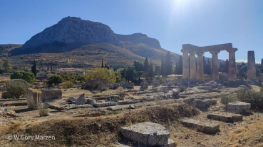
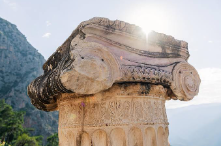
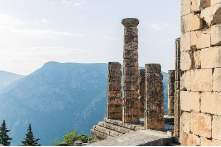
I wonder if such a Political Thery could in relation ‘geopolitical convergence’, advocate universal principles of global ‘Fiduciary Governance’?, which could include preservation of Cultural Heritage and Monuments, and of course the Environment – which are linked.

Note that Cultural Heritage is entwined with UNESCO’s broader mandate concerning human rights, the rule of law, development, and peace.

Cultural identity is considered to part of human dignity. It is linked to human rights because cultural heritage is of crucial importance to individuals and communities as part of their identity.

As cultural heritage requires memory, this applies to both tangible and intangible heritage, because material and physical heritage needs to be placed in both a historical and cultural context, in order to understand its value.

The cultural heritage of a people is not limited to the tangible expressions of art, architecture, religion, poetry, or writing in general but also includes its intangible heritage, which is transmitted from generation to generation, is constantly recreated by communities and groups in response to their environment, their interaction with nature and their history, and provides them with a sense of identity and continuity.

More generally, cultural heritage includes the expressions of the people’s spirituality, and the body of values which give meaning to life.

See also:

Joe Kent: Iran War, Israeli Influence & Creating ISIS – YouTube

‘IDF tortures a baby!’

AI (01,04.2026) – ‘In March 2026, allegations emerged that Israeli Defense Forces (IDF) soldiers tortured an 18-month-old Palestinian baby, Jawad Abu Nassar, to coerce a confession from his father. …

According to family members, witnesses, and regional news outlets like TRT World and Al Jazeera, the incident occurred near the Al-Maghazi refugee camp in central Gaza: Separation and Detention: Jawad’s father, Osama Abu Nassar, was reportedly stopped at a checkpoint, stripped, and interrogated while his son was taken by soldiers.

Physical Abuse: Reports and a medical assessment shared by the family alleged the toddler suffered deliberate cigarette burns on his legs, pricking, and the insertion of a metal nail into his foot.

Release: The child was released after approximately 10 hours through the International Committee of the Red Cross (ICRC), while his father remained in detention.

The United Nations Special Rapporteur and organizations like CAIR have cited this and other reports as evidence of systematic abuse of Palestinian detainees.’

‘I told you once that I was searching for the nature of evil. I think I’ve come close to defining it: a lack of empathy. It’s the one characteristic that connects all the defendants. A genuine incapacity to feel with their fellow man. Evil, I think, is the absence of empathy.’ (Gustave Gilbert – who was, an American Army psychologist assigned to the Nuremberg trials. After closely observing and interviewing the Nazi defendants, he reflected on his search for the nature of evil).

See also:

  • ‘Aaron Maté : IDF Tortures a Baby’: https://lnkd.in/eN7mucyb
  • ‘2,000 British Soldiers Serving In Israel’s Army During Gaza GENOCIDE’: https://www.youtube.com/watch?v=MbN6X1JKRh4

    AI (01.04.2026) – ‘British journalist and commentator Owen Jones has heavily criticized the actions of British citizens serving in the Israel Defense Forces (IDF) during the conflict in Gaza, advocating for their prosecution for alleged war crimes.

    Jones has highlighted that British nationals serving in Israel’s armed forces are contributing to atrocities and has called for them to face legal scrutiny. He has stated that “soldiers who committed these war crimes, including Brits,” should be prosecuted, arguing that “following orders” is no excuse.

    The calls for prosecution of these individuals are part of a wider campaign by legal groups, such as the International Centre for Justice for Palestinians (ICJP) and the Public Interest Law Centre (PILC), which have prepared reports to be filed with police regarding British citizens’ involvement in IDF operations, alleging they participated in serious violations.’
  • ‘Brits Face Gaza WAR CRIME CHARGES’: https://www.youtube.com/watch?v=62do2P5mTBk
  • https://www.youtube.com/watch?v=F8LcRpbZ9qA
  • ‘Torture and genocide Report of the Special Rapporteur on the situation of human rights in the Palestinian territories occupied since 1967’, Francesca Albanese –

    ‘In the present report, the Special Rapporteur on the situation of human rights in the Palestinian territories occupied since 1967 examines the systematic use by Israel of torture against Palestinians from the occupied Palestinian territory since 7 October 2023, encompassing custodial and non-custodial practices that meet the threshold for genocide under the Convention on the Prevention and Punishment of the Crime of Genocide.

    She documents how torture has become integral to the domination of and punishment inflicted on men, women and children, both through custodial abuse and through a relentless campaign of forced displacement, mass killings, deprivation and the destruction of all means of life to inflict long-term collective pain and suffering.’
    https://www.ohchr.org/sites/default/files/documents/hrbodies/hrcouncil/sessions-regular/session61/advance-version/a-hrc-61-71-aev.pdf
  • https://www.democracynow.org/2026/3/24/headlines/un_special_rapporteur_says_israel_has_adopted_torture_as_state_policy
  • ‘How can any moral person justify or support this!’: https://lnkd.in/eQfD6cm5 – ‘I expect that the image of this depraved woman [who is the Deputy Speaker of the Knesset] holding up a ‘death noose’ and symbolic ‘lethal injection’, will become a defining image of the ‘Genocidal Intent’ of the people she represents. Is this the moral cause for which mothers and fathers in America are giving up their sons and daughter to fight, and to die for?’
  • AI (01.04.2026) – ‘Multiple investigations and reports have documented members of the Israel Defence Forces (IDF) posting photos and videos of themselves with detained Palestinians in humiliating or abusive circumstances on social media. …

    Specific documented instances include an officer posting a photo of himself standing over a handcuffed, undressed hostage, and soldiers filming themselves mocking or forcing detainees into “stress positions”. …

    Investigations by BBC Verify and The New York Times analyzed hundreds of such posts across platforms like TikTok, Instagram, and Facebook. These reports found that many soldiers did not hide their identities when uploading this content.

    Legal experts and human rights organizations, including Human Rights Watch and UN investigators, have stated that filming and publishing such images may constitute war crimes as they violate international laws protecting detainees from “public curiosity” and “humiliating and degrading treatment”. …

    Additionally, high-profile footage from the Sde Teiman detention facility—which reportedly showed soldiers sexually abusing a detainee—was leaked to Israeli media in 2024 rather than posted by the soldiers themselves.’
  • ‘Israel tortured 2 year old child, Gaza doctor testifies’: Israel tortured 2 year old child, Gaza doctor testifies

‘Israel’s parliament passed a sweeping death penalty law targeting Palestinians on Monday, triggering widespread international condemnation – as lawmakers celebrated with champagne inside the Knesset. The bill, approved by 62 of the Knesset’s 120 members with 48 opposed and one abstention, will instruct military courts to impose capital punishment on Palestinians convicted of killing Israelis in acts defined as “terrorism”. It takes effect within 30 days, and crucially, does not apply to Jewish Israelis convicted of the same crime. Far-right extremist National Security Minister Itamar Ben-Gvir, who had made the law a core condition of his party’s coalition agreement with Prime Minister Benjamin Netanyahu, appeared in the chamber wearing a lapel pin shaped like a metal noose before the vote.’

As far as I am aware Israel has become the first state in history to legislate for a death penalty that only applies to one ethnic group, which in the case of the Palestinians – are living under occupation by Israel in breach of International Law.

‘Globally, In the art and architecture of which ancient civilizations was dualism and symmetry used to reflect the divine principle of cosmic order, balance, and truth?’

AI – ‘Dualism and symmetry were fundamental to the art and architecture of several major ancient civilizations to mirror cosmic order:

  • Ancient Egypt: The concept of Ma’at (truth, balance, and order) was expressed through strict bilateral symmetry in temples and statues. This reflected the dualism of the Red Land (desert) and Black Land (fertile soil), as well as the unification of Upper and Lower Egypt.
  • Ancient China: The philosophy of Yin and Yang dictated that harmony arises from the balance of opposites. This was physically manifested in the symmetrical layouts of palaces and cities, aligned to cardinal points to mirror the celestial order.
  • Pre-Columbian Mesoamerica (Maya and Aztec): Architecture often featured dual temples (like the Templo Mayor) representing opposing forces like rain/fertility and war/fire. Symmetry was used to align buildings with astronomical events, grounding the earthly realm in the divine movements of the stars.
  • Ancient Mesopotamia: Sumerian and Babylonian ziggurats and palaces used rhythmic, symmetrical patterns to represent the king’s role as the mediator who maintains order against primordial chaos.
  • The Andes (Inca and Chavín): The principle of Yanantin (complementary dualism) influenced the “u-shaped” ceremonial centres and dual-walled architecture, emphasizing the union of unequal but complementary parts’ 

‘How and why were dualism and symmetry utilised in ancient Egyptian art and architecture?’

AI – ‘In ancient Egyptian art and architecture, dualism and symmetry were not merely aesthetic choices but essential tools used to reflect Ma’at, the divine principle of cosmic order, balance, and truth. By mirroring elements across a central axis, Egyptians believed they were manifesting the harmony of the universe and keeping the forces of chaos (Isfet) at bay. 

Why Dualism and Symmetry Were Utilised

The primary motivation was religious and philosophical rather than decorative: 

  • Representation of Ma’at: Symmetry was the physical manifestation of Ma’at, the goddess of balance. Upholding this balance was the sacred duty of the Pharaoh and every citizen to ensure the sun rose and the Nile flooded.
  • Cosmic Duality: Egyptians saw the world in pairs: male/female, light/dark, and life/death. Art and architecture mirrored these dualities to reflect the divine design of the universe.
  • Stability and Authority: Symmetrical poses in statues of pharaohs signified eternal strength, stability, and divine legitimacy.
  • Spiritual Connection: Statues and temples were “spiritual tools” designed to connect the mortal and divine realms. Perfection in form was required for a deity’s spirit to inhabit a statue.
  •  How They Were Implemented

Ancient Egyptians achieved this rigorous balance through specific technical methods and architectural designs: 

  • Canon of Proportions & Grids: Artists used a standardised grid system to ensure identical measurements on both sides of a figure. For example, the Statues of Ramses II at Memphis and Luxor exhibit nostrils and facial features that are mathematically identical.
  • Bilateral Symmetry in Architecture: Temples were often designed with a long horizontal axis where one side mirrored the other. Pylons (monumental gates) consisted of two identical towers flanking a central doorway, representing the horizon.
  • Matching Pairs: Statues and obelisks were frequently created in identical pairs to guard temple entrances, reinforcing the concept of dual balance.
  • The “Composite Pose”: In two-dimensional art, figures were shown from their most “truthful” or representative angles (e.g., torso frontal, face in profile) to capture the ideal essence of the subject rather than a fleeting naturalistic view.’

‘Is there a 2nd Sphinx?’

See – Filippo Biondi | BREAKING NEWS: Second SPHINX found under Giza Plateau: Filippo Biondi | BREAKING NEWS: Second SPHINX found under Giza Plateau

AI –  ‘While there is no proven second Great Sphinx  at Giza, the idea that one once existed or remains buried is a long-standing theory in Egyptology that has recently gained new attention. 

Current evidence and theories regarding a second Sphinx include:

  • Recent Radar Scans (2026): Italian researcher Filippo Biondi and his team recently claimed that satellite radar scans of the Giza Plateau show a “massive structure” buried under a 108-foot-high mound of hardened sand. They believe this structure is a mirrored twin of the Great Sphinx, aligned geometrically with the pyramids.
  • The Dream Stele: A stone slab located between the paws of the Great Sphinx depicts two sphinxes side by side. Some researchers argue this isn’t just symbolic art but a literal record of two monuments that guarded the plateau.
  • Historical Symmetry: Ancient Egyptian art and architecture often utilised dualism and symmetry. Sphinxes were frequently built in pairs to guard entrances, representing the rising and setting sun.
  • Scientific Skepticism: Most mainstream archaeologists, including former Egyptian Minister of Antiquities Zahi Hawass, have dismissed these claims. They argue the area has been extensively excavated for decades without finding a second statue and that current radar data may simply show natural rock formations or small voids.
  • Other Discoveries: While not a “second Great Sphinx,” other sphinxes exist in Egypt, such as the Alabaster Sphinx of Memphis and two recently discovered large sphinxes at a funerary temple in Luxor.’

‘How and when in antiquity did occult practices become part of Judaic practices?’

AI – ‘In antiquity, occult and mystical practices (often termed “Jewish magic” or “esotericism”) became integrated into Judaic rituals primarily during the Second Temple period (c. 516 BCE – 70 CE) and the subsequent Rabbinic era (2nd–6th centuries CE). 

While the Hebrew Bible officially forbade “magic,” these practices developed as a “technology” for healing, protection, and divine encounter, often blending native traditions with influences from neighboring cultures. 

Timeline of Integration

  • Post-Exilic Period (5th Century BCE): Following the end of official prophecy, spiritual seekers transitioned from direct revelation to mystical speculation and esoteric interpretation of scripture.
  • Late Second Temple Period (c. 200 BCE – 70 CE): “Apocalyptic Judaism” introduced complex angelology and visionary ascents, seen in texts like 1 Enoch and the Dead Sea Scrolls.
  • Talmudic/Rabbinic Era (2nd – 6th Century CE): Early rabbinic elites developed “Ma’aseh Merkavah” (the Work of the Chariot) and “Ma’aseh Bereshit” (the Work of Creation), focusing on the secrets of the divine throne and the origins of the cosmos.
  • Late Antiquity (3rd – 7th Century CE): The first formal magical treatises, such as Sefer Yetzirah (Book of Creation) and Harba de-Moshe (Sword of Moses), appeared, detailing alphanumeric cosmology and recipes for enlisting angels. 

How Practices Became Ritualised

  1. Scriptural Reinterpretation: Mystics used the Torah as a blueprint for the universe. By manipulating Hebrew letters and divine names—believed to be the tools of creation—practitioners aimed to influence the material world.
  2. Angelic Adjuration: Rituals often involved “Practical Kabbalah,” where specialists invoked the names of angels to provide healing, protection against demons (shedim), or to gain spiritual ascent.
  3. Amulets and Incantations: The use of Aramaic incantation bowls and protective amulets became widespread for domestic protection, often blending Jewish divine names with Graeco-Egyptian magical formulas.
  4. Cultural Syncretism: Contact with Persian, Babylonian, and later Hellenistic cultures enriched Jewish traditions with new techniques like dream interpretation and astrology, which were then “Judaized” through biblical frameworks. 

Key Early Forms

  • Merkavah Mysticism: Ritualised meditation and hymns designed to allow the practitioner to safely pass through seven heavenly “palaces” (hekhalot) to view the divine chariot.
  • Hekhalot Literature: A body of texts describing the rituals, angelic guards, and specific divine names required for these celestial journeys.
  • Folk Magic: Popular rituals for the “Evil Eye” (ayin hara) and protection from spirits like Lilith became staple elements of daily religious life.’ 

‘In antiquity what warnings were given about corruption of the soul through economic exploitation?’


AI – ‘In antiquity, warnings about the “corruption of the soul” through economic exploitation were most prominently voiced by the Prophets of Ancient Israel, who frequently condemned high priests and religious elites for their roles in such systemic abuse. 

While “high priest” was an official title, the most famous critiques of this specific corruption came from figures who challenged the priestly establishment:

Prophetic Critiques of Priestly Corruption 

  • Micah of Moresheth: Micah explicitly condemned the religious leadership of Judah, stating that “her priests teach for a price” and her leaders “judge for a bribe”. He warned that this economic exploitation of the poor was a betrayal of their covenant with God and would lead to divine judgment.
  • Jeremiah: Known for his “Temple Sermon,” Jeremiah accused the priests of his day of being ungodly and “dealing falsely”. He argued that their focus on ritual while ignoring justice and the exploitation of the “sojourner, the fatherless, and the widow” had fundamentally corrupted the nation’s spiritual standing.
  • Hosea & Amos: These contemporaries warned that dishonest economic practices, such as using “dishonest scales,” were symptoms of a rotted soul and a society that had abandoned spiritual integrity for material gain. 

Historical Examples of Priestly Exploitation

  • The Sons of Eli (Hophni and Phinehas): In the 11th century BC, these priests are cited as the quintessential examples of corruption. They exploited their positions for personal gain, forcibly taking the best portions of sacrifices and treating the offering of the Lord with contempt.
  • First-Century Temple Establishment: Historical accounts from Flavius Josephus and Rabbinic literature describe the high priestly families (like those of Annas and Caiaphas) as being widely perceived as corrupt and oppressive. They were accused of using their political power to exploit the Jewish populace, leading to the public perception that the Temple itself had become a “den of robbers”

Other Ancient Perspectives

  • Ancient Egypt: While high priests often held immense economic power through temple land ownership, the Great Edict of Horemheb contains warnings against royal and religious officials who extorted the poor under the guise of collecting taxes.
  • Ancient Greece: While not “high priests” in the same sense, figures like Solon acted as mediators in 6th-century BC Athens to stop the exploitation of poor farmers who were being sold into slavery for debt, framing his reforms as a necessary restoration of “justice and stability”. …’

‘How can any moral person justify or support this!’

See – ‘The End of Israel: The Ultimate Evidence’: https://lnkd.in/eb4P3dZD

Scroll forward to 11:20 – The woman on the right holding a ‘noose’ in her right hand and a symbolic ‘lethal injection’ in her left hand – ‘celebrating Israeli plans to introduce the death penalty for Palestinians’, is the Deputy Speaker of the Knesset. Her named is Limor Son Har-Melech, and she is a member of the far-right Otzma Yehudit party.

The full trial on the merits of the case brought against Israel at the ICJ in the Hague is expected to reach oral hearings in early to mid-2027, i.e. in less than 12 months time.

I wonder if meanwhile, any Rabbi, Jewish Community Leader, or Westminster Politician, will unequivocally and unconditionally condemn the depraved behaviour of Limor Son Har-Melech, or whether they will seek to excuse or justify it – or just acquiesce by turning a ‘Nelsonian Blind Eye’? – Let us see how they behave.

I also wonder whether the ICC will investigate Limor Son Har-Melech for inciting:

(i) the mass murder of civilians;
(ii) War Crimes;
(iii) Crimes against Humanity; and
(iv) Genocide.

I expect that the image of this depraved woman holding up a ‘death noose’ and symbolic ‘lethal injection’, will become a defining image of the ‘Genocidal Intent’ of the people she represents.

Is this the moral cause for which mothers and fathers in America are giving up their sons and daughter to fight, and to die for?

See also:


‘In the negotiation of an International Dispute the least effective sources of power are position and coercion.’

Before going offline from LinkedIn for at least six months in order to maximize my available time for writing my next book – ‘Mediation of Cultural Heritage Disputes’, I could not resist one more post.

I ma currently reading the ‘Handbook of Global And Multicultural Negotiation’ by Christopher W.Moore and Peter J.Woodrow (2020) which contains the following advice:

‘in the context of negotiations, the least effective sources of power are position and coercion. Positional power works only if the holder also possesses a number of other sources of power, such as perceived legitimate authority. Coercive power is effective only if a party actually possesses it, is willing to use it, can overcome resistance from the counterpart that the use of force provokes, and has accurately assess the ability of the counterpart to withstand the exercise of this form of power. If these conditions are not met, the use of coercive power will not only be ineffective, that may result in unanticipated negative consequences and make a situation worse. Negotiators should use only the minimum amount of power needed to obtain a desired change. Overuse of any source of power may cause resistance on the part of a counterpart.’

As I was taught by the Head of Legal of the Rolls-Royce industrial Power group at the tender age of 28, before being dispatched to the Far East to negotiate a multi-million pound ‘major project’ contract – ‘only ever make a threat, if you have the authority to carry through and are willing to do so. Otherwise, you will lose all credibility as a negotiator.’

This is wise advice that I follow to this day.

When as a negotiator you exercise power, there is no going back, so power should only be exercised when absolutely necessary. Otherwise, the consequences may prove to be catastrophic.

The company was awarded the contract.

In my view, the equivalent of winning a contract in a conflict resolution scenario, is settlement. I consider that the wisdom outlined above transfers across and applies equally to the Mediation of an International Dispute. That is why a theatrical display of coercive power which cannot logistically be carried through with success, predetermines failure. In other words, it is an elementary and catastrophic mistake.

Comments added:

  • This by the way, is why it is so dangerous to bluff, i.e. because your counterpart may call your bluff! Then if a decision is made to go up the ‘escalation ladder’, without thoroughly thought through ‘logistical’ planning and preparation, then the outcome for the aggressor will be failure. Likewise, if their counterpart has anticipated the escalatory move and has prepared, then the outcome will be far worse, because not only will the aggressor have failed to achieve their stated strategic objectives, they will also have walked into a trap – which will result in a ‘quagmire’!