
There is an ‘artistic’ nexus between:
(i) Geometric patterns in Moorish Art; and
(ii) Ancient ‘Sacred Geometry’.
‘Sacred Geometry’ is based upon the universal and ‘Cosmic’ language of mathematics.
AI – ‘Moorish geometric patterns—the distinctive visual language of the Islamic West (Al-Andalus and the Maghreb)—are deeply derived from and inspired by ancient sacred geometry through a process of “creative appropriation”. While these patterns reached their peak of complexity in the 14th-century Alhambra, they are structurally rooted in the mathematical and philosophical traditions of late antiquity, specifically those of the Greeks, Romans, and Sasanians.
Structural Inheritance from Classical GeometryThe foundational shapes and structures of Moorish art are directly based on the geometry of Euclid and other ancient Greek mathematicians.
- The Circle as Foundation: In both ancient sacred geometry and Moorish design, the circle is the ritual and mathematical starting point. Every pattern begins by dividing a circle into equal sections (four-fold, five-fold, or six-fold), a method that mirrors ancient cosmic symbolism.
- Archimedean Tilings: Moorish designers utilized the full range of Archimedean tilings—composed of simple polygons first discovered by the Greeks—to create their tessellations.
- Pythagorean Influence: The concept of “Abrahamic Pythagoreanism” in Islamic thought views numbers and figures as keys to the structure of the cosmos. The Golden Ratio (), a staple of ancient Greek sacred geometry, is reflected in the harmonic proportions of Moorish patterns to symbolize universal balance. Art of Islamic Pattern +4
2. Adaptation and EvolutionMoorish art did not just copy ancient forms; it transformed them into a unique system of decoration that emphasized unity (“Tawhid”).
From Independent to Interconnected: While ancient Hellenic mosaics often used stars as independent, scattered motifs, Moorish patterns evolved these into an interconnected network where every line is an integral part of a unified, infinite whole.
The Polygonal Technique: By the 11th century, Moorish and wider Islamic artists developed the “polygonal technique,” using underlying tessellations of regular polygons as a hidden “veil” to generate increasingly complex star patterns.
Regional Specialisation: While sharing a common ancestry with Eastern Islamic art, Moorish art (notably Zellij tilework) specialized in specific complex forms, such as 16-point stars, which are less common in other regions. ScienceDirect.com +3
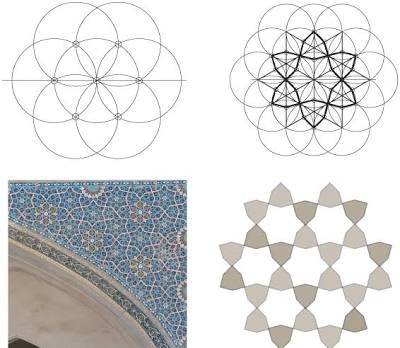
Introduction to Geometry – Art of Islamic PatternArt of Islamic Pattern
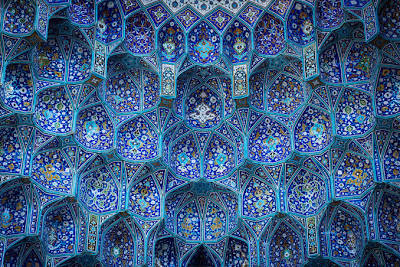
The Stunning Beauty of Islamic Geometry | by Ali | MediumAli – Medium
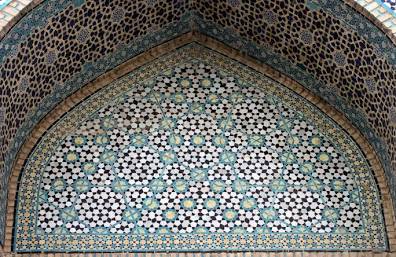
Sacred Geometry: The Spiritual Meaning of Islamic …Architecture, Culture, and Spirituality Forum
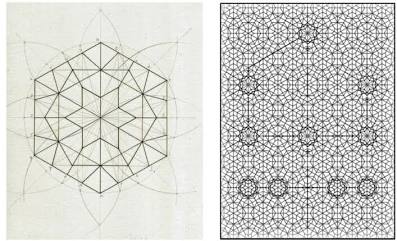
Sacred Geometry: The Spiritual Meaning of Islamic …Architecture, Culture, and Spirituality Forum
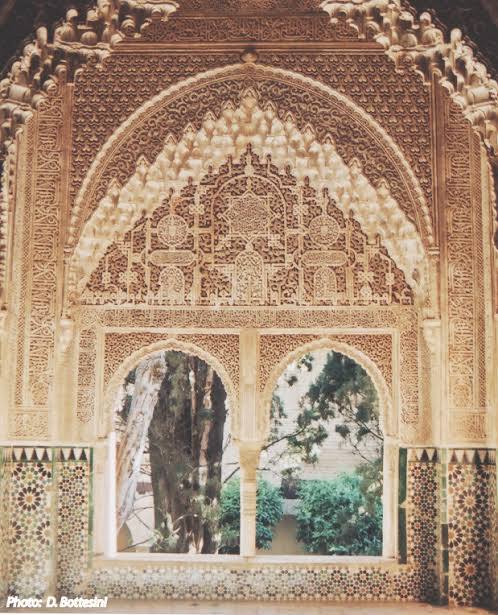
Introduction to Geometry – Art of Islamic PatternArt of Islamic Pattern
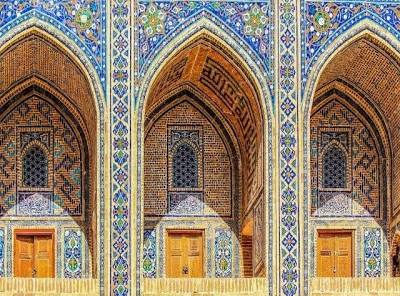
Islamic Geometric Patterns: Exploring The Harmony Between …The Decor Journal India
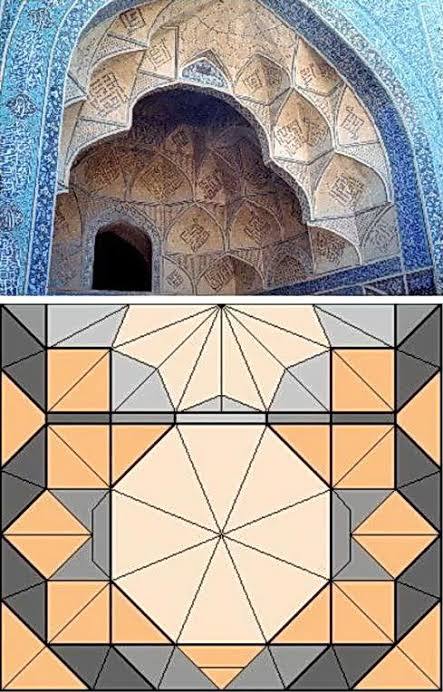
New Discoveries in the Islamic Complex of Mathematics …Muslim Heritage
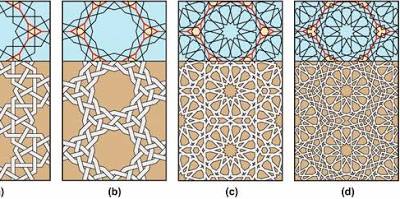
The Historical Significance of the Geometric Designs in the …Springer Nature
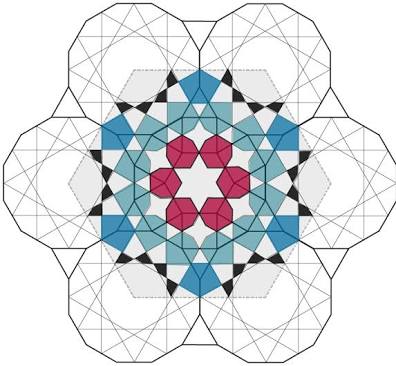
Introduction to Geometry – Art of Islamic PatternArt of Islamic Pattern
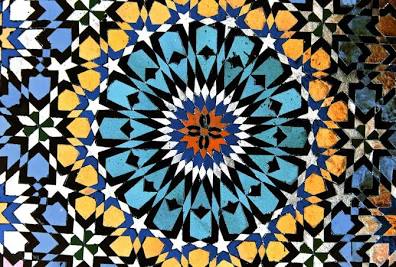
Islamic Tile History and Inspiration – Why TileWhy Tile
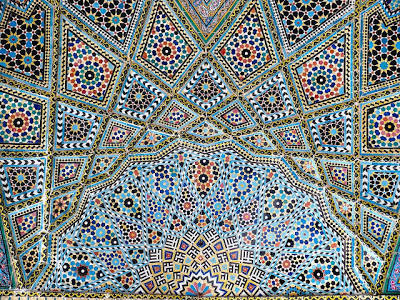
Islamic Tile History and Inspiration – Why TileWhy Tile
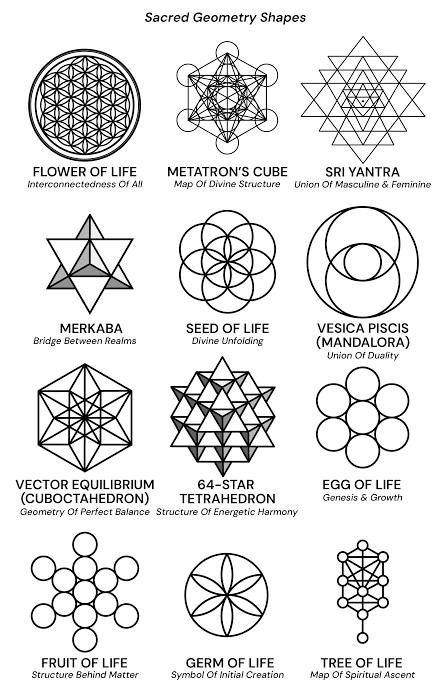
Introduction To Sacred Geometry – Rare Earth GalleryRare Earth Gallery
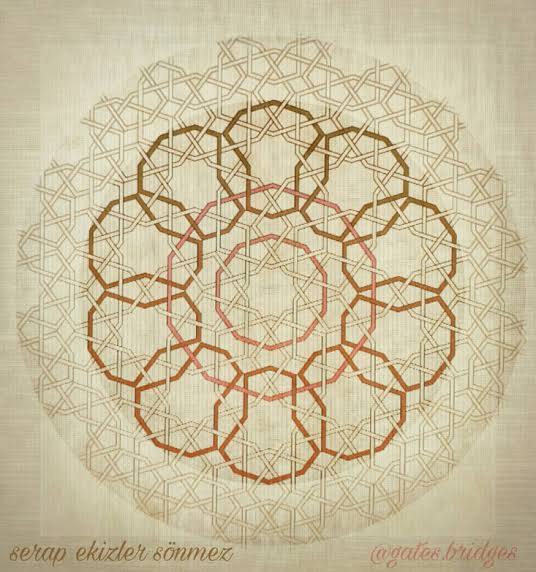
Islamic Geometric Patterns | Deen Arts FoundationDeen Arts Foundation
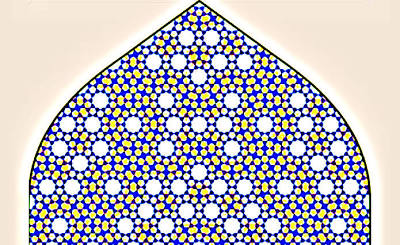
New Discoveries in the Islamic Complex of Mathematics …Muslim Heritage
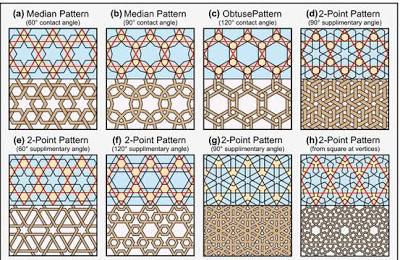
The Historical Significance of the Geometric Designs in the …Springer Nature
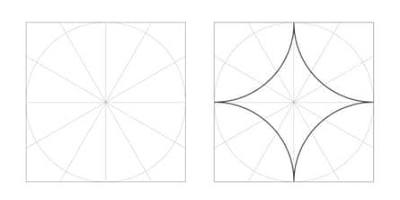
Muslim rule and compass: the magic of Islamic geometric …The Guardian
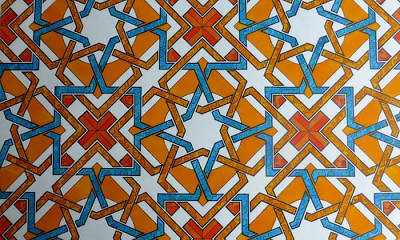
Muslim rule and compass: the magic of Islamic geometric …The Guardian
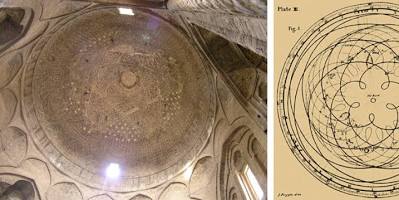
Introduction to Geometry – Art of Islamic PatternArt of Islamic Pattern
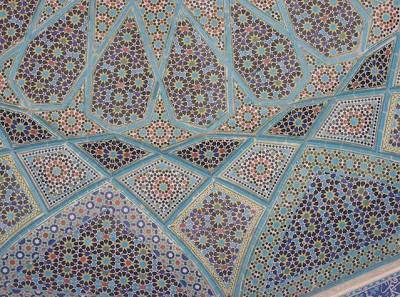
Introduction to Geometry – Art of Islamic PatternArt of Islamic Pattern3. Spiritual and Metaphysical SymbolismThe inspiration from sacred geometry is most evident in the metaphysical meanings attributed to the shapes:
- Infinity: The repetition of patterns suggests the infinite nature of God, a direct evolution of the ancient interest in the “divine perfection” of mathematical design.
- Numerology: Similar to ancient sacred traditions, specific numbers hold weight; for example, the number four represents the cardinal directions and the four elements, while eight-pointed stars (the “Khatam”) often symbolize the “seal” of order. Art of Islamic Pattern +3
For those looking to explore the technical construction of these patterns, resources like Art of Islamic Pattern offer detailed educational guides, while books such as Islamic Geometric Patterns by Eric Broug provide step-by-step recreation techniques. …
The question of whether mathematics is a “cosmic language” is a central debate in both philosophy and science, typically split into two main viewpoints: discovery (math is an inherent part of the universe) versus invention (math is a human-made tool).
1. The Argument for Math as a Cosmic Language
Proponents argue that mathematics exists independently of human thought and is the “blueprint” of reality.
- Predictive Power: Math often predicts phenomena before they are physically observed. For example, Einstein’s equations predicted black holes before we had observational evidence.
- Universality of Laws: The same physical constants, like or the speed of light, remain consistent throughout the observable universe.
- SETI & Alien Contact: Scientists have used math (e.g., prime numbers and binary code in the Arecibo Message) as the most likely bridge for communicating with extraterrestrial intelligence, assuming any advanced civilization would discover the same logic.
- Mathematical Universe Hypothesis: Max Tegmark posits that the universe isn’t just described by math, it is a mathematical structure.
2. The Argument for Math as a Human InventionCritics argue that math is a specialized language created by the human brain to model and simplify complex physical realities.
Anthropocentric Bias: Our base-10 counting system is likely rooted in our having ten fingers. Aliens might have entirely different representations or biological sensory processing that would make our “logic” incomprehensible to them.
A Descriptive Map: Just as a map of a city is not the city itself, mathematical equations are models that describe the “terrain” of the universe but are not the fundamental fabric of it.
Limitations in Meaning: While math is perfect for logical deduction, it lacks the capacity to express abstract cultural concepts like “peace,” “empathy,” or “friend”.
Key Perspectives from History
| Thinker | Perspective |
|---|---|
| Galileo Galilei | Famously stated, “The book of nature is written in the language of mathematics”. |
| Eugene Wigner | Noted the “unreasonable effectiveness of mathematics” in describing the physical world as something bordering on mysterious. |
| Richard Feynman | Believed the universe appeared to be mathematical by its very nature, calling the existence of such rules a “miracle”. |
| Lakoff & Núñez | Argue math is grounded in our physical embodiment (moving through space, holding objects), making it human-specific. |
In antiquity, the golden ratio—then known as the “extreme and mean ratio”—signified a fundamental link between mathematical logic and the physical world. It was primarily a tool for understanding cosmic harmony, geometric perfection, and aesthetic balance.
Significations in Antiquity
- Universal Order and Harmony: For the Pythagoreans, the ratio was a symbol of “all is number”. They believed the universe was an ordered system governed by specific proportions. The ratio appeared in the geometry of the pentagram, which the Pythagoreans used as a symbol of health and secret recognition.
- Aesthetic Perfection: Ancient Greeks, such as the sculptor Phidias, are believed to have used the ratio to achieve ideal beauty and balance in sculpture and architecture. It was viewed as a way to create compositions that were naturally pleasing to the human eye.
- The “Sacred Ratio”: According to some historical accounts, ancient Egyptians referred to this proportion as the “sacred ratio,” using it in the construction of temples and religious structures to connect their work with divine order.
- Mathematical “Jewel”: Later ancient mathematicians like Euclid (c. 300 BCE) provided the first formal definition of the ratio in his work Elements. For Euclid and his successors, it was one of geometry’s “treasures,” essential for constructing perfect shapes like the dodecahedron, which was often associated with the cosmos.
Alleged Ancient ApplicationsWhile modern scholars debate whether these were intentional or coincidental, many famous ancient works are frequently cited as examples of the ratio’s significance:
| Ancient Structure | Purported Signification |
|---|---|
| The Parthenon | Used to achieve balanced proportions in the facade and columns. |
| Great Pyramid of Giza | Represented a sacred link between height and base area. |
| Greek Statues | Defined the “ideal” proportions of the human body and face.’ |
While conventional wisdom amongst archaeologists is that there was no contact between: (i) ancient civilizations in the Americas; and (ii) ancient civilizations in Europe, Africa and Asia, coincidentally, perfect shapes form the backbone of design in the art and architecture of ancient civilizations in Central and South America, who often blended them with organic, zoomorphic, and astronomical alignments to create a deeper meaning.
The Maya used precise rectangles and triangles in their pyramids (like El Castillo at Chichén Itzá), but they designed them so the sun would create a moving ‘serpent’ of shadow during the equinox.
The Inca were masters of the trapezoid. They used it for doors and windows because it provided superior seismic stability against earthquakes while maintaining a clean, geometric look.
The Aztecs used the circle not just for aesthetics, but as a framework for complex cosmological calendars, mapping the entire history of the universe within a single round stone.
In these cultures, geometry was not just about math; it was a way to anchor their buildings to the stars and the earth.