
AI – ‘The Vitruvian Triad refers to the three core principles of good architecture defined by the ancient Roman architect Vitruvius in his treatise De Architectura. He argued that all successful buildings must satisfy three essential conditions: Strength, Utility, and Beauty. [1, 2, 3, 4]
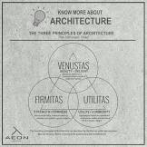
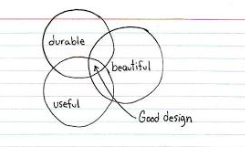
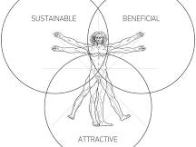
These principles, often cited by their Latin names, remain foundational to architectural theory today: [1, 2]
- Firmitas (Strength/Durability): A building must be structurally sound and able to withstand the elements and time. It should remain in excellent condition for an extended period.
- Utilitas (Utility/Functionality): A building must be useful and beneficial to its residents or users. It should appropriately respond to the needs and space requirements of its intended occupants.
- Venustas (Beauty/Aesthetics): A building should be attractive, appealing, and raise the spirits of those who see it. This includes harmony, proportion, and craftsmanship that creates “delight”.
Historical Context and InfluenceIn the 17th century, Sir Henry Wotton famously translated these terms into the “great slogan” of architecture: “Firmness, Commodity, and Delight”.
The triad is so influential that:
- It is listed on the reverse side of the Pritzker Architecture Prize medal.
- It serves as the conceptual basis for Leonardo da Vinci’s “Vitruvian Man”, which links architectural proportions to the ideal symmetry of the human body.
- Modern designers often adapt these pillars to digital fields, such as Web Design or UX, mapping them to reliability, usability, and delight. …
In the architecture of antiquity, “delight” (Latin: venustas) was the aesthetic quality of a building that inspired joy and visual pleasure. According to the Roman architect Vitruvius, delight was achieved when a structure’s appearance was pleasing and in good taste, specifically through the integration of harmony, proportion, and craftsmanship. [1, 2, 3, 4, 5]
1. Harmony (Symmetria) [1, 2]Harmony was used to unify all parts of a building so they related logically to each other and to the whole structure. [1, 2]
- Balance & Symmetry: Architects used symmetrical balance—where elements on either side of a central axis were identical—to convey order and stability, as seen in the Parthenon in Athens.
- Contextual Unity: Harmony also involved the building’s relationship with its surroundings. Greek temples were often conceived as sculptural entities within the landscape, raised on high ground to supplement the natural topography rather than impose upon it. [1, 2, 3]
2. Proportion (Analogia)Proportion was the mathematical foundation of beauty, ensuring every element was strictly and relationally proportional to every other part. [1]
- The Human Scale: Ancient architects based their rules of proportion on the human body. For example, the Doric order was considered “masculine” with a height-to-diameter ratio of 1:8, while the Ionic order was seen as “feminine” and more slender at 1:9.
- Mathematical Ratios: Principles like the Golden Ratio (approx. 1.618) were used to determine the ideal dimensions of rooms, facades, and the spacing of columns to create a sense of visual equilibrium.
- Optical Corrections: Architects applied “entasis” (a slight curve in columns) and upward curves in temple foundations to correct optical illusions that would otherwise make straight lines appear to sag, ensuring the final result looked “perfect” to the eye. [1, 2, 3, 4, 5, 6, 7, 8, 9]
3. Craftsmanship (Refinement)Craftsmanship translated abstract mathematical ideals into tangible objects of delight through meticulous detail and execution. [1, 2]
- Material Integrity: The transition from wood to stone construction required masons to dutifully copy wooden details—like triglyphs and beams—into stone, creating a familiar, elaborate grammar of architectural elements.
- Intricate Detailing: Even in massive temples, intricate detailing of the classical orders ensured that elements remained comprehensible on a human scale.
- Symbolic Ornament: Craftsmanship wasn’t just about utility; it was about using sculpture and surface effects to attract and “arouse a feeling of love” or joy in the viewer, much like the Greek word for statue (agalma) means “to give joy”. [1, 2, 3, 4, 5, 6]’
From where and how, did these ‘mathematical ideals’ originate?