
AI – ‘The Peruvian harp (arpa peruana) was introduced by Spanish conquistadors and missionaries in the 16th century. While the harp as a global instrument has ancient origins dating back over 5,000 years to Mesopotamia and Egypt, the specific Peruvian tradition began roughly 400 to 500 years ago. [1, 2, 3, 4, 5, 6]
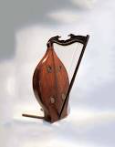
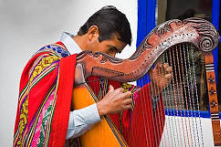

Historical OriginsAlthough the instrument itself is European, it has been deeply “Andeanized” over centuries by native Peruvian communities. [1, 2, 3]
- Arrival: Spanish colonists brought the diatonic harp to the Americas to accompany liturgical singing and aid in evangelisation.
- Adaptation: Native artisans redesigned the instrument using local tropical woods and adapted it to play indigenous rhythms.
- Design: The Peruvian harp is typically larger than a Celtic harp but smaller than a modern orchestral grand harp. [1, 2, 3, 4]
Cultural and Sacred StatusThe Peruvian harp is considered a sacred tool in specific ceremonial and spiritual contexts within the Andes. [1, 2, 3, 4, 5]
- Ceremonial Use: It is central to traditional festivals, such as the Feast of San Juan, and rituals like the Scissors Dance (Danza de las Tijeras).
- Spiritual Bridge: In many communities, it is viewed as a bridge between the physical and divine worlds, often used in healing or during “passing” rites.
- Regional Variations: Different areas have unique styles, such as the rounded lines of the Ayacucho harp or the wider frame of the Huancaína model. [1, 2, 3, 4, 5]
Key Regional Styles
| Style [1, 2, 3, 4] | Characteristic | Origin |
|---|---|---|
| Ayacuchana | Known for rounder lines and delicate bass patterns. | Ayacucho |
| Cusqueña | Often smaller, known as the domingacha; sometimes carried on the shoulder. | Cusco |
| Huancaína | Features a wider resonator body for deeper sound. | Huancayo |
Listen to the music of Francisco Yglesia on Amazon Music.Francisco Yglesia