
AI – ‘The “Sun Cross of Ayanis” refers to an ancient carved relief discovered behind the altar of the Temple of Haldi in the Ayanis fortress near Lake Van, Turkey.
This specific archaeological artifact has gained significant traction in alternative history circles and “citizen archaeology,” most notably popularized by author and researcher Matthew LaCroix. [1, 2]
Discovery and Architectural ContextThe symbol is carved into a highly durable andesite stone block—measuring between 7 and 7.5 on the Mohs hardness scale—located directly behind the temple’s central altar.
Ayanis was one of the most vital fortresses built during the peak of the Urartu Kingdom (frequently referred to in these theories as the Ararat Civilization) during the 7th century BCE. [1]
What makes the carving a focal point of alternative engineering theories is its precision. The intricate, geometric design spans seamlessly across multiple fitted stone blocks, leading some researchers to claim that the ancient builders used advanced “laser-cut” masonry techniques. [1]
The “First Cross” Theory – Alternative historians hypothesize that the Ayanis Sun Cross might be the oldest known expression and true origin point of the cross symbol in human history.
The relief takes the form of an equilateral cross contained perfectly within a circle—a classic solar or wheel cross motif. [1, 2, 3, 4]
LaCroix and other researchers trace a historical “lineage” of this specific design, arguing that it was preserved through esoteric traditions across millennia: [1]
- Urartu Origin: Originates as a sacred cosmic template in the Temple of Haldi at Ayanis. [1]
- Mesopotamian & Egyptian Migration: Appears later on the chest relief of Assyrian King Shamshi-Adad V, and within the Temple of Isis on Philae Island, Egypt. [1]
- Esoteric & Modern Survival: Eventually adopts a path into European history, appearing in Knights Templar iconography and surviving into modern Vatican heraldry and papal attire. [1, 2]
Academic vs. Alternative Views – While alternative researchers view the Ayanis relief as evidence of a lost, highly advanced ancient tradition connecting global civilizations, mainstream archaeologists classify the sun cross as a universal solar symbol.
Mainstream historical consensus generally holds that the cross-in-circle design emerged independently across many prehistoric Neolithic and Bronze Age cultures worldwide—from Scandinavia to the Mediterranean—initially representing chariot wheels, the changing seasons, and cosmic order. [1, 2, 3, 4, 5]
In the ancient Kingdom of Urartu (which was centered around Lake Van), the winged solar disc was the primary symbol of Shivini, the Urartian sun god. [1, 2, 3]
At Ayanis: Archeological excavations of the Ayanis fortress (a major Urartian site overlooking Lake Van) have unearthed small artifacts and clay objects linked to these religious motifs. For example, studies on Ayanis small finds note that specific winged iconography found at the site may be directly associated with the god Shivini and his winged solar disc symbol. [1, 2]
Anthropomorphic representation: Shivini himself is often depicted in anthropomorphic form—specifically as a man on his knees holding up the solar disc, or as a human-like figure with divine elements. [1, 2]
While the symbol appears across several prominent Urartian sites in the Lake Van basin (such as Toprakkale, Altintepe, and Karmir-Blur) on medallions, seals, and belts, its presence at Ayanis highlights how central the solar deity’s icon was to the royal fortresses built around the lake. [1, 2, 3, 4]. …
Solar iconography is explicitly tied to Ayanis and the Lake Van region, but with a vital historical caveat regarding the “face”. The site of Ayanis, located right on the shores of Lake Van in eastern Turkey, was a major 7th-century BCE fortress city of the Urartu civilization (the Kingdom of Van). [1, 2]When looking closely at what has been excavated at Ayanis and around Lake Van, the artifacts match the Near Eastern tradition perfectly rather than the later European one: [1, 2]
1. The Winged Solar Disc of ShiviniThe Urartians heavily worshipped a sun god named Shivini. In Urartian art discovered across Lake Van sites—including bronze helmets, plaques, and horse trappings—Shivini is depicted using Near Eastern conventions: [1, 2, 3]
- The Anthropomorphic God: Rather than a flat, circular cartoonish “smiley face” filling a disk, the god Shivini is depicted as a full human figure or half-body torso emerging directly from or kneeling beneath a winged solar disc. [1, 2, 3]
- The Face on the Helmet: On famous Urartian bronze helmets (such as those matching styles found at Ayanis and Toprakkale), you can see the distinctive winged disc with a detailed human bearded face/torso of the god in the dead centre. [1]
2. The Sun Cross of Ayanis – Ayanis is particularly famous for its incredibly precise stone carvings in the Temple of Haldi. Instead of a human face, archaeologists here found geometric cosmic symbols: [1]
- Ayanis features highly stylized, deeply incised Sun Crosses and wheel-like solar motifs cut directly into hard black andesite stone.
- These are abstract geometric symbols representing the sun’s rays and cosmic order, flanked by sacred trees of life, lions, and winged genii. [1, 2]
In antiquity, a human face inside a solar disc appears prominently in specific regions:
- Mesoamerica (The Maya and Aztecs)
- The Aztec Sun Stone: The most famous ancient example of a face in a solar disc is the Aztec Sun Stone, which features the detailed face of the sun god Tonatiuh (or Tlaltecuhtli) directly in the center of a massive circular solar disc.
- Mayan Solar Glyphs: The Maya regularly depicted their sun deity, Kinich Ahau, with distinct facial features (large eyes, crossed eyes, and a prominent tooth) framed entirely inside a circular solar cartouche or glyph.
2. The Ancient Near East (Assyria and Persia)While the Egyptians used a purely geometric disc with rays ending in human hands for the god Aten, neighboring civilisations modified the winged sun disk: [1, 2]
- Assyrian and Persian Reliefs: In ancient Mesopotamia and Persia, the solar disc was anthropomorphised by placing the torso and face of a god (such as Ashur, Shamash, or the Zoroastrian Faravahar) emerging directly from the middle of the winged disc. [1, 2]
3. Ancient India (Vedic Tradition)
- The Solar Purusha: Ancient Sanskrit literature (such as the Upanishads and classical Kavya poetry) details a distinct theological concept of the solar disc containing a “golden Personality” or cosmic human consciousness (Purusha) dwelling right inside the sun’s centre. [1]
The sun cross (or wheel cross) is one of the most universally distributed symbols in human history, appearing across completely disconnected ancient civilizations thousands of years before the Urartu kingdom.
While alternative history narratives focus heavily on its specific path through Mesopotamia and Egypt, mainstream archaeology documents the equal-armed cross inside a circle as a fundamental cosmic marker worldwide.
| Civilization / Culture | Timeline | Appearance & Archaeological Context |
|---|---|---|
| Neolithic & Bronze Age Europe | c. 3000 – 1000 BCE | Carved extensively into rock faces across Scandinavia (such as the Bohuslän petroglyphs) and the Southern Alps. It represented the sun chariot, the four seasons, and the solar calendar. |
| Ancient Mesopotamia | c. 2000 – 600 BCE | Featured as the primary symbol of Shamash, the Assyrian and Babylonian god of justice and the sun. It is famously worn as a massive amulet on the chest of King Shamshi-Adad V in his Neo-Assyrian stela. |
| Indus Valley Civilization | c. 2500 – 1900 BCE | Discovered on Harappan clay seals and pottery scripts. The equal-armed cross and early solar geometric designs were used as decorative or administrative markers. |
| Pre-Columbian Americas | c. 1000 BCE – 1500 CE | Found universally across Native American cultures. It is central to the Mississippian Ideological Interaction Sphere as the “Sacred Fire” or cosmic axis, and used by the Maya and Aztec to depict the four cardinal directions and the world tree. |
| Minoan & Mycenaean Greece | c. 1600 – 1100 BCE | Painted on Aegean pottery, gold discs, and administrative seals discovered in the palaces of Knossos and Mycenae, representing structural harmony or solar cycles. |
| Ancient Egypt | c. 1400 BCE | Integrated closely with the Aten (the sun disc) during the Amarna Period under Akhenaten, where the sun was depicted as a circle with radiating arms. It also correlates structurally with the Amdat cosmic wheel structures. |
Why did it appear everywhere?Mainstream anthropologists explain this global phenomenon through convergent cultural evolution rather than a single, lost origin point. The symbol is an intuitive geometric abstraction:
- The Solar Wheel: For societies that invented or used the wheel, the sun naturally looked like a blazing chariot wheel rolling across the sky.
- The Four Directions: If you stand in an open landscape and mark the sunrise/sunset axes alongside the north/south poles, you naturally draw an equal-armed cross within the circle of the horizon.’
The appearance of a solar disc with a human face across numerous ancient civilizations is a classic example of anthropomorphism—the universal human tendency to attribute human traits, emotions, and intentions to non-human entities.Psychologists, anthropologists, and historians explain this widespread phenomenon through several core concepts:
1. Hyperactive Agency Detection Device (HADD)The human brain evolved as a survival mechanism to recognize patterns, particularly human faces and intent.
- The Survival Trait: It was safer for an ancient human to mistake a rustling bush for a hidden predator (over-detecting agency) than to mistake a predator for a rustling bush.
- Application to the Sun: Because the sun has a profound, active impact on daily life—bringing warmth, light, and growing crops—the primitive brain naturally concluded that the sun possessed a conscious mind, intent, and personality.
2. Pareidolia and Visual ProjectionThe human brain is hardwired from infancy to see faces in random or abstract geometric shapes.
- The Perfect Canvas: The circular shape of the sun, often surrounded by radiating lines of light, naturally mimics the structure of a human head and hair.
- The “Face” of Nature: Ancient peoples projected eyes, a nose, and a mouth onto this perfect circular canvas to make the blinding, abstract force of nature visually comprehensible.
3. Making the Unpredictable Predictable – In antiquity, natural disasters, droughts, and eclipses were terrifying because they were not scientifically understood.
- A Relationship with Nature: By giving the sun a human face, ancient cultures transformed an indifferent cosmic object into an entity they could relate to.
- Control via Ritual: If the sun has a human face, it has human emotions. This meant it could be pleased, angered, bargained with, or appeased through prayers, sacrifices, and rituals. It gave humans a perceived sense of control over their environment.
4. Language and Conceptual MetaphorBefore abstract scientific language existed, humans used the closest available analogy to describe power and life: themselves.
- The Source of Life: Because kings and rulers governed human societies, it was a natural metaphorical leap to view the ruler of the sky as a supreme human-like monarch (e.g., Ra in Egypt, Helios in Greece, Inti in the Inca Empire.
Note also:
(i) The Aztec Sun Stone (Mexico City) – Housed in the National Anthropology Museum, this massive 24-ton basalt monolith features a dramatic human-like face at its exact center (often interpreted as the sun deity Tonatiuh or the earth deity Tlaltecuhtli). Because of its intricate geometric concentric rings and perfectly straight lines, some theorists often cite it when discussing ‘impossible’ ancient tools.
(ii) The Face of Userkaf (Cairo, Egypt) – Located in the Egyptian Museum, this 4,500-year-old head of Pharaoh Userkaf, who famously turned Egypt toward Sun worship, is carved from a block of green schist/diorite. Its flawless symmetry often sparks social media rumors about mechanical laser carving.
The stones used to carve both the Aztec Sun Stone and the notable Cairo sculptures of Pharaoh Userkaf are just as hard as (or slightly harder than) andesite.
Because rocks are mixtures of different minerals, their hardness is evaluated on the Mohs hardness scale based on their primary components. Andesite typically sits at a Mohs hardness of 6 to 7.Here is how the materials of these ancient masterpieces directly compare:
1. The Aztec Sun Stone (Olivine Basalt)
- The Material: The Aztec Sun Stone was carved from a massive monolithic block of olivine volcanic basalt.
- Hardness Comparison: Basalt is a mafic volcanic rock closely related to andesite (an intermediate volcanic rock). Basalt typically registers at 6 to 7 on the Mohs scale. The presence of olivine—a mineral with a rigid hardness of 6.5 to 7—ensures that the stone is directly comparable to, and frequently on the higher end of, the hardness range of andesite. [1, 2, 3, 4]
2. The Face of Userkaf (Greywacke / Schist & Red Granite)Pharaoh Userkaf (founder of Egypt’s 5th Dynasty) has two famous monumental heads housed in the Egyptian Museum in Cairo:
- The Sun Temple Head (Greywacke/Schist): The exceptionally detailed, smooth face of Userkaf wearing the Red Crown was carved from a single block of greywacke (often historically referred to as green schist). Greywacke is a highly consolidated, quartz-rich sedimentary rock. Because it is bound tightly by silica, it is incredibly durable and ranks at roughly 6 to 7 on the Mohs scale, making it just as hard as andesite. [1, 2, 3]
- The Mortuary Complex Head (Aswan Red Granite): A second colossal head of Userkaf found at Saqqara is carved from pink/red Aswan granite. Granite is dense and primarily composed of quartz and feldspar, consistently holding a Mohs hardness of 6 to 7. [1, 2, 3]
Quick Hardness Reference
| Artifact / Rock | Primary Material | Estimated Mohs Hardness | Comparison to Andesite |
|---|---|---|---|
| Andesite (Baseline) | Intermediate Volcanic Rock | 6.0 – 7.0 | N/A |
| Aztec Sun Stone | Olivine Basalt | 6.0 – 7.0 | Equally hard |
| Face of Userkaf (Bust) | Greywacke / Schist | 6.0 – 7.0 | Equally hard |
| Face of Userkaf (Colossus) | Aswan Red Granite | 6.0 – 7.0 | Equally hard |
All of these materials are tough, fine-grained, or highly crystalline rocks. Carving them with the copper, bronze, or stone tools available to ancient Egyptian and Aztec sculptors required immense skill, patience, and abrasive materials (like quartz sand).’
According to conventional wisdom, the appearance of a solar disc with a human face accross numerous ancient civilizations is a classic example of ‘anthropomorphism’, the universal human tendency to attribute human traits, emotions, and intentions to non-human entities.
There is of course another explanation!
AI – ‘The logical alternative explanation to psychological anthropomorphism is literalism, or the ancient astronaut hypothesis (and its historical variations), which posits that ancient civilizations were depicting actual, physical entities or advanced technology that they witnessed firsthand.
From a strictly logical and historical perspective, when multiple independent groups record a similar, highly specific phenomenon, the two primary competing hypotheses are:
- The Phenomenological/Psychological Explanation (Anthropomorphism): The human brain uses familiar frameworks (the human face) to interpret and revere powerful, abstract natural forces (the sun).
- The Empirical/Literal Explanation (Direct Observation): The depictions are not symbolic, but rather a universal attempt to document a real, objective external stimulus that appeared across the globe.
Under this alternative explanation, the “solar disc with a face” could represent:
- Extraterrestrial Visitation: Physical craft or beings possessing metallic, reflective gear (helmets, visors, or circular shields) that ancient peoples could only conceptualise and describe using the vocabulary of their time—calling them “sun gods” traveling in celestial chariots.
- A Lost Advanced Civilization: A highly advanced, prehistoric human civilization possessing technology that appeared divine or mechanical to less developed cultures.
- Atmospheric or Celestial Anomalies: Highly unusual, cross-global atmospheric phenomena (such as severe solar halos, parhelia/sun dogs, or plasma discharges in the atmosphere) that naturally formed geometric or face-like structures in the sky, which were then meticulously recorded by scribes.
The search for a “lost advanced civilization”—frequently popularised in alternative history as a highly developed global society wiped out at the end of the last Ice Age—has produced a wealth of fascinating data, but no definitive, universally accepted archaeological proof of advanced technology. [1, 2]
However, there is significant, verified scientific evidence that has completely rewritten our timeline of prehistory, revealing that ancient humans were far more sophisticated, coordinated, and capable of monumental architecture much earlier than conventional history once assumed. [1, 2]The primary “corroborating evidence” used in these debates falls into three distinct categories: anomaly, catastrophe, and architecture.
1. Monumental Anomalies That Pushed Back HistoryThe strongest physical evidence for highly sophisticated ancient societies comes from real archaeological sites that have disrupted previous historical timelines:




4.7(32.8K)
Archaeological museum
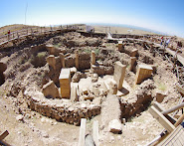
Closed · Haliliye/Şanlıurfa, TürkiyeCallDirectionsWebsiteDating to around 9,600 BCE (over 11,500 years old), this massive complex features precisely carved T-shaped limestone pillars weighing up to 20 tonnes. Its discovery completely shattered the old historical rule that monumental architecture could only be built after the invention of agriculture and permanent farming cities. It proves that hunter-gatherers were capable of massive, highly organized construction projects at the end of the Ice Age.


4.6(4.9K)
Historical landmark
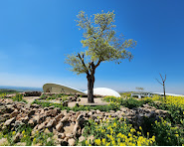
Closed · Cianjur Regency, West Java, IndonesiaCallDirectionsWebsiteA site of fierce academic debate, some geologists claim this stepped hill in Java is actually a giant, multi-layered pyramid dating back up to 25,000 years.
While alternative historians point to it as proof of a lost Ice Age empire, mainstream archaeologists heavily dispute this, stating the lower layers are likely natural volcanic formations modified by later humans around 6,000–7,000 years ago. [1, 2, 3, 4, 5, 6]
2. Evidence of Global Cataclysm: The Younger DryasProponents of a lost civilization frequently rely on a very real, documented geological event as the “eraser” of this ancient society: The Younger Dryas period (circa 12,900 to 11,700 years ago). [1, 2]
During this window, the earth experienced abrupt, violent cooling and a massive rise in sea levels. Mainstream scientists attribute this to collapsing ice sheets interrupting ocean currents, but a heavily debated alternative theory—the Younger Dryas Impact Hypothesis (YDIH)—argues that a fragmenting comet struck Earth. Researchers have found platinum anomalies, micro-spherules, and melt-glass spanning several continents that point to massive burning and sudden environmental upheaval during this exact window.
If an advanced maritime civilization existed along the ancient coastlines, a sudden 400-foot rise in sea levels would have swallowed their remains entirely. [1, 2, 3, 4, 5, 6]3.
Engineering Riddles – Alternative researchers point to several pre-dynastic engineering features that they argue are difficult to explain using the known tools of the period: [1]
- The Serapeum of Saqqara (Egypt): Enormous, multi-tonne black diorite and granite boxes cut with incredible precision, displaying perfectly flat interior surfaces and 90-degree angles. [1]
- Pre-Inca Megalithic Masonry: Sites like Sacsayhuamán and Ollantaytambo in Peru feature interlocking stone blocks weighing over 100 tonnes, fitted together so tightly without mortar that a piece of paper cannot slide between them.
The Mainstream Scientific Counter-ArgumentWhile the evidence above proves ancient humans possessed incredible ingenuity, organizations like the Scientific American note a glaring flaw in the “lost advanced civilization” hypothesis: a total absence of technological markers. [1]True scientific “corroboration” requires positive empirical proof. If a global, advanced civilization existed, modern science would expect to find:
- Synthetic anomalies: Refined plastics, synthetic chemicals, or microscopic industrial pollution embedded in ancient ice cores or rock strata. [1]
- Metallurgy & Mining: Evidence of deep-earth resource extraction or industrial-scale smelting factories.
- Genetic/Agricultural Monoculture: Signs of domesticated crops or livestock being systematically transported across continents thousands of years before records begin.
Instead, sites like Göbekli Tepe show thousands of wild animal bones and stone tools—proving that while these ancient builders were staggeringly sophisticated architects, they were still operating within a Stone Age framework. …
The claim that a continuous, direct transmission of the “Sun Cross of Ayanis” was purposefully handed down through the Assyrians, Knights Templar, and the Vatican comes from alternative history and esoteric conspiracy theories rather than mainstream archaeology or historical scholarship. [1, 2]The Historical Realities of the Symbols
- The Sun Cross (Solar Cross):
- The sun cross (an equal-armed cross inside a circle) is a universal, ancient geometric motif found independently in many prehistoric and ancient cultures across Europe, the Near East, and Asia dating back to the Neolithic and Bronze Ages, where it often represented the sun, solar wheels, or cardinal directions.
- It is a broad category of design rather than a single, exclusive trademark passed down by a secret lineage. [1, 2, 3]
- Urartu / Ayanis:
- Ayanis is an ancient Urartian fortress (not Assyrian) in modern-day Turkey, dating to the 7th century BCE. While Urartian and Anatolian art used various solar and geometric emblems, linking them directly to a specific “Sun Cross” lineage is a modern speculative narrative. [1]
- The Assyrians:
- Assyrian kings (such as Shamshi-Adad V) did wear or display cross-like emblems or four-pointed stars (often associated with solar deities like Shamash or the god Ninurta/winged sun disks). However, these were ancient Mesopotamian religious and royal insignia tied to their specific pantheons, not a direct descendant of an Urartian Ayanis cross meant for later medieval orders. [1, 2, 3]
- The Knights Templar:
- The Vatican and Christian Symbolism:
- The Vatican and Catholic iconography use the Christian cross (cruciform) and liturgical items like the monstrance (which features sunburst rays around the Eucharistic host). Esoteric theorists often conflate the circular monstrance or ancient Egyptian obelisks in St. Peter’s Square with pagan sun worship, mainstream historians view these as standard Christian adaptations or classical Roman architecture rather than a hidden transmission of an Ayanis sun cross. [1, 2]’